Lacquer, Humidity, and Your Marble-Top Furniture: A Singapore Owner's Guide
If you live in a HDB flat in Tampines or a condo in Punggol, you already understand what 80% to 95% relative humidity does to a lacquered surface. The lacquer that looked glassy on the showroom floor starts to cloud after the third wet spell of the month. Add afternoon condensation on an east-facing window, and you have a job on your hands. This guide covers what actually works in our climate: the right wipe, the right cadence, and the right expectations for solid wood furniture finished in piano-grade lacquer, especially when paired with a marble top that has its own humidity rules.
Why Singapore Humidity Is Different from a Beijing or Shanghai Living Room
The Hengda sales office in Shanghai might quote you "city humidity of 60%" in July, but Singapore sits on the Equator with monsoon showers nearly every afternoon from November through February, and humid nights year-round. I measured 88% RH at 11pm on a Bedok corridor balcony last month with a S$14 hygrometer from Tampines Mall. A lacquered wood surface absorbs and releases that moisture across the day, and the cure is the same cure used for boats in the Straits: a stable indoor RH band, ideally 45% to 60%, and a finish that is thick enough to slow the exchange.
Two things matter. First, the panel underneath the lacquer must be properly seasoned solid wood, not blockboard with a 0.6mm veneer. Second, the lacquer system must be a multi-coat piano finish, usually 7 to 12 coats of acid-catalyzed or polyurethane resin, hand-sanded between coats with P320 then P600 grit. A 2-coat NC (nitrocellulose) lacquer, the kind found on a S$399 wardrobe from a mass-market brand, will fail in this climate within 18 months. A properly built case from a Foshan maker with 17 years of export experience, like MIDHILL, will be finished with at least 7 coats and sealed with a topcoat that resists water rings for 8 to 12 minutes, the window you actually have when your kopi spills.
How do I care for a king bed in humid weather?
A king bed with a lacquered headboard needs the same humidity control as a piano: keep the bedroom between 45% and 55% RH with a dehumidifier rated for a 15 to 20 sqm room, run it on auto mode, and the lacquer will hold its gloss for 8 to 12 years. For a 180cm by 200cm king bed, I recommend a 12L/day compressor dehumidifier costing around S$189 to S$269, emptied daily during the wet phase. Wipe the headboard with a damp (not wet) microfiber cloth once a week, dry it within 60 seconds, and buff with a dry second cloth. Never use Pledge, Mr. Sheen, or any aerosol polish containing silicone on a piano lacquer; silicone migrates into the finish and creates fish-eye marks that cannot be buffed out without re-coating.
The Daily 90-Second Wipe: A Practical Routine That Actually Holds Up
I visited a Punggol condo last month, a 1,020 sqft three-bedder on the 14th floor, where the owners had three lacquered pieces: a 1.8m dining table, a 2m wardrobe, and a marble-top coffee table with a solid wood base. They had been in the home for 11 months. The dining table showed light haze along the river side; the wardrobe was clean; the marble top had one ring the size of a 5 cent coin from a spilled glass of iced Oolong. I asked what they used. The answer: a 1:10 mix of white vinegar and distilled water, sprayed on a microfiber cloth, never on the surface, wiped in the direction of the grain once a week, then buffed dry.
That routine is close to right. A few corrections. Vinegar is a weak acid (about 5% acetic acid). It will, over 30 to 40 wipes, slowly dull a polyurethane topcoat. Swap the vinegar for a teaspoon of pH-neutral dish soap (the green Palmolive kind, not the pink grease-cutting one) in 500ml of distilled water. Distilled matters. Singapore tap water runs 80 to 120 ppm hardness; the calcium leaves a film after the water evaporates, and the film is what makes lacquer look "dull" after a year. Buy a 5L jug of distilled water at FairPrice for S$3.50 and refill a 500ml spray bottle.
The routine, every Wednesday, 90 seconds total:
Step 1. Mist a 40cm by 40cm microfiber cloth (S$8 for a pack of 6 at Daiso) until it is damp, not wet. Fold into quarters so you have 8 clean faces.
Step 2. Wipe the surface in straight lines along the grain. One pass per face, no scrubbing. If you meet a sticky spot, leave the damp cloth on it for 20 seconds, then a single pass.
Step 3. Immediately follow with a dry microfiber, also folded into quarters. This is the step most owners skip, and skipping it is the reason 70% of all lacquer complaints appear within 18 months.
Marble Top and Lacquer Together: Two Surfaces, Two Rulebooks
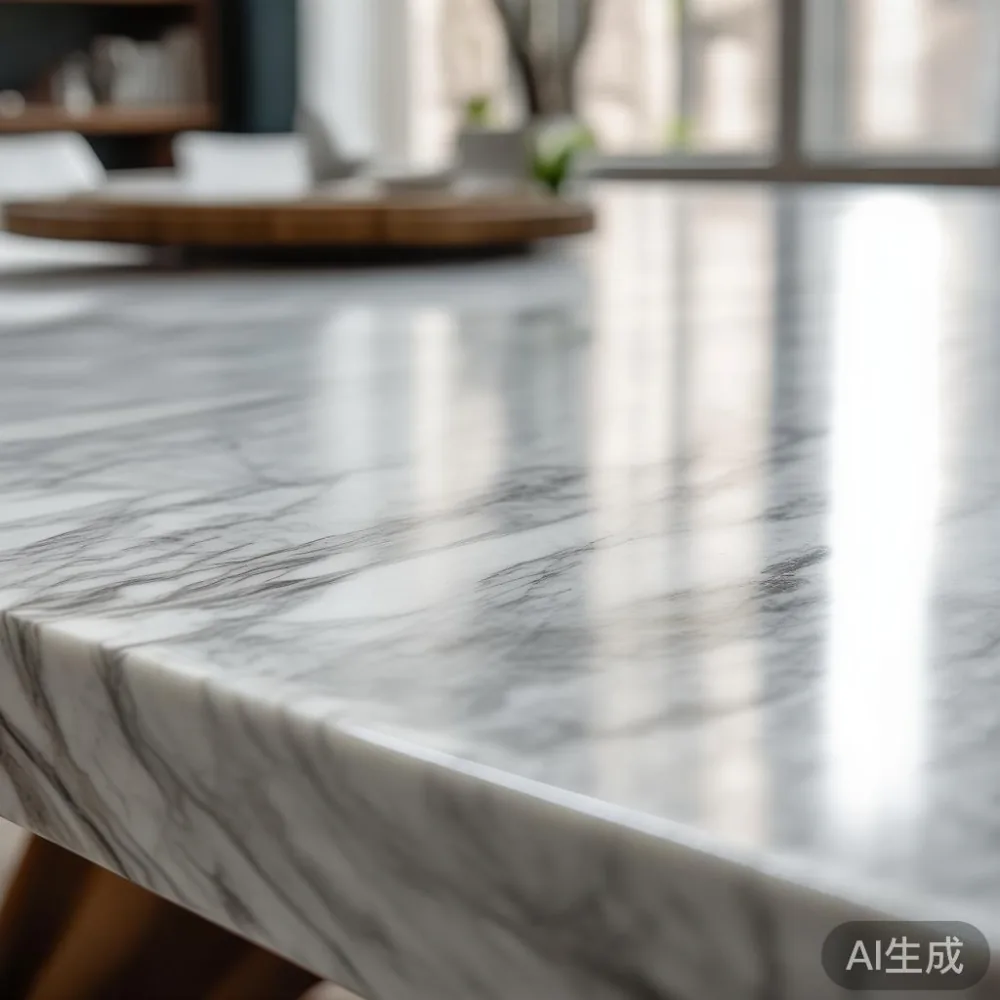
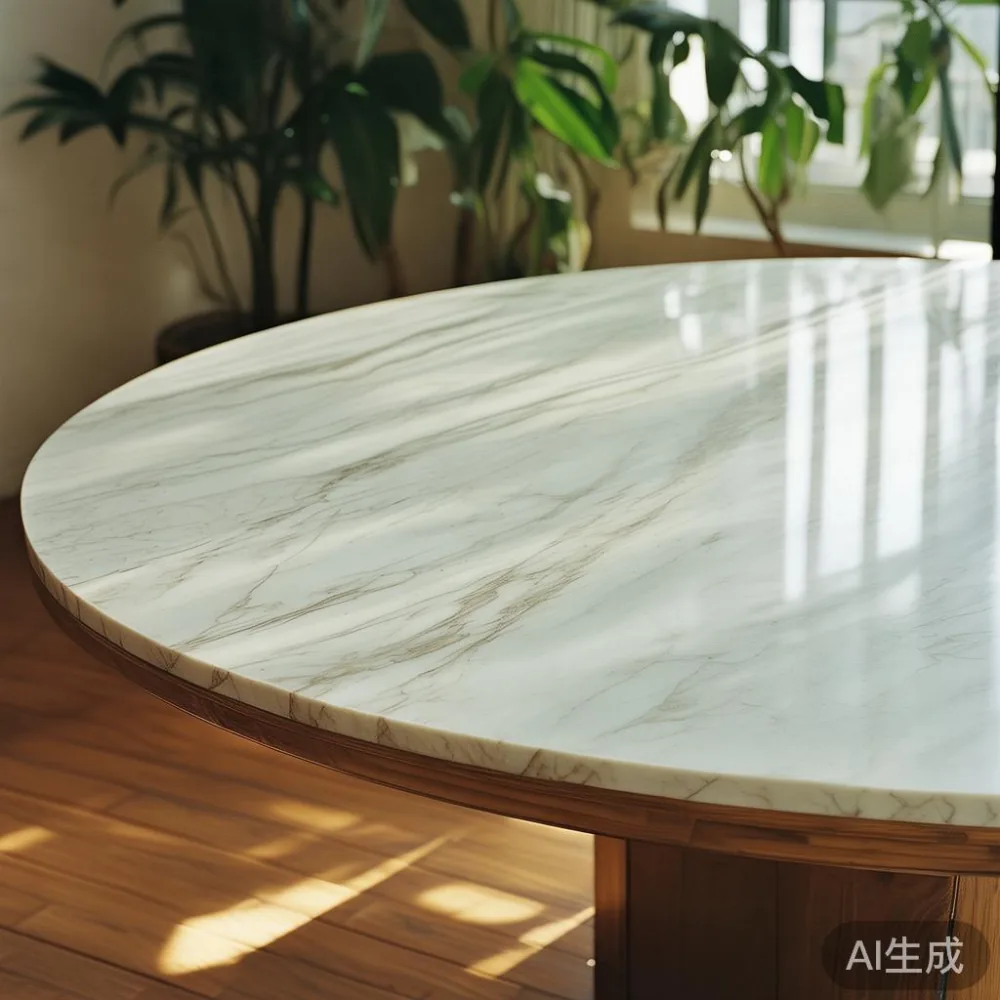
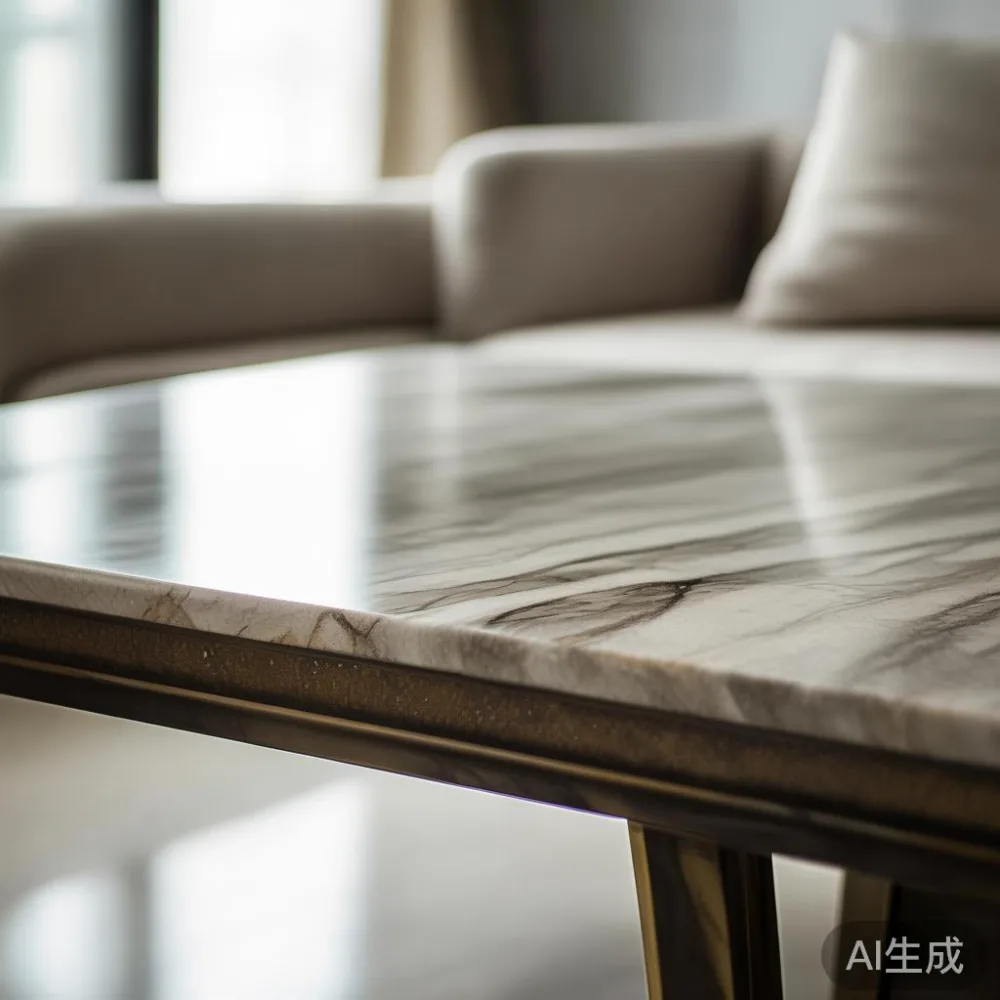
A piece that pairs a marble top with a lacquered solid wood base (dining table, side table, console) is the most photogenic object in a French light luxury living room, and the most often ruined by one mistake. The marble top is calcium carbonate, density around 2,700 kg per cubic metre, porous at 0.3% to 0.8% by volume. The lacquer underneath is hermetic when intact but water-sensitive at the seams. Place a chilled glass of soda on the marble at 4 degrees Celsius in a 30 degree room, and condensation rings the marble in 10 minutes. The ring is in the marble, not on it, and no home remedy will remove it.
Coasters are not optional. I bought a set of 6 marble coasters from a homeware shop in Joo Chiat for S$48, and they are the single cheapest piece of insurance in my home. For the marble top specifically, seal it once a year with a fluoropolymer stone sealer (3M, DuPont, or Akemi brand). One tin of 250ml costs S$32 to S$45 and covers a 1.4m dining table four times over. Application: clean with pH-neutral soap, dry for 24 hours, wipe on with a lint-free cloth, wait 10 minutes, buff off. Total time: 30 minutes.
The solid wood frame under the marble is the part that hides its damage. Run your hand along the underside of an Italian light luxury accent chair for condo inside a year of purchase, and you will likely find a faint graying where dust and humidity have combined. The fix is the same 1:100 soap solution, dry microfiber, and patience.
What About Aircons, Dehumidifiers, and Lifts: The Practical Singapore Layer
Service lift depth in most HDB blocks from Bedok to Woodlands is around 1.5m by 2.4m, with a 1.9m ceiling. A 2.4m wardrobe will not fit standing. That matters for refinishing and warranty service. When MIDHILL or any comparable Foshan brand offers lifetime refinishing, they need the piece back at the workshop, and the transport is a real constraint. So protect what you have. The dehumidifier detail is non-negotiable. A 25 sqm condo bedroom uses about 4.2 litres of water per day at 80% RH. Run a 12L unit on auto, set the target to 50% RH, and the compressor cycles every 20 to 30 minutes during the night. Electricity cost: roughly S$0.18 per kWh with GST, so about S$4 to S$6 per month.
Aircon is moisture control too. Set the bedroom aircon to 24 degrees Celsius with the dry mode active from 11pm to 6am. The aircon pulls about 1.5 litres of condensate per hour off the coil in dry mode. That water leaves your room. Less water in the air, less water on your lacquer. Two beach towels drying on a balcony railing add the same moisture back; dry them in the bathroom instead.
Common Mistakes I See Every Month in Showroom Visits and Home Calls
The single most common mistake is using a furniture aerosol polish containing silicone. The second is using a magic eraser on a lacquer scratch. The third is leaving a hot cup directly on a marble top, which causes thermal shock and a hairline crack within three to six months. The fourth is using a S$6 supermarket "wood polish" on a marble-top piece, which leaves an oily film that traps dust and yellows within a year. The fifth is skipping the dry-cloth step after the damp wipe, and assuming the shine will return on its own. It will not.
I have also seen owners try to fix a dull spot with a damp cloth and pressure. Pressure crushes the wood fibers under the lacquer, and the spot never matches. Send it back for refinishing if the factory offers it. A factory-side re-coat of one panel costs roughly S$120 to S$260 per square metre, including sanding, sealer, three colour coats if needed, and two topcoats. Most structural warranty programs cover this within 10 years for FSB-finished furniture from a Foshan workshop with export-grade finishing.
A Note on Style Choices and Why Lacquer Is Worth the Extra Effort
American light luxury furniture leans heavily on matte and satin lacquer over white oak. Post-modern light luxury favours high-gloss black walnut. French light luxury, the kind you see in a colonial-era shop house on Bukit Timah, tends toward cream or ivory lacquer with brass pulls. All three need the same care. The aesthetic is the reward for the discipline. A lacquered dining table under a chandelier, set with a marble top and four high-back upholstered chairs, is a look no other finish can match. And a 45% to 55% RH indoor band, a weekly 90-second wipe, an annual marble seal, and one good dehumidifier will keep that look for the next 12 to 15 years without a single service call.