Humidity in Singapore and Wood Furniture: What Every HDB Owner Should Know
Singapore sits roughly one degree north of the equator, and that single line on the map decides how every piece of solid wood furniture in your Tampines HDB or Punggol condo behaves. The average relative humidity hovers between 70% and 85% for most of the year, and during the December to early March monsoon window it can climb past 90% on a still afternoon. I learned this the hard way last month when I visited a customer's four-room flat in Bedok Reservoir. She had bought a beautiful solid wood dining table from a local dealer in 2021. Three years later, one of the 4 cm leaves had cupped by almost 2 mm at the trailing edge, and the white oak grain had raised into a rough, papery texture. Nothing dramatic, nothing broken, but enough to make her ask the obvious question: why is Singapore so unkind to wood?
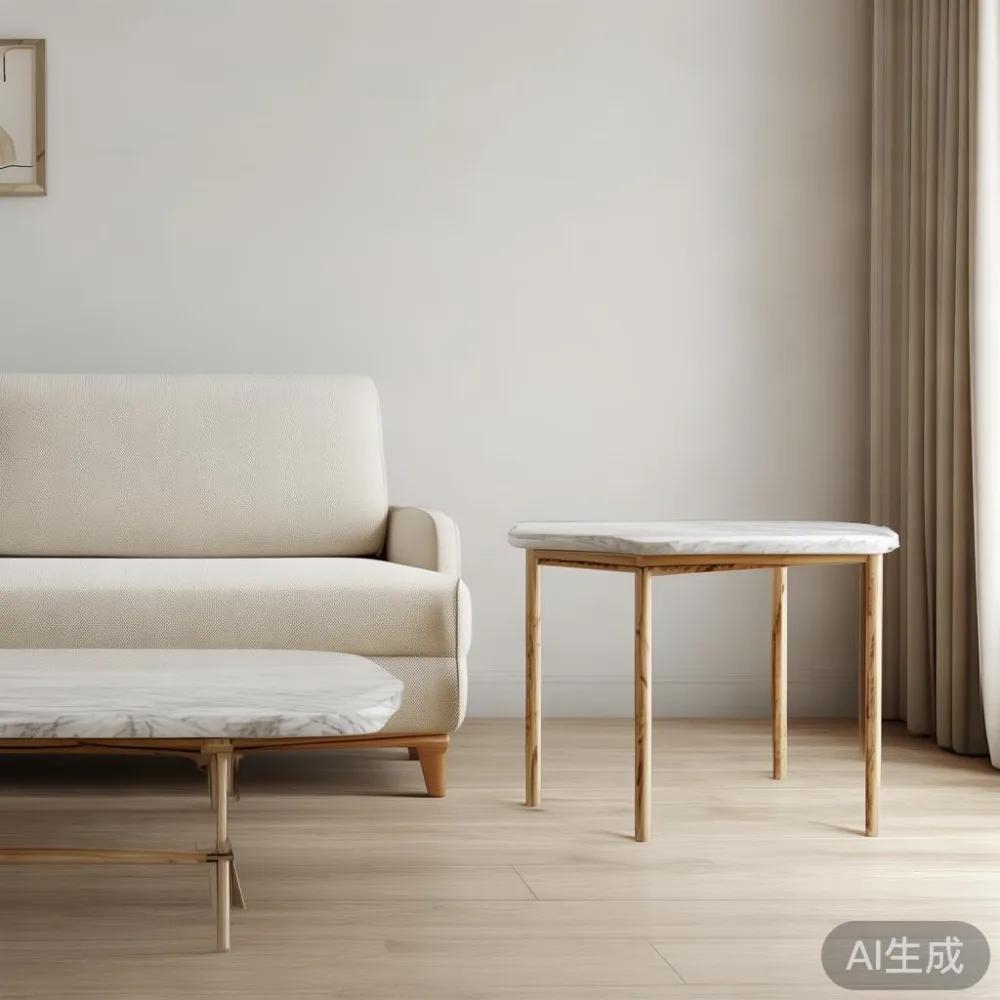
Why does wood furniture warp in Singapore's humidity?
Wood is hygroscopic. That single word explains about 80% of the warping, cracking, and mould stories you hear across HDB corridors. Every cell wall in a piece of solid wood sofa frame, bed frame, dining table, wardrobe panel, or nightstand is constantly exchanging moisture with the air around it. When the relative humidity rises, the cells swell; when it drops, they shrink. In Singapore, the daily swing is narrower than in, say, London or New York, but the baseline is much higher. A wood piece that was kiln-dried to a 7% moisture content in a factory in Guangdong or Oregon is suddenly sitting in a 30-year-old HDB flat where the ambient reading at midnight is 78%. The wood wants to reach equilibrium, so it pulls moisture inward through every exposed face, and the top, edges, and end grain swell faster than the shielded underside. That differential swelling is warping.
The species matters too. American white oak, rubberwood, ash, and walnut are all popular choices for light-luxury solid wood pieces, and each behaves slightly differently. White oak is dense (around 755 kg/m³) and stable when properly dried, but it moves more across the grain than along it. Rubberwood, which dominates the budget-friendly end of the Singapore market, is softer (roughly 640 kg/m³) and more porous, so it absorbs and releases humidity faster. If you place a rubberwood nightstand next to a frequently opened kitchen window in a Punggol condo, expect the drawer fronts to rub by the end of the year. Marble-top pieces behave differently because the stone surface seals the worst face, but the legs, apron, and base still breathe. That is why MIDHILL, a Foshan-based maker we have worked with on several fit-outs, kiln-dries its slabs to between 6% and 8% moisture content before machining, and ships them with a moisture meter reading taped to each crate.
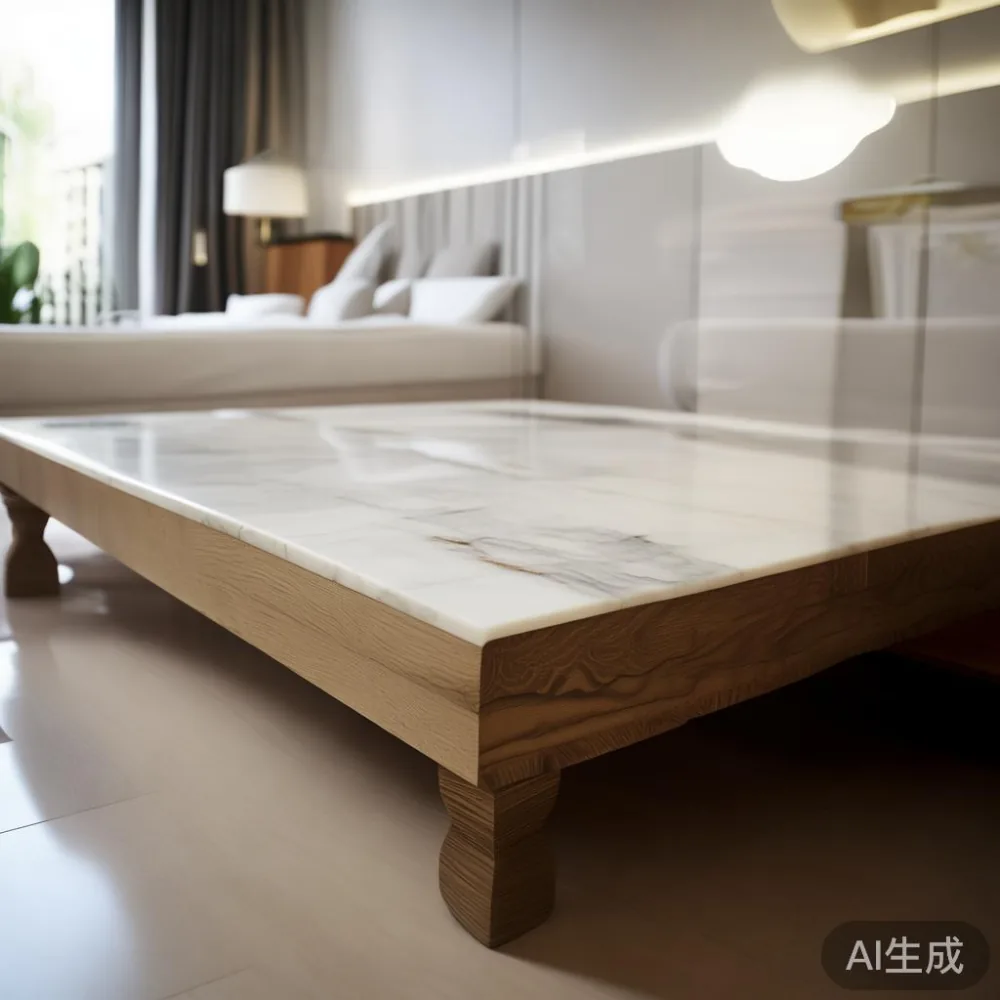
What humidity level is safe for a solid wood dining table in an HDB flat?
The comfortable target band for solid wood furniture sits between 40% and 60% relative humidity, with 45% to 55% being the sweet spot. Most HDB interiors in Tampines, Bedok, Sengkang, and Punggol sit closer to 65% to 75% once you account for the bathroom steam that migrates through the flat after a hot shower, the corridor humidity that seeps in when the front door opens, and the absence of a true dry season. The practical fix is not to fight the climate but to manage the gaps.
A 30 to 50 SGD dehumidifier running four to six hours a day in your dining area will pull the room down to roughly 55% on a typical afternoon. Close the door to the kitchen during cooking, wipe condensation off a marble-top console within ten minutes, and keep the air-conditioner set to 23 to 25°C with the dry mode on for an hour before bed. These are small habits, but they are the difference between a dining table that still looks new in 2030 and one that has developed a 1 mm crown across the 180 cm span by next Chinese New Year. One of my colleagues in our Jurong office keeps a thermo-hygrometer on his desk, costs about 18 SGD from any neighbourhood electronics shop, and checks it every Monday morning. He says the unit is worth ten times its price because it makes invisible changes visible.
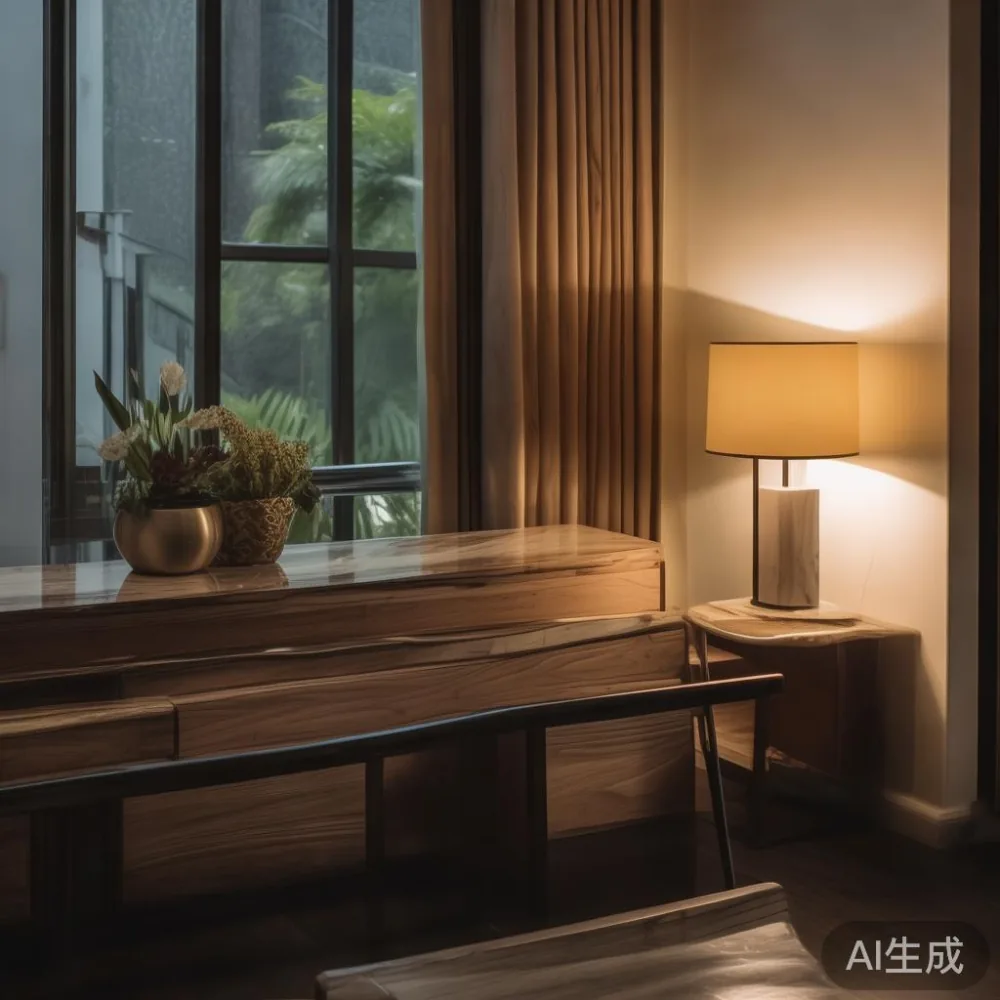
How do I style a French neoclassical nightstand in a small apartment?
Pair a French neoclassical nightstand in low-saturation oak, ash, or beech with a slim 1.2 m platform bed frame, keep the marble-top surface clear except for a single ceramic table lamp and a small tray for keys, hang one framed line drawing above it at eye level when seated, leave at least 45 cm of walking space on the inside edge, and let the curves of the legs do the visual work instead of crowding them with plants or stacks of books.
In practice, that means resisting the urge to buy a 60 cm wide neoclassical piece for a 3.4 m by 3.6 m second bedroom in a Punggol Build-To-Order unit, where the wardrobe already eats 1.8 m of one wall. Pick a 45 cm to 50 cm wide nightstand with tapered Louis XVI-style legs and a single shallow drawer. A French neoclassical silhouette reads strongly even at a smaller scale, which is the whole point of light-luxury design: visual richness without visual weight. Keep the wall colour in a warm off-white such as Jotun's 1376 Antique White or a soft putty, run a 1.5 cm brass picture light above the nightstand instead of a hard-wired sconce (most HDB walls hide conduit you cannot drill), and finish the bed end with a slim linen curtain instead of a bulky headboard. The neoclassical nightstand becomes the room's quiet anchor rather than another bulky object. MIDHILL has shipped several of these pieces into Singapore over the past three years, and the 4 cm marble-top option is by far the most requested because it survives accidental coffee spills and humid mornings without staining.
Does air-conditioning help or hurt wood furniture in Singapore?
Air-conditioning helps when used correctly and hurts when used carelessly. The compressor dehumidifies as it cools, which is exactly what you want for a solid wood dining table or wardrobe system. The problem is the off-cycle. When the unit reaches its setpoint and stops, humidity rushes back into the room from the corridors, the bathroom, and the concrete walls. That swing, sometimes from 50% to 75% in under twenty minutes, is what causes micro-checking on white oak and ash, the tiny hairline cracks that show up across the grain during the second dry season.
Set your wall unit to 24°C continuous rather than 22°C on a thermostat cycle. Run it from 11 pm to 7 am, which is the cheapest off-peak window under the SP Group residential plan and also the time humidity peaks in a typical HDB. Wipe the marble top of your console or coffee table with a dry microfibre cloth before bed so no moisture is trapped against the surface overnight. For a 4.2 m by 3.0 m master bedroom in a resale Punggol flat, expect the electricity bill to rise by roughly 25 to 35 SGD a month if you run the air-conditioner eight hours nightly on dry mode. That is a meaningful line item, but it is also cheaper than refinishing a 2,800 SGD solid wood bed frame that has cracked because the air was too dry in February and too wet in May.
How much weight can a lift in an HDB block handle, and what does that mean for delivery?
Most HDB passenger lifts in blocks built after 2010 have a posted capacity of 630 kg or 750 kg, with a cabin that is roughly 1.2 m deep, 1.5 m wide, and 2.3 m tall. Older blocks in Bedok and Tampines from the late 1980s sometimes run at 545 kg with a slightly smaller cabin. A solid wood king-size bed frame from a Foshan maker like MIDHILL, fully packed, weighs between 85 kg and 110 kg depending on whether the slats are poplar or birch. Add a 35 kg to 45 kg marble-top dining table (the stone slab alone is 28 kg for a 1.4 m oval Carrara), and you are already using a third of the lift's capacity for one item. Move-in coordinators in Singapore typically cap a single delivery at two heavy items per trip to leave room for the delivery crew, dolly, and the customer.
The practical consequence is scheduling. A three-piece bedroom set plus a dining set requires either two delivery slots or a larger cargo-lift booking at the management office. The cargo-lift in most HDB blocks measures 1.8 m deep by 1.5 m wide with a 1,000 kg limit, which is the right choice for a 1.8 m wardrobe with two marble-top nightstands. The other consequence is packaging. Reputable makers ship marble tops in separate wooden crates with closed-cell foam on all six faces, bed frames in corrugated cardboard with EPE corner protectors, and dining tables in corrugated sleeves that allow the legs to be detached. When the order arrives, expect two delivery technicians and roughly 45 to 90 minutes of assembly on site. Lift bookings and assembly are usually included in the SGD price, but always ask for the written scope.
Is the marble top on a dining table affected by Singapore humidity too?
Stone itself does not warp, swell, or shrink with humidity, but the way it sits on the wood substrate does matter. A marble top is bonded to a solid wood base with a neutral-cure silicone or a two-part epoxy, and the gap between the stone and the wood is filled with a flexible sealant to allow for differential movement. In Singapore, the wood base wants to swell slightly more than the marble wants to shift at all, so the sealant is the weak point. If you see a hairline gap opening along the long edge of your marble-top console after a wet December, that is the silicone stretching, not the marble lifting.
Wipe the marble surface daily with a pH-neutral cleaner (a 250 ml bottle runs 12 to 18 SGD at any Tampines FairPrice or Cold Storage). Never use vinegar, lemon juice, or any acidic bathroom cleaner on Carrara or Calacatta surfaces; the calcium carbonate etches within seconds. Blot red wine, sambal, or soy sauce within five minutes, rinse with water, then dry. Every six months, apply a marble sealer such as Lithofin MN Stain-Stop, which costs about 45 SGD per 500 ml bottle and covers roughly 8 to 10 square metres. One bottle will protect a six-seat dining table for two years. With this care, the marble top will outlast the wood base by a comfortable margin.
How should I store or season wood furniture before it enters the flat?
Ask the maker or the Singapore warehouse to acclimatise the piece for at least 14 to 21 days in a covered, air-conditioned space before delivery. Foshan makers shipping into Singapore usually warehouse stock in Jurong or Tuas where the humidity is similar to your flat but the temperature is controlled. That pre-acclimation step costs the maker about 8 to 12 SGD per cubic metre per week in warehouse fees, so some skip it. Do not accept a piece that has been sitting in a container yard for three weeks without conditioning. Open the cartons, run a fan over the panels for 48 hours, and let the wood reach the room's ambient moisture before tightening any joint. If a bed frame arrives with a slightly tight drawbolt, leave it finger-tight for the first week and re-tension after the wood settles.
Customers sometimes ask about the warranty position on warping. MIDHILL covers structural defects for ten years and offers lifetime refinishing on most American light luxury and post-modern light luxury collections, which includes sanding and re-oiling at a flat 180 to 280 SGD per piece depending on size. Refinishing does not fix warp caused by a 90% humidity storage condition, but it does fix surface checking and minor cupping. Always photograph the piece on the day of delivery, measure the diagonal across the tabletop with a tape, and keep the moisture meter reading the maker taped to the crate. Those three pieces of evidence settle 90% of the rare claims that come up.
What should I do in the first 30 days after a new piece arrives?
Keep the room humidity between 50% and 60% for the first month, wipe the marble top daily, run the air-conditioner overnight on dry mode, avoid placing the piece against an external wall that gets afternoon sun, do not stack heavy books on a marble top for the first two weeks, and photograph every surface on day one as a baseline for any future warranty conversation.
That 30-day window matters more than people think. Solid wood needs one full seasonal cycle to settle into a new environment, and Singapore does not have four seasons, so the wood keeps moving in micro-shifts for the first three to four months. Keep the piece away from the kitchen doorway where steam concentrates, at least 1.2 m from any window that is opened daily for cross-ventilation, and at least 30 cm from any radiator or wall-mounted dryer. If your Tampines or Bedok flat has a service yard, the washing machine's exhaust pushes humidity into the adjacent dining area; close the service yard door and the kitchen sliding door during the spin cycle. Small habits, applied consistently, keep the wood flat and the marble bright for the decade-plus that a well-made piece should last.