Small HDB Styling Guide: Making a 50 sqm Layout Feel Like a French Light-Luxury Showroom
Most people I speak with in Tampines and Bedok start the same way: they have a 50–65 sqm HDB flat, two or three rooms, narrow lift access, and a wish list that includes a proper sofa, a dining table for four, a bed frame that actually looks like furniture, and a marble surface somewhere — usually for coffee, keys, and the occasional plate of kueh. The challenge is real. Singapore corridors run around 1.2 m wide, and the lift door opening is typically 0.9 m, so the furniture you choose has to be sized for the building as much as for the room. After spending the last month visiting three MIDHILL showroom consultations and walking through a Punggol BTO delivery with a friend, I want to share the layout logic that keeps a small apartment from feeling crowded, and the small handful of pieces that carry the entire visual weight.
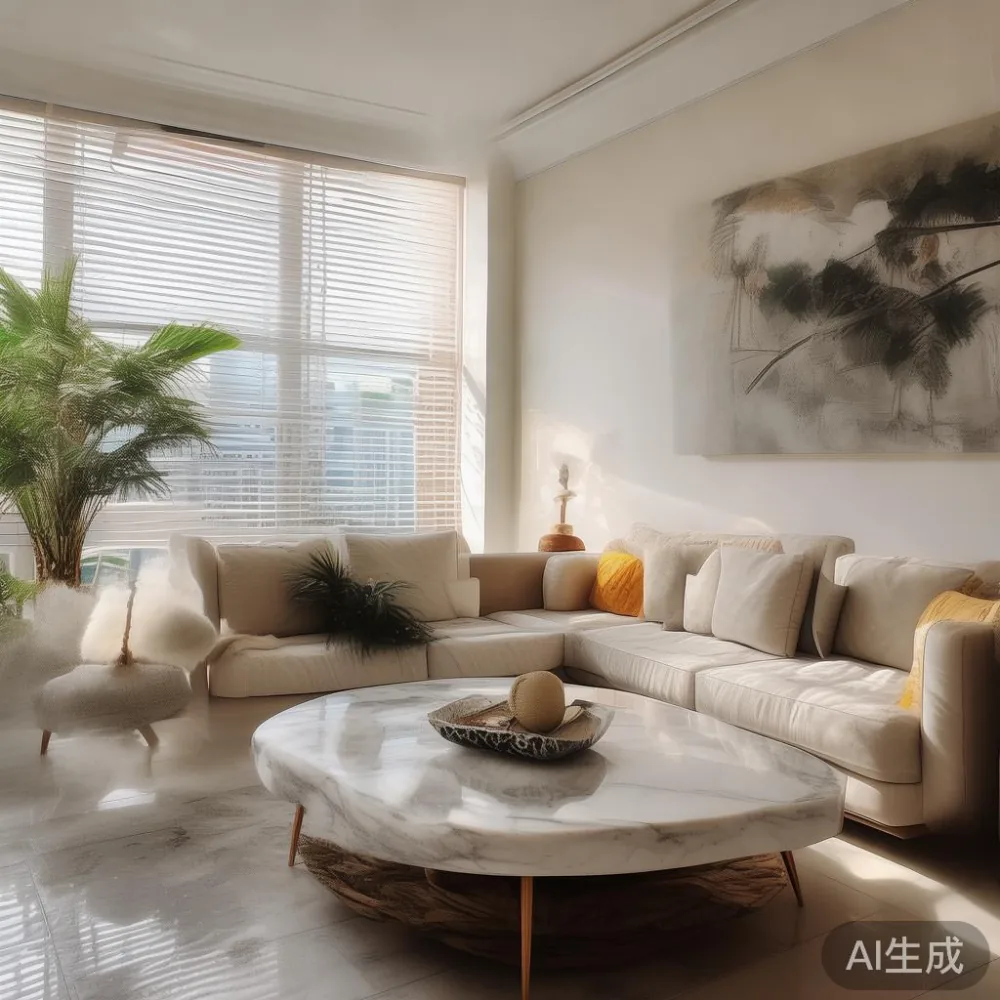
What does "small apartment styling" actually mean in a 50 sqm HDB?
It means every piece earns its footprint. A 240 cm four-seater sofa against a 300 cm living room wall will eat the room; a 180 cm solid wood sofa in a slim profile leaves a 120 cm walk-through and keeps the sightline open from the entryway to the window. The same principle applies to a dining table. A round 90 cm table seats four comfortably, leaves a 70 cm circulation path on every side, and removes the corner-bump risk that rectangular tables create in tight layouts. In a recent Tampines resale my colleague measured, swapping a 160 cm rectangular dining set for a 90 cm round marble-top dining table reclaimed roughly 1.4 sqm of usable floor — enough to fit a 40 cm wide console and still pass the corridor traffic rule most ID firms in Singapore use, which is a 90 cm clear path.
How do I care for a bean bag in humid weather?
A bean bag should be kept in an air-conditioned room and out of direct sunlight, because Singapore's average 80% relative humidity encourages mould inside the inner liner if the cover is washed and not fully dried within 24 hours; rotate the bag weekly, vacuum the seams on a low setting every fortnight, and replace the inner liner's polystyrene fill every 18–24 months as the beads compact by roughly 15%.
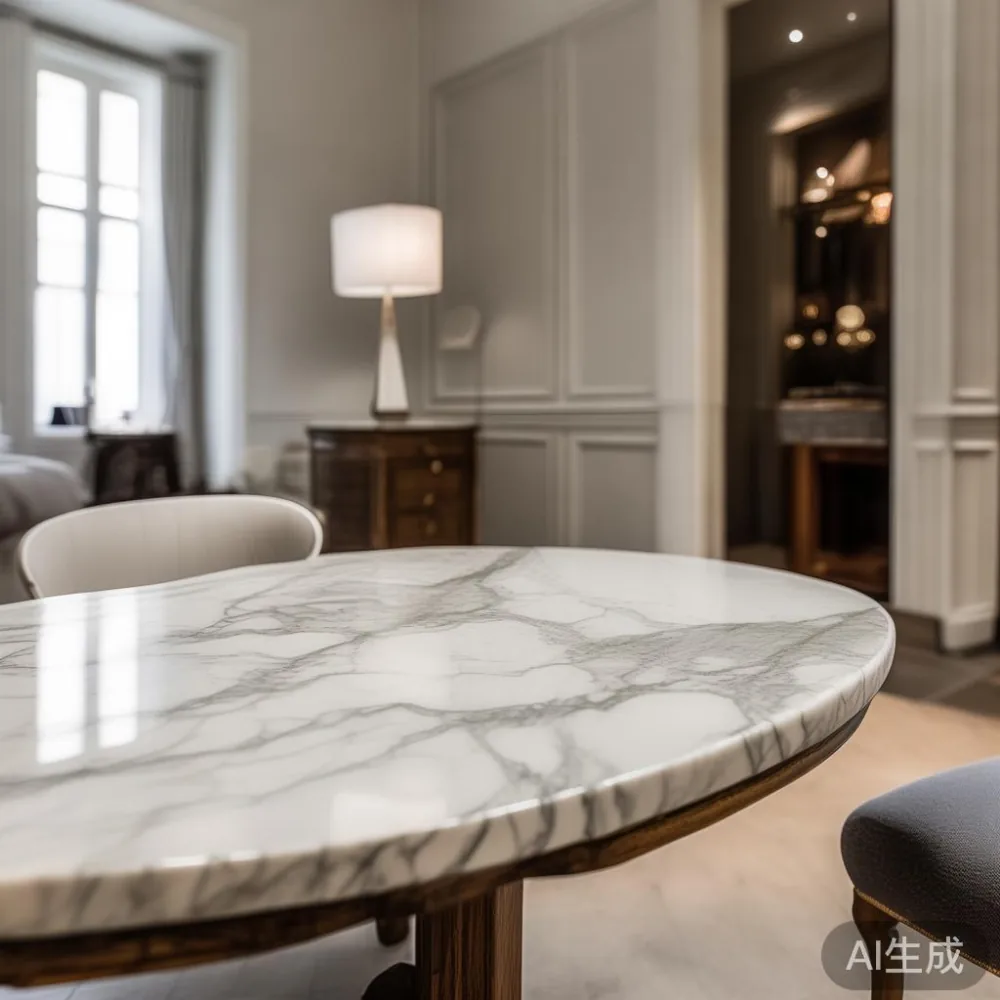
Which furniture dimensions actually fit a Punggol or Bedok lift?
Measure twice, order once. HDB lift cabins are typically 1.1–1.4 m deep and 1.0–1.5 m wide, with a door opening of 0.9 m and a weight rating near 1,000 kg for passenger lifts. A solid wood bed frame in king size breaks down to a headboard around 190 cm tall and side rails that usually ship under 215 cm — manageable, but tilted delivery adds risk to corners. MIDHILL's logistics team told me they pre-measure client lifts before dispatch and will split a wardrobe into two 90 kg crates if the corridor turn radius is under 1.5 m, which is worth asking about. For a three-door wardrobe, expect 180–220 kg total packed weight and three cartons; budget 14–21 working days from order to doorstep, with free shipping on orders above US$350 (about S$475 at current rates) and a 14-day return window if dimensions are off by more than 2 cm.
Can a light-luxury look work without cluttering the room?
Yes — and this is where the French light-luxury approach earns its keep. Instead of layering many decorative objects, the style relies on a few pieces with material presence: a solid wood sofa in a neutral bouclé, a marble-top coffee table with a slim brass-finished base, a single low nightstand per side of the bed, and one tall lamp. In a 2024 Bedok BTO I walked through, the owner used exactly this recipe: one 200 cm oak-framed bed frame, two 45 cm nightstands, a 60 cm round marble-top side table, and a slim 180 cm TV console. The total furniture footprint was about 4.2 sqm in a 52 sqm flat, and the room read as generous rather than tight. The marble top does the heavy lifting visually; the wood warms it up; the negative space does the rest.
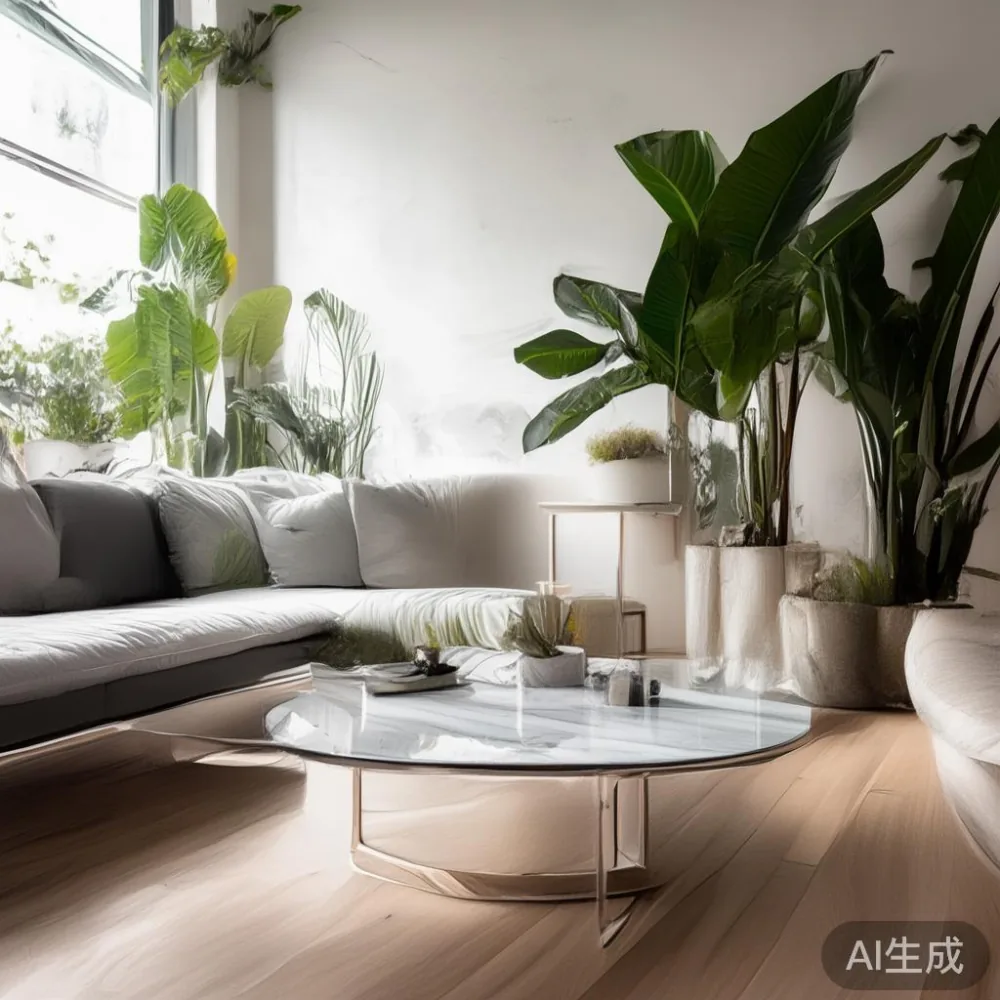
Where does a marble-top dining table fit in a small condo?
Almost everywhere — if you choose the right diameter and base. A 90 cm round marble-top dining table seats four, fits a 2.4 m x 2.4 m dining zone, and pairs naturally with a Mid-century modern dining table korea silhouette (tapered legs, 70–72 cm table height, edge profile under 2 cm). Marble is denser than engineered stone at roughly 2,700 kg per cubic metre, so the top alone on a 90 cm round will weigh 35–48 kg depending on thickness; the base needs to be steel or solid wood to handle that load. For daily Singapore use, a honed finish hides micro-scratches better than polished, and a sealed top resists curry and soy stains — both worth confirming before purchase. A friend in Punggol who bought hers last month paid S$1,180 inclusive of GST for a 90 cm round with a 1.8 cm marble top and oak base, and reports that four adults sit comfortably with elbows clear.
How do I plan delivery and assembly for a corridor-turn layout?
Photograph the lift door, the lift cabin, and the corridor turn. Send those to the supplier before payment. Most condo corridors in Singapore have a 90-degree turn between lift and unit door, and the diagonal clearance at that turn is often the limiting factor — not the lift itself. A solid wood bed frame headboard taller than 110 cm will usually not clear a tight turn; a 95 cm headboard with a removable top rail solves it. MIDHILL's pre-delivery checklist, which my colleague in Tampines went through last month, included measuring the unit door (usually 0.9 m wide), the corridor width (1.2 m), and the lift door (0.9 m). The delivery team brought the bed frame in four boxes totalling 92 kg and assembled it in 35 minutes. Plan assembly time of 30–60 minutes for a bed frame, 45–90 minutes for a wardrobe, and 15–25 minutes for a dining table.
What is the right budget for a small-apartment furniture set in SGD?
For a complete primary-bedroom-plus-living set in solid wood with marble accents, a realistic Singapore budget sits between S$4,800 and S$9,500 inclusive of GST, depending on whether you choose one statement piece or build a coordinated set. A typical allocation looks like this: bed frame S$1,200–S$2,400, wardrobe S$1,800–S$3,200, two nightstands S$300–S$600, dining table S$900–S$2,000, solid wood sofa S$1,800–S$3,800, and a marble-top coffee or side table S$400–S$1,100. Add S$120–S$250 for doorstep delivery across the island and S$80–S$180 for disposal of your existing flat-pack if the supplier offers it. The warranty question matters: look for a 10-year structural warranty on frames and joints, lifetime refinishing on solid wood surfaces, and a 14-day return policy for size or finish issues. MIDHILL offers exactly this combination, which is why a Punggol couple I spoke with chose them after comparing three other suppliers.
How do American light-luxury and post-modern light-luxury differ in a small space?
American light-luxury leans on proportion and comfort — deeper seat depths (60–65 cm), plush cushions, warm oak or walnut tones, and one large marble or travertine surface per room. Post-modern light-luxury, by contrast, plays with silhouette: rounded corners, asymmetric bases, mixed-material tables (think a marble top on a blackened steel pedestal), and a slightly sculptural feel. In a 50 sqm HDB, the American style reads as calm and grounded; the post-modern style reads as curated and gallery-like. Both work, but the post-modern version needs more negative space to breathe, so it suits a 60 sqm flat better than a 45 sqm studio. If your living room is under 14 sqm, default to American light-luxury proportions; if it is over 18 sqm, post-modern shapes start to earn their keep.
What is the one piece I should never compromise on?
The bed frame. You spend roughly a third of your life on it, and a poorly proportioned frame — too tall, too short, too deep — visually throws the entire bedroom. In a small Singapore bedroom, a 180–200 cm king frame with a 100–110 cm headboard and a 12–15 cm underbed clearance (for robot vacuum access and storage boxes) is the sweet spot. Solid wood construction matters here because MDF and plywood frames tend to loosen at the side-rail bolts within 18–24 months, while a properly jointed solid wood frame holds its geometry for a decade or more. Pair it with a 50–55 cm wide nightstand on each side, leaving a 5–8 cm gap from the mattress edge for a phone and a glass of water, and the room is functionally complete.
How do I keep the look from dating quickly?
Stick to a tight material palette: one wood tone (oak, walnut, or ash), one stone (white or grey marble with subtle veining), one metal (brushed brass, blackened steel, or matte nickel), and one textile family (linen, bouclé, or cotton velvet). Limit decorative objects to under ten visible items per room, and rotate seasonally. The reason this works in a small HDB is that each surface carries less, so each piece reads as intentional. A marble top — whether on the dining table, the coffee table, or a single 45 cm nightstand — becomes the anchor; everything else supports it rather than competing with it. And because marble and solid wood both age gracefully, the room actually looks better at year three than year one, which is rare for small-space interiors.