What Drives the Price of Solid Wood Furniture in Singapore (and How to Read the Numbers)
I spent a Saturday at the Tampines hub showroom two months ago, walking between a 1.8 m oak dining table, a marble-top side table, and a row of French-provincial wardrobe doors. The price tags looked wildly different, and so did the questions on the slip I kept in my pocket: why does this cost S$2,480 and the one across the aisle costs S$4,900? After two hours of notes and a long chat with a Foshan factory liaison, the answer stopped feeling mysterious. Wood furniture pricing is built from a small set of variables, and once you can read them, the market gets much calmer. This article is the longer version of what I learned, written for anyone in Singapore trying to compare solid wood sofa, bed frame, dining table, wardrobe, nightstand, and marble table options without getting lost in showroom lighting.
Where does the price actually come from?
Every piece of solid wood furniture carries roughly seven cost layers: the raw timber, the drying and milling, the joinery, the finish, the hardware, the marble or stone (if any), and the logistics into Singapore including GST. A dining table with a 1.6 m oak top, for example, absorbs 18–25 kg of dried timber, 2–3 days of CNC work, two coats of oil finish, and a pallet that weighs around 85 kg once crated. Add sea freight from China (about 7–14 days to PSA), 9% GST on the landed value, and last-mile delivery up to a Punggol HDB on the 14th floor, and a S$2,100 ex-works product quietly becomes S$2,560 at your door. The same item retailed through a third-party boutique in Bedok can show S$3,800 after they add a 40–50% margin, photography, and a 12-month display warranty.
What makes the wood itself cost what it costs?
The single biggest number on the bill is the species. Ash, rubberwood, and poplar sit at S$1,800–S$2,400 per cubic metre of dried lumber; white oak climbs to S$3,400–S$4,200; walnut to S$5,800–S$7,500. A queen-size bed frame uses roughly 0.12 m³, so the wood alone swings between S$220 (rubberwood) and S$900 (walnut). After that, kiln-drying matters: properly kiln-dried 8–12% moisture content prevents the cracking you see in HDB flats during dry months. Factories that skip this step save S$40–S$70 per piece but pay for it later in customer complaints. For a French provincial dining table, the curve is steeper still, because the legs are usually turned on a lathe from single billets rather than glued from short pieces, and turning rejects 15–25% of every blank.
How heavy is the craftsmanship, really?
Joinery is the quiet hero of solid wood pricing. A bedside nightstand joined with dowels and staples might retail for S$380 and last 5–7 years before the top racks. The same drawer box with dovetail joints, a floating panel back, and a French-provincial soft-close hinge costs S$640–S$780 and lasts 15+ years. In a Foshan workshop I toured last month, the head joiner showed me two wardrobe sides: one glued and pin-nailed (mass-line, three workers per hour), one mortise-and-tenon with a spline (slow-line, one worker per hour). The slow-line piece adds roughly S$140 of labour but gives you a wardrobe you can disassemble for a Punggol HDB move and reassemble without the doors drifting. This is also where lifetime refinishing becomes a real benefit instead of marketing: sanding and re-oiling a solid wood sofa frame at year 8 costs S$280–S$420, far less than a replacement.
Does the marble top actually justify the markup?
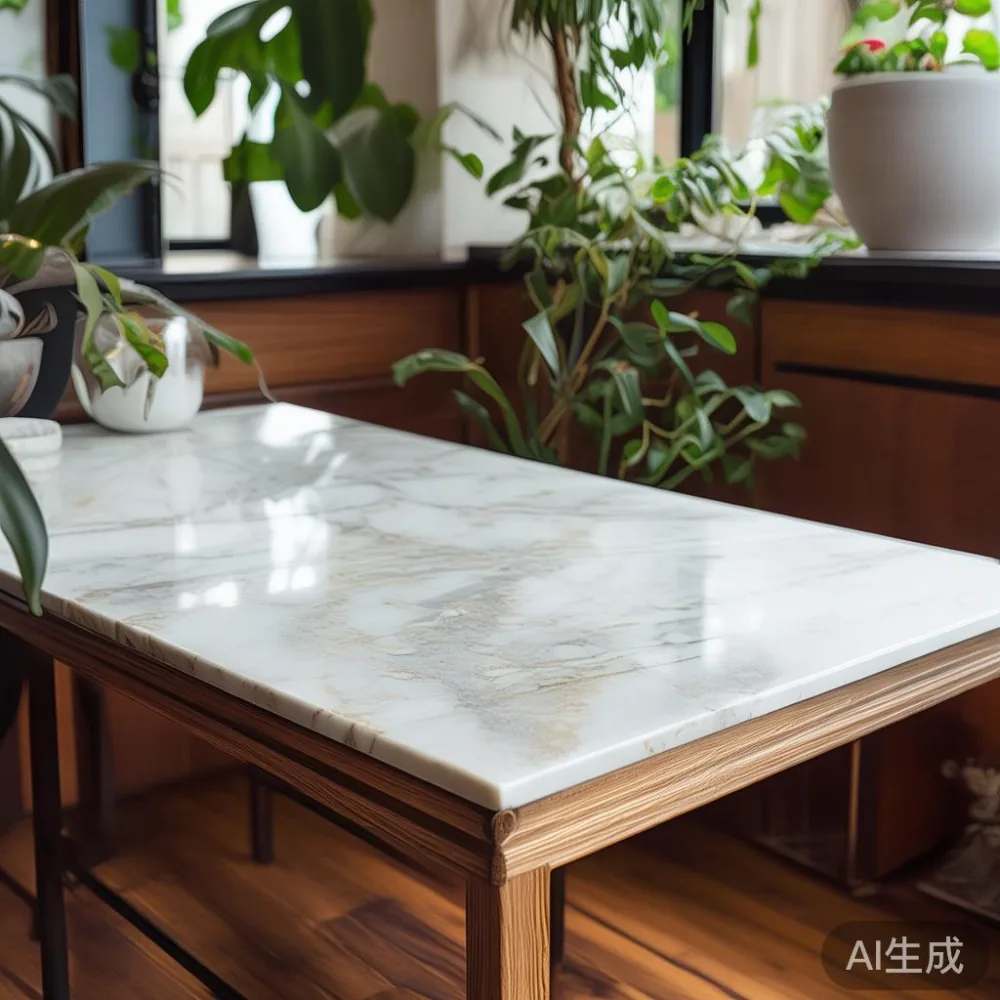
For marble table pieces, yes, mostly. A genuine marble top in 12 mm Calacatta or Carrara adds S$420–S$980 to a side table and S$1,100–S$2,400 to a dining table, depending on veining grade. The cost reflects quarry selection, slab yield (only 35–50% of a quarry block becomes furniture-grade slabs), the cutting and epoxy resin treatment, and the steel-reinforced plywood substrate that prevents the 80–110 kg top from cracking during a Tampines HDB lift ride. A sintered-stone alternative is lighter (roughly 35 kg for the same size), scratch-resistant, and adds only S$300–S$600 to the price. If you live in a 4-room HDB with a small lift opening of 80 cm, sintered stone often survives the move better than marble, which can chip on a tight lift door. Both options belong to a wider post-modern light luxury category that mixes a stone slab with a slim wood or metal base, and the look is part of what you're paying for. When a sales page labels a piece "marble top," check whether it is full slab, married, or engineered stone with a marble veneer — the price gap between the three is real.
Is the hardware and finish really worth the difference?
Hardware is small by weight but loud by feel. A soft-close drawer slide from a reputable German supplier costs S$18–S$28 per pair; a generic one costs S$4–S$7. Across a six-drawer wardrobe that is a S$90–S$150 swing for a feel you notice every day. Finishes tell the same story: a conversion varnish that resists Singapore humidity and the occasional kopi spill costs S$60–S$120 per piece in materials and labour, while a thin NC lacquer costs S$15–S$25. UV-curable water-based finishes are a good middle ground for families with young kids, off-gassing under 30 g/L and curing in 90 seconds under the lamp. For an oil-and-wax finish, expect to re-oil the dining table every 12–18 months; the products themselves are cheap (S$35 for a 500 ml can), but the labour adds up.
What about shipping into a Singapore HDB flat?
Logistics are where a lot of buyers get caught. Sea freight from Foshan or Shenzhen to Singapore runs 7–14 days door-to-door for a 1 CBM shipment, plus 9% GST on the commercial invoice. Add a S$60–S$120 customs clearance fee and last-mile delivery that ranges from S$45 (ground floor HDB, no lift booking) to S$180 (14th floor condo in Punggol with a narrow service lift that requires a furniture hoist). A queen bed frame in a flat-pack weighs 55–70 kg; an assembled bed frame weighs 95–120 kg. If your corridor is under 110 cm wide and your lift opening is under 90 cm, the assembled version simply will not fit. This is why experienced sellers cut bed frames into 4–5 sub-assemblies and ship them flat-packed; you reassemble in the bedroom in 35–55 minutes with the included hex key. Free shipping thresholds matter here: anything above S$350 in product often qualifies, and below that you are paying a true-cost surcharge of S$60–S$110.
What should I ask the salesperson before I pay?
Ask five questions, in this order, and write the answers down. One: what is the exact species and the country of origin for every wood component, not just the visible parts? Two: what is the moisture content at the time of packing, and is there a kiln-drying certificate? Three: what is the joinery method on the load-bearing joints — dowel, mortise-and-tenon, or metal bracket? Six: for any marble top, is it full slab, married, or veneer, and what is the substrate? Five: what does the warranty actually cover, and what is excluded? A 10-year structural warranty that excludes joinery is worth less than a 5-year warranty that covers loose joints, warping, and finish cracking. A return policy of 14 days for unused pieces in original packaging gives you a real safety net if the colour clashes with your Tampines flooring once it is in your living room.
Is French provincial really different from American light luxury?
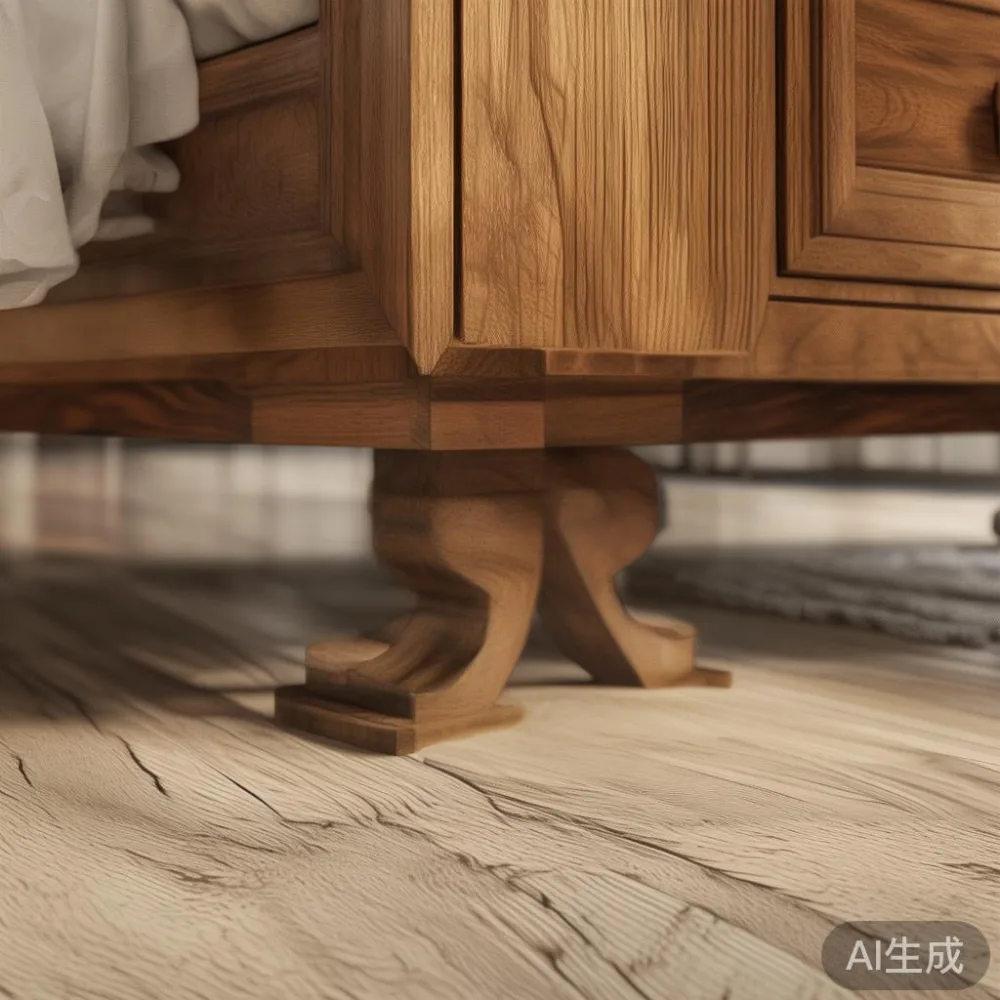
Yes, and the difference shows up in the price. French provincial dining table designs lean on cabriole legs, hand-carved aprons, and a soft palette of white, cream, or weathered oak. They are usually heavier (95–115 kg for a 2 m table), more labour-intensive, and end up in the S$3,400–S$6,200 bracket for a six-seater. American light luxury pieces are cleaner, straighter, and rely on proportion and hardware for their look, which is why a similar 2 m table in walnut or ash can land at S$2,400–S$3,600. If you want to know how to choose French wardrobe pieces specifically, look at three signals: the door panels should be solid with a raised or fielded design rather than flat MDF, the cornice should be a single piece of moulded timber, and the back should be a 9–12 mm solid panel rather than cardboard. For shoppers thinking about French sofa vs Nordic sofa, the same rule applies: French is curvier, with rolled arms and turned legs, while Nordic is straight-lined, with longer legs and lighter frames. And if you have ever wondered how to style French bed in bedroom, the easiest route is to keep the wall a soft warm white, layer a linen throw across the foot, and avoid mixing in heavy modern lamps. The point is to let the carved headboard breathe.
How do I compare two similar listings without getting confused?
Build a one-page comparison sheet with six columns: species, dimensions, joinery, finish, hardware brand, and warranty. Fill it in for the two finalists, then divide each total price by the number of pieces you actually need. A 6-seater dining set at S$4,200 breaks down to S$700 per seat, including chairs; a 4-seater at S$2,900 breaks to S$725. The 6-seater looks cheaper per seat but requires 2.4 m of wall clearance, which a 4-room HDB dining nook in Bedok rarely has. For wardrobes, the same rule: measure the wall in centimetres, then look for pieces you never need beyond the wall by more than 5 cm on each side. Buyers asking how to style French wardrobe in room usually find that a 60 cm deep, 240 cm wide unit against a 5-metre wall leaves a balanced 110 cm breathing space on either side and avoids the cramped look that turns a luxury piece into clutter.
Where does a brand like MIDHILL actually fit into this?
MIDHILL sits in the factory-direct middle of the market: a Foshan maker that has shipped solid wood sofa, bed frame, dining table, wardrobe, and nightstand pieces to more than 15 countries since 2008, with a 10-year structural warranty and lifetime refinishing on most items. Their marble-top pieces use a sintered-stone option that costs roughly 30% less than a Calacatta slab and survives the Punggol lift test. The pricing reflects the supply chain I walked through above: timber + joinery + finish + hardware + freight + GST, with the retailer's third-party margin stripped out. Last year I recommended a MIDHILL dining table to a colleague renovating a 5-room flat in Punggol, and the pieces arrived in three boxes, 78 kg total, fitting a 110 cm lift opening without a hoist. The assembly took about 40 minutes, and the finish still looked clean eight months in, even with daily use by two kids. That kind of outcome is what the line items are supposed to buy you, once you know how to read them.
What is the cheapest mistake people still make in 2025?
The cheapest mistake is buying a "solid wood" label that hides an MDF core with a 2 mm veneer. Singapore's humidity punishes this construction: the veneer lifts at the corners within 18–30 months, and the warranty usually excludes that failure mode. The second-cheapest mistake is ignoring the lift test until moving day; a S$4,800 dining table that has to be craned up the outside of a Bedok condo costs more in hoist rental than the table saved. The third is buying a marble top without asking whether it is full slab, married, or engineered stone with marble veneer — all three are sold under the marble-top headline. None of these mistakes are about money in the obvious sense; they are about reading the small print before you sign the delivery order, and they are what separates a calm purchase from a regretful one. If you keep the seven cost layers in mind and bring a tape measure to the showroom, the price stops being a number you receive and becomes a number you can read.
One small note for context: this Foshan-side breakdown was put together with input from Wuhan Lingzhan Media, which tracks furniture export pricing across southern factories, and the figures above reflect their published Q4 rate cards and the on-the-ground samples I handled in their showroom.