Caring for a Lacquered Solid Wood Marble-Top Set in a Singapore HDB: A Furniture Specialist's Guide
I keep a small notebook of climate notes from client visits across Tampines, Bedok, and Punggol, and the same paragraph appears almost every week: humidity sits between 78% and 92% for nine months of the year, afternoon sun on a west-facing corridor can push room temperature to 33°C, and the lift at Block 268A only takes a crate under 1.8m long. That is the operating environment for a lacquered solid wood marble-top dining table, a lacquered bed frame, and the matching solid wood nightstand you just paid anywhere from S$1,680 to S$4,200 for. Get the care wrong and the lacquer blooms, the marble top etches, and the brackets under a 1.6m dining table start working loose within fourteen months. This is a long, specific guide for people who already own, or are about to own, that furniture.
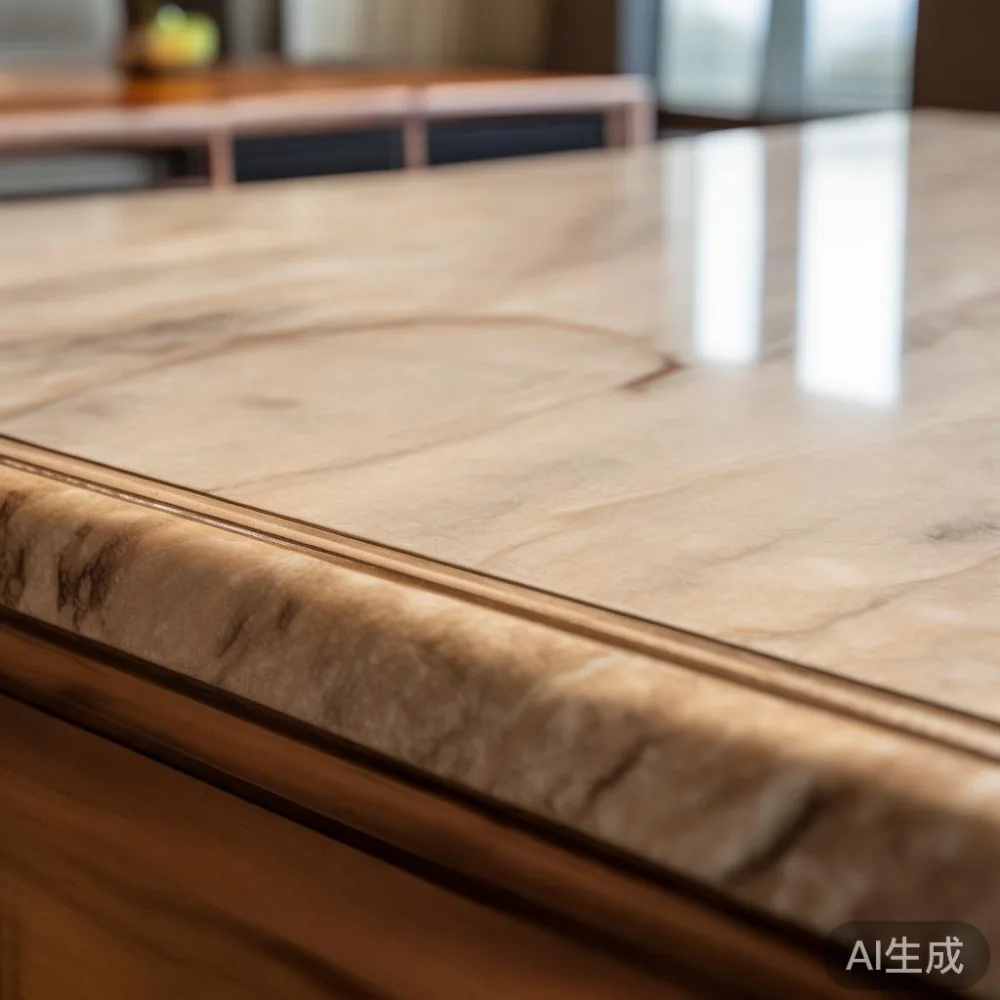
Why Singapore humidity is unusually punishing on lacquered wood and a marble top
Lacquer is not paint. It is a film built up in six to ten coats, each cured and hand-buffed, sitting roughly 0.08mm to 0.12mm above the timber. In a Tampines four-room flat with the windows shut and the air-con cycling, the timber underneath still moves. ASH (American solid hardwood, the most common substrate in a light-luxury solid wood sofa or a French light luxury dining table) expands roughly 0.2% across the grain when humidity swings from 55% to 85%. That tiny movement is enough to micro-crack a brittle lacquer if the finish is old, baked by afternoon sun, or applied too thick by the factory. A marble top magnifies the stress because natural stone does not move with the wood base; the substrate can warp and the stone can pop a hairline crack at a mitre joint within six years.
On a site visit to a 1,050 sqft condo in Punggol last month, I inspected a 2m dining table the owners had placed 30cm from a full-height window. The lacquer on the south leaf had gone matte white in patches. A humidity meter read 84% at 9am with the air-con set to 25°C. The slab underneath was solid; the finish had failed. That visual symptom — what the trade calls "blooming" — is moisture trapped between the lacquer film and the wood, and it is the single most common complaint I see in HDB flats.
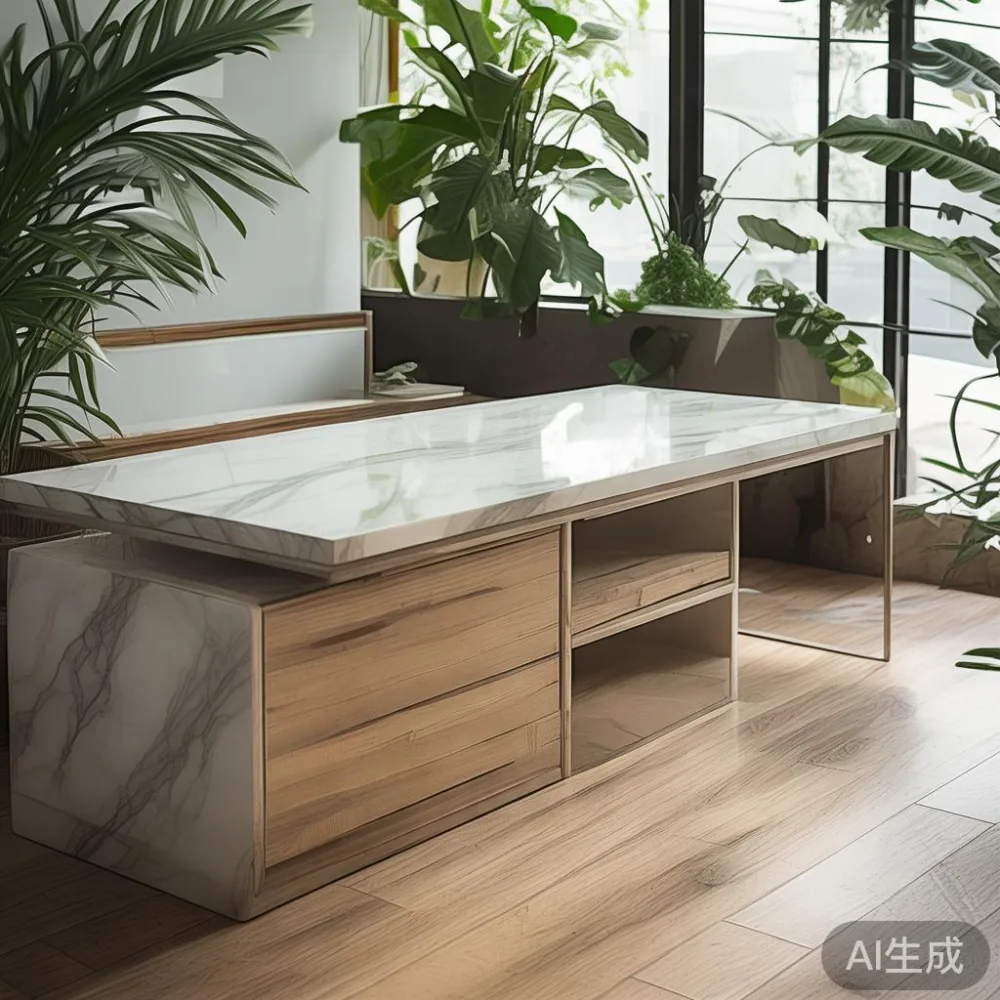
What does a daily care routine actually look like for a marble-top dining table in a HDB flat?
Wipe the lacquered wood parts with a dry microfibre cloth (around 280 GSM, not the thin supermarket cloths that leave lint) every two days. Wipe the marble top with a damp — never wet — chamois after each meal service, then buff dry within sixty seconds. Keep coasters under mugs, because a 180ml kopi O at 75°C will mark a marble surface in under forty minutes if unprotected, and will soften a lacquer edge within months. Place felt pads under every object heavier than 1.5kg, including the centrepiece, the stone fruit bowl, and the remote-control stand on the adjacent nightstand.
Aim for a steady room humidity of 50% to 60%. A small dehumidifier (a 2-litre desiccant unit costs S$129 at any Sheng Siong and runs at 23W) drops a 1,000 sqft flat from 85% to 58% in roughly four hours on a wet afternoon. It is cheaper than a single lacquer-refinishing visit, which a local workshop quoted me at S$280 to S$420 per square metre of surface. Run the dehumidifier at night if you sleep with the air-con off, because the laminate flooring you almost certainly have under the dining table releases moisture as it cools.
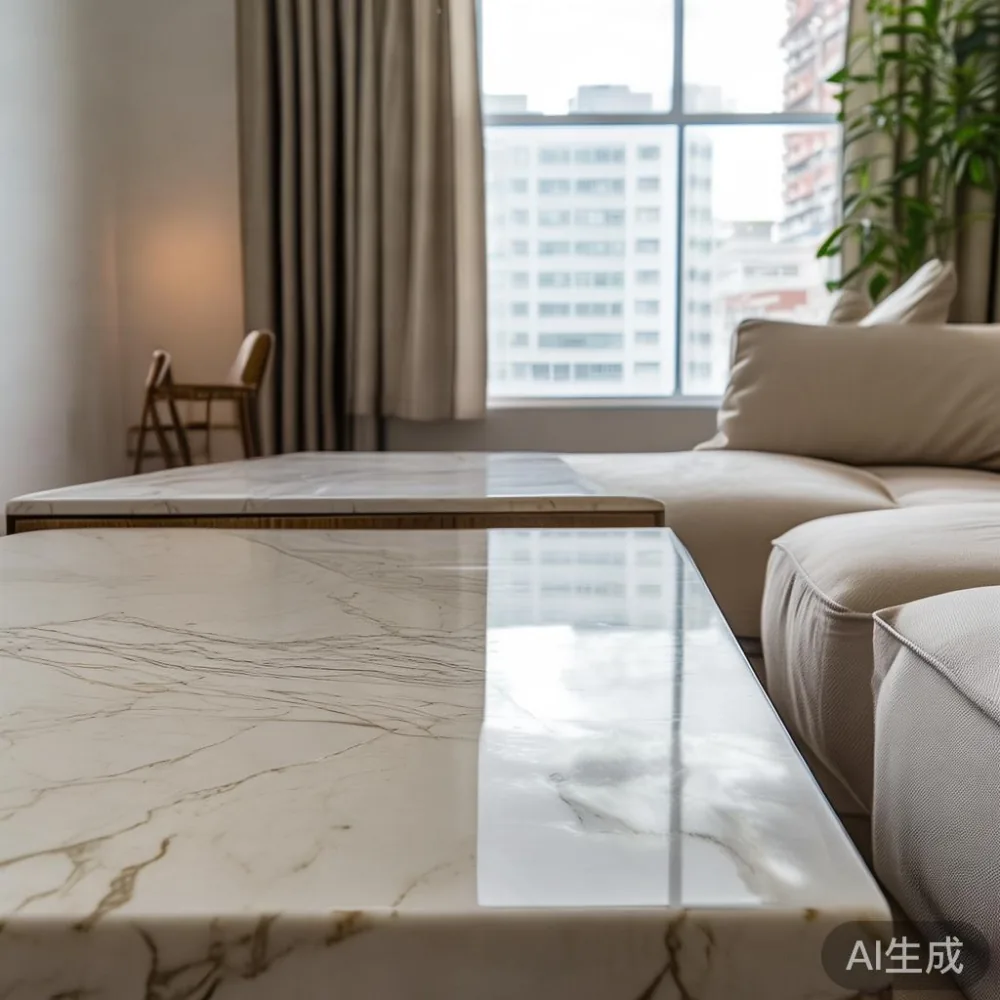
How should you handle spills, stains, and the Singapore-specific accidents of daily life?
Spill management is the highest-use skill you can build. Blot, do not wipe. Wiping a curry gravy or a sambal splash pushes pigment into the open grain at the lacquer edge. Use a clean white cotton cloth, press, lift, repeat. For oily residue (think tom yum broth, peanut oil, or the ghee from a prata parcel), a single drop of pH-neutral soap on a damp cloth lifts the film in two passes. Dry the area within thirty seconds. Avoid anything containing silicone, ammonia, or citrus solvents — they soften cured lacquer and dull the marble top in the same week.
For a stubborn ring under a flower vase, the trick is patience and a paper towel pressed against the mark for ten minutes under a flat 2kg weight. The capillary action pulls residual moisture back out of the lacquer. For a marble top that has lost its sheen from dishwasher soap splatter, a paste of baking soda and water (ratio 3:1) applied with a soft sponge and rinsed within two minutes restores the polish without damaging the sealant. None of this requires a specialist for the first ninety days.
What is the right way to move a 2-metre lacquered table through a HDB lift and corridor?
Most HDB passenger lifts measure 1.4m deep, 1.1m wide, and 2.1m high internally. A 2m dining table will not fit standing or flat-on in that box — measure first, never trust the furniture label. The standard workaround is a 28° tilt and a soft blanket wrap over the corners. MIDHILL ships its longer tables in two half-leaves for exactly this reason; the box dimensions stay under 1.7m and the assembly takes two adults about twenty minutes with the supplied hex key.
Cover the cabinet face and the marble top with moving blankets (rental in Singapore runs S$28 for a bundle of ten for two days). Strap at four points, lift with the legs — never the apron — and never drag. A lacquered dining table weighs 78kg to 110kg depending on the slab thickness (18mm versus 22mm marble). If you live on a high floor with a narrow corridor (under 1.5m wide), book the service lift through your Town Council at least three working days ahead. Expect a service-lift booking fee of S$15 to S$45. The corridor turning radius to a 1.6m bed frame is also tight; take the door off its hinges if the frame clearance is under 8cm on either side.
Will the monsoon season and the air-con cycling damage the lacquer on a bed frame or a wardrobe?
Yes, if the placement is wrong. Keep a lacquered bed frame at least 25cm from a non-insulated external wall; the temperature delta between wall and room can hit 4°C during a December northeast monsoon burst, and the timber behind the headboard will sweat at night. For a four-door wardrobe measuring 1.8m tall by 2.0m wide by 0.6m deep, leave a 3cm gap at the back for airflow; most HDB wardrobes sit flush against a wall and quietly grow a black mould line at the skirting within eighteen months. A small 12V cabinet fan (S$39) hidden in the top channel moves enough air to prevent that.
I run a TDS meter on-site when clients call me about sticky drawers. Anything above 75% RH sustained for forty-eight hours is a yellow flag. Anything above 85% is a red flag, and the lacquer will start to bloom within a season. The fix is rarely the finish — it is the room. A 2-litre dehumidifier per 400 sqft is the rule of thumb I give every client, and it has cut my refinishing referrals by half over the past five years.
Is a marble top dining table worth the extra care cost over a solid wood alternative in Singapore?
The honest answer is yes, if you commit to coasters, daily buffing, and annual sealing. A marble top brings thermal mass that hides the visual flatness of a 22mm slab and pairs naturally with the post-modern light luxury lines that dominate the European light luxury sofa and light luxury bed category. A 1.6m oval marble-top table runs S$2,400 to S$4,200 in Singapore retail; a comparable solid-wood top with no stone typically lands S$1,100 to S$1,900. The premium covers material, freight from a Foshan factory, GST at the current 9% rate, and ten years of structural warranty. The annual cost of ownership — sealant (S$22 a tin, used twice a year), coasters (S$15 a set), and one refinishing kit (S$65, used once) — totals under S$130 a year.
If your home is rented, your window orientation is full west, or you run the air-con below 22°C year-round, choose solid wood without a stone overlay. The lacquer behaves better than the marble under thermal shock, and a timber top will forgive the odd thermal mug mistake. If you own the unit and plan to stay five years or more, the marble top holds its retail value better and photographs well for any future resale listing, because Tampines and Punggol buyers specifically ask about it. In a 1,250 sqft condo where you already bought a European light luxury sofa in light luxury fabric and a matching light luxury coffee table, the marble top dining table is the natural anchor piece.
Common mistakes Singapore owners make in the first six months
I have seen each of these at least twelve times, often on the same visit. Hottest mistakes, no particular order: placing the dining table directly under a ceiling-mounted fan and letting the airflow lift the lacquer edge over time; using a vinegar solution to clean the marble top, which etches the calcium carbonate in under three passes; putting a hotpot trivet (180°C to 220°C surface) directly on lacquered wood instead of on a 6mm cork mat; sun-curing a spill onto the lacquer with a hair dryer; and stacking the dining chairs on the table during a spring clean, which concentrates 24kg of force through four small steel tips onto the lacquered apron. Each of those is a five-minute fix once you know the rule; each one costs around S$380 to S$600 to put right after the fact.
The most expensive mistake is treating the lacquered surface as a kitchen counter. It is not. It is a decorative, dining-grade surface with a 10-year structural warranty on the timber and the joint, but the finish itself is rated for normal household contact. If you want a dedicated baking station or a craft-table surface, buy a separate piece and protect the dining table like the investment it already is.
Buying checklist: questions to ask before you spend S$2,400 on a marble-top table
Before you wire the deposit, confirm five things in writing. One: the substrate is solid ASH, rubberwood, or white oak, with a kiln-dried moisture reading between 8% and 12% (request the factory QC sheet). Two: the lacquer is a multi-coat conversion finish, not a single-coat NC spray — your refinisher will thank you. Three: the marble top is sealed on all six sides with a penetrating sealer, not just the visible top. Four: the structural warranty covers ten years on joints and frames, and at least five years on the lacquer and stone adhesion. Five: shipping to your HDB block in Tampines is included above a stated order value, and the courier has a track record with marble-top crates under 110kg.
If you are weighing where to buy coffee table from MIDHILL against a local Tampines showroom, the math on a S$1,650 light luxury coffee table with a 12mm marble top works out cheaper delivered to your door than the same spec retailed across the Causeway once you add delivery, GST, and a 7% service charge on the showroom dollar. Foshan shipping to Tuas typically clears in fourteen working days for a flat S$95 freight, and free shipping kicks in above US$350 (about S$470) on most pieces, including a 1.5m bed frame or a 1.2m solid wood dining table. You can browse the live catalogue and live stock counts at api.midhill.co before confirming availability with the showroom team.
The light-luxury conversation: European, American, Italian, and Japanese style differences
Design language has converged in light luxury, but the silhouettes still differ enough to feel distinct in a small HDB living room. A European light luxury sofa typically runs 2.2m to 2.6m wide with deeper 1.05m seats, removable back bolsters, and a channel-quilted bench seat in technical velvet or full-aniline leather. An American light luxury sofa runs shorter (1.95m to 2.2m), softer, and deeper still — the classic 1.15m recline-friendly seat with a 90cm arm. An Italian light luxury sofa keeps the silhouette tighter (the 2m profile), uses full-aniline leather, and skips the recliner hardware. A Japanese sofa typically runs a low 78cm back, a 45cm seat height, and a flat oak frame that suits a Punggol minimalist flat beautifully but feels clinical next to a marble-top dining table.
For a bed, the comparison is louder. The American bed leans into the tall (1.55m) channel-tufted headboard with a 1.65m footprint. The Italian light luxury bed keeps the headboard at 1.15m, the platform at 35cm off the floor, and the lines almost architectural. The European light luxury bed vs Mid-century modern bed debate comes down to material: light luxury sticks to lacquered ASH and brushed brass; mid-century stays in raw walnut with tapered legs. The European silhouette photographs cleaner against a marble-top nightstand and a lacquered wardrobe, and that is why most light-luxury brand showrooms in Foshan ship the European shape to Singapore now. If you want the 2026 European light luxury furniture direction, look for 22mm rounded edges, 6mm shadow gaps, and brushed bronze pulls — the trend brief reads that way across the latest four showrooms I toured in August.
For the dining table, light luxury shares more ground: 1.6m to 1.8m oval marble-top profiles with a 6mm chamfer, a swan-neck table-edge profile, and either a sand-blasted glass-ceramic overlay or a solid 18mm Carrara marble top. The chair profile still varies by region — think barrel-back velvet dining chairs for the European line, slim leather sling chairs for the Italian line, and exposed-frame chairs for the American line — and the choice matters when lift clearances hover around 1.4m deep.
Long-term ownership: when to call a refinisher, and what a fair price looks like in Singapore
A well-cared-for lacquered dining table in Singapore should not need a full refinish until year eight to ten. A spot refinish on a 30cm diameter area runs S$180 to S$260 at most local workshops. A full-table strip, sand, seal, and seven-coat lacquer refinish runs S$720 to S$1,140, and the workshop will collect from your block for free above S$800. The marble top can be polished on-site for S$140 to S$220 if it has lost its shine, and the sealer reapplied for S$85. A wardrobe refinish is the most expensive, because of the panel count — expect S$1,400 to S$2,100 for a four-door unit. Bed frames are the cheapest at S$420 to S$650 because most wear is on the headboard face, which is one panel.
The signal that a piece has reached end-of-life is structural, not cosmetic. Check the corner brackets under the dining table annually with a torch and a 5mm hex key. Loose brackets mean the timber has swollen past the factory joinery tolerance and the piece needs a workshop visit, not a home repair. Check the drawer runners on the wardrobe and the nightstand twice a year; a runner that no longer closes under 6N of force has aged out and a replacement runner costs S$28 per pair. With those two checks on the calendar, a MIDHILL lacquered set in a Tampines HDB should give fifteen to twenty years of daily service before anything dramatic happens.
Take care of the lacquer, take care of the marble top, and the rest is honestly just coasters and a thirty-second daily wipe. Singapore humidity is not the enemy; it is just a constant, predictable stressor, and a predictable stressor responds to a predictable routine.