Caring for a Lacquered Marble-Top Surface in Singapore's Tropical Climate
I still remember the afternoon my colleague Priya unpacked a new dining table at her Tampines HDB flat. She had ordered a six-seater solid wood dining table with a marble top from a Foshan workshop, and within three weeks the lacquered edges began to cloud over. The cause was not the brand — it was the 32°C afternoon heat pouring through her west-facing window while her air-con cycled off during a weekly ECO mode. That was the day I started paying real attention to how lacquer, marble, and Singapore weather actually get along.
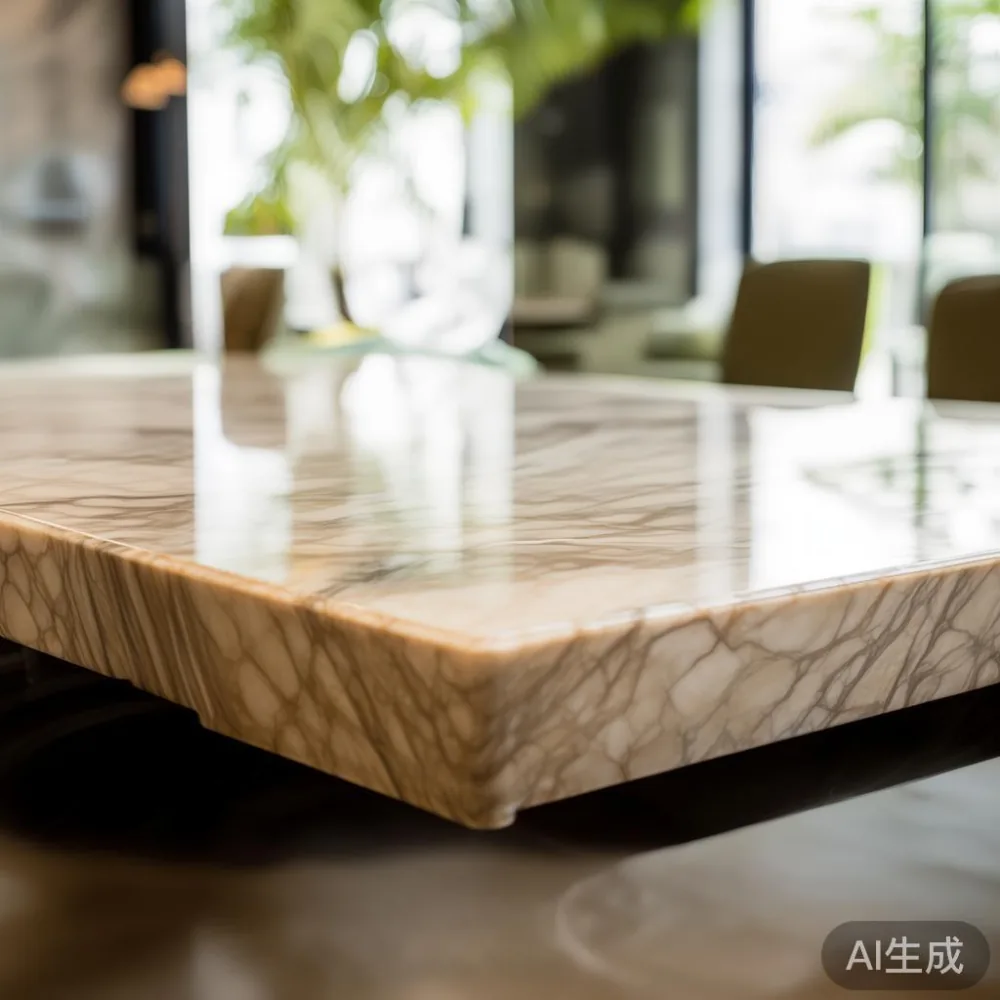
Why a Tropical Climate Is Hard on Lacquered Marble-Top Furniture
Singapore sits about 137 km north of the equator. Annual relative humidity averages 78–82%, with afternoon peaks above 85% between April and October. UV index regularly hits 9–11 from noon to 3 pm. Both numbers matter more than people think. Lacquer — whether a high-gloss piano finish, a satin conversion varnish, or a hand-rubbed shellac — is a cured polymer film bonded to wood. Marble is a calcium-carbonate stone. Humidity attacks the wood under the lacquer; UV and heat attack the polymer itself.
On a marble top dining table measuring 180 cm by 90 cm, the stone can absorb roughly 0.3–0.5% of its weight in moisture over a humid week. The lacquer on the apron below it expands at a different rate than the rubberwood substrate, and that mismatch is what produces the dull haze Priya saw. I have watched the same thing happen on a walnut bed frame in a Punggol condo: the headboard finish looked chalky within eight months because the bedroom sat at 81% RH with the balcony door open every evening.
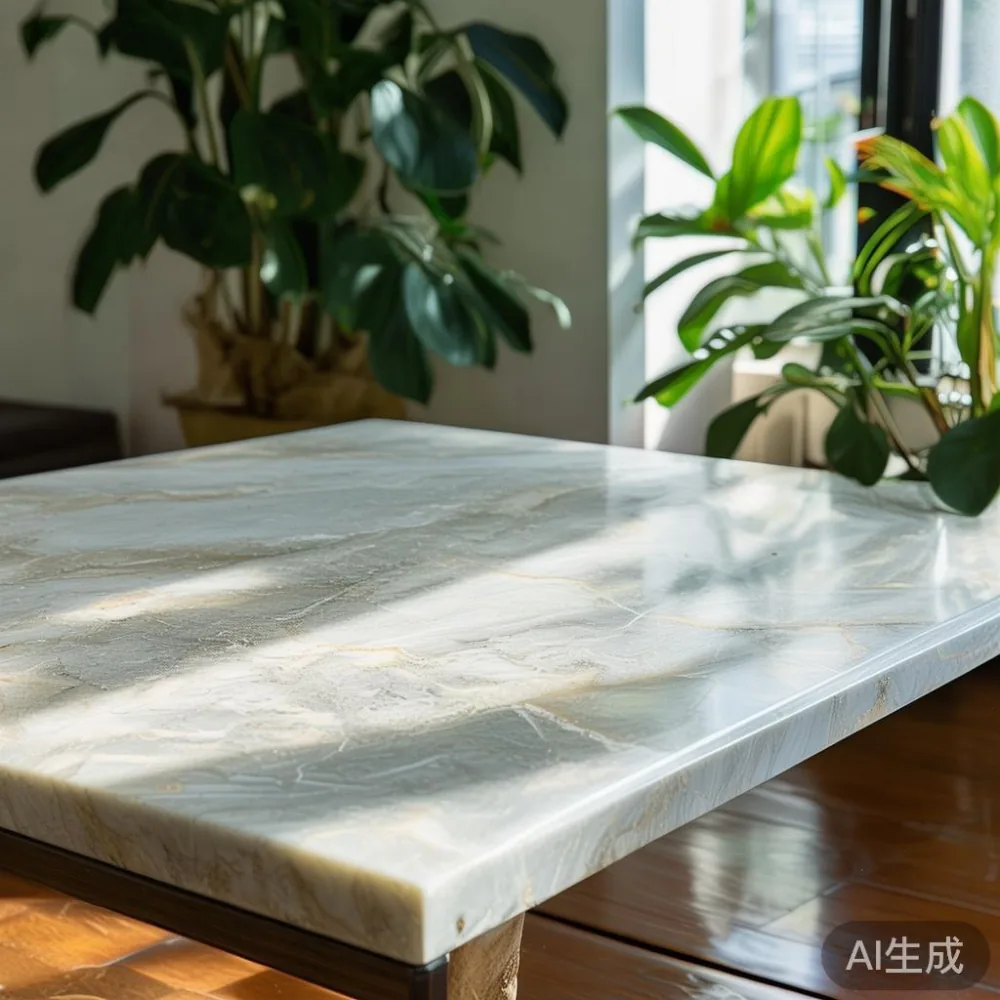
If you are weighing the question is European light luxury bed worth it for a Singapore bedroom, the answer depends less on the label and more on the lacquer system and the inside humidity you can hold. The light-luxury tier — French light luxury curves, American light luxury shaker lines, post-modern light luxury brass-tipped legs — tends to use a multi-coat catalyzed finish that handles tropical humidity far better than the single-layer nitrocellulose sprayed on cheaper frames.
What "Lacquered" Actually Means on a Marble-Top Piece
Customers often assume lacquer is lacquer. In practice, the factories around Foshan working with export-grade timber use four common systems:
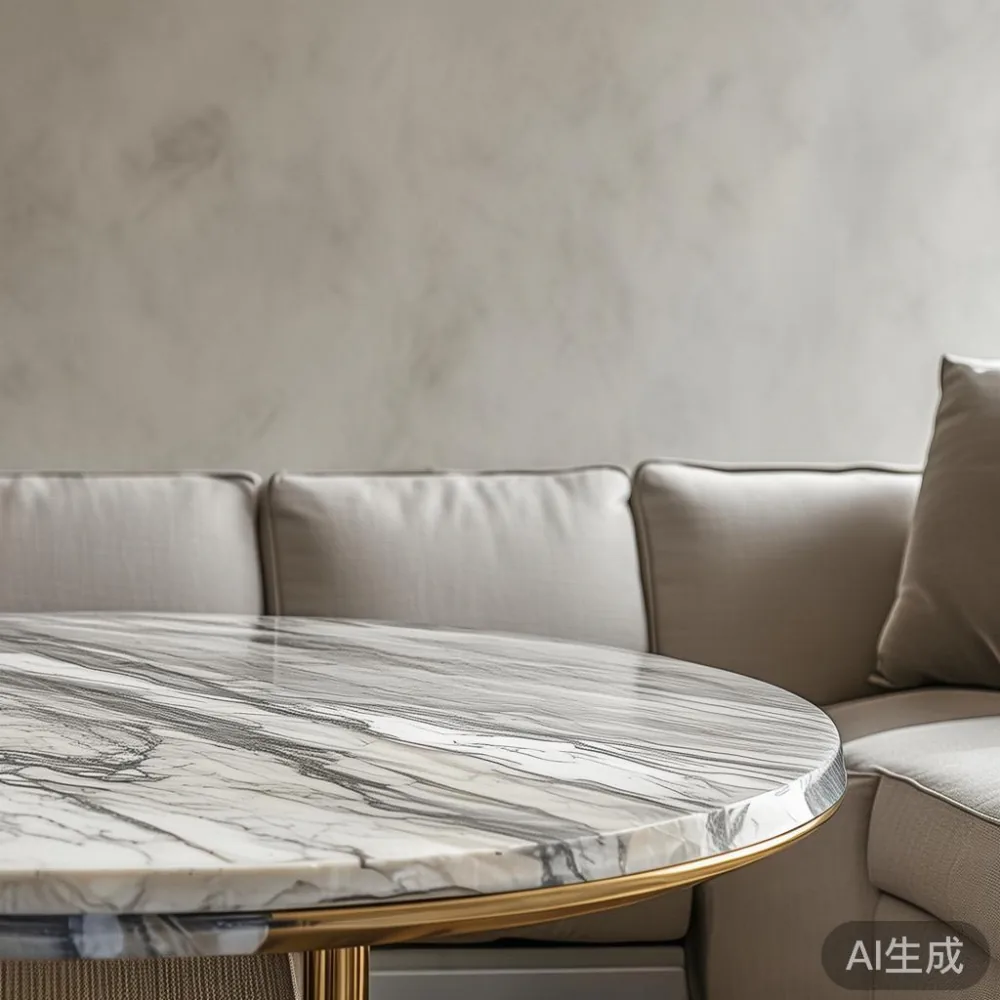
- Nitrocellulose (NC) lacquer: 8–12 coats, hand-sanded between passes. Soft under fingernails, easy to repair, weakest against moisture.
- Acid-catalyzed (AC) lacquer: 6–8 coats. Harder, more chemical-resistant, used on most mid-range solid wood bed frames and nightstands.
- Conversion varnish (CV): 4–6 coats. The standard on French light luxury dining tables and sideboards.
- UV-cured polyurethane: 3–5 coats cured under mercury lamps. Very hard, very glossy, factory-set so humidity damage during transit is the main risk.
Marble tops are sealed separately — typically with a penetrating stone sealer plus a top coat of beeswax or a polymer wax. The stone is not lacquered; it is waxed. Conflating the two is the single most common mistake I see in customer care videos.
On a typical MIDHILL marble top dining table, the apron and legs carry the AC lacquer while the 1.8 cm Calacatta-style marble top carries a stone sealer. The two surfaces want different cleaning cloths, different cleaners, and different response times to spills.
How Does Singapore's Lift and Corridor Geometry Change Delivery and Care?
Singapore HDB corridors are 1.2 m to 1.5 m wide, with lift doors at roughly 0.9 m on older blocks and 1.0–1.1 m on newer ones in Punggol and Sengkang. A 200 cm long marble top dining table will not fit through either standing on end. It has to come in flat, rotated, and protected at both ends. I watched a Bedok crew spend 40 minutes getting a 1.8 m solid wood dining table around a 1.2 m corner last month, and the only reason the lacquer survived was that the legs were unbolted for transit.
That same geometry matters at home. The piece you measure for a Tampines 4-room flat is not the piece you measure for a Punggol executive condo. Before any care routine, confirm three numbers: lift door width, corridor turn radius, and the height clearance under your air-con bulkhead (usually 2.4 m). MIDHILL ships knocked-down for many SKUs in their marble top collection, including the sideboard and the 6-seater dining table, so the carton you carry upstairs is closer to 35 kg than the fully assembled 95 kg.
Delivery in Singapore from a Foshan-backed warehouse typically runs 14–21 working days for stocked items, 35–45 days for made-to-order. Sea freight arrives at PSA Terminal, is trucked to a Jurong East or Tampines staging hub, and is then booked into a 2-hour delivery slot with SMS notice. Lift access surcharges apply for walk-ups above the 4th floor without a service lift — S$45 per level for most movers on the island.
The 7-Step Care Routine That Actually Works in HDB Conditions
I keep a laminated A5 card on my own console table, and I have rewritten it twice after watching what fails. The current version, refined after a Bedok customer visit and a Punggol condo walkthrough, looks like this.
1. Hold indoor RH between 45% and 60%. A S$39 Xiaomi or S$69 SwitchBot dehumidifier set to 55% is the single most useful purchase. Above 65%, lacquer and marble both start to react. Below 40%, solid wood joints shrink and the lacquer can hairline-crack at corners.
2. Diffuse the afternoon sun. UV-rated film on west-facing windows (3M NV35, around S$18 per square foot installed) drops UV transmission from roughly 80% to under 5%. A S$45 linen sheer from Taobao further cuts heat gain by 2–3°C near the piece.
3. Use two cloths, two cleaners. For the marble top: a 30 cm by 30 cm microfiber cloth and a pH-neutral stone cleaner (Faber Neutral Cleaner Concentrate, 250 ml for S$22). For the lacquered apron: a separate dry microfiber and a damp — never wet — wipe with plain water. Never let the same cloth touch both.
4. Blot, do not wipe, spills. Coffee, soy sauce, and sambal will etch marble in under 15 minutes and stain nitro lacquer in under 5. Keep a 30 cm by 30 cm stack of unbleached cloths next to the dining table, not under it.
5. Coasters and felt pads, but the right kind. Cork coasters of 9–10 cm diameter, four per dining chair. S$28 for a set of six. Felt pads of 1.5 cm diameter on every wardrobe and nightstand leg. Replace every 9 months.
6. Wax the marble top twice a year. A 200 ml tin of StoneTech Polish Protector (S$34) covers a 1.8 m table twice. Apply with a 15 cm lambswool pad, wait 8 minutes, buff off. Schedule it for the week after Chinese New Year and after National Day weekend — easy to remember.
7. Refresh the lacquer only when needed. A light scuff on an AC lacquer is fixable with a 1500-grit wet sand, then a single pass of spray can lacquer (S$18 Rust-Oleum at HomeFix). A deep gouge needs a pro, and Foshan workshops shipping to Singapore — including MIDHILL — typically offer lifetime refinishing on structural wood parts for the cost of shipping only.
Where Light-Luxury Styling Crosses Into Care Decisions
French light luxury styling favors curved cabriole legs on sofas and sideboards, brass-tipped feet on nightstands, and pale travertine or marble tops with a soft honed finish. The honed finish hides micro-scratches but holds oils, so it needs the wax routine above more than a polished marble does. American light luxury tends toward square shoulders, shaker-style paneling on a wardrobe, and a satin — not gloss — lacquer that forgives more and shines less. Post-modern light luxury plays with mixed metals and high-gloss piano lacquer on dining table aprons; that is the surface most damaged by Singapore humidity if the dehumidifier is skipped.
Across these styles, the marble top itself is usually the same 1.5–1.8 cm Calacatta, Carrara, or Crema Marfil stock, sealed identically. So when a customer asks me to compare a Coastal for dining room look (white-washed oak base, soft grey-vein marble, brushed brass) against a Nordic for dining room look (paler ash, cooler marble, matte black legs), the care steps are nearly identical — only the wax frequency shifts because honed finishes show water spots where polished finishes do not. A Japanese for dining room reading — pale hinoki tones, restrained joinery, an almost flat-sheen lacquer — is the easiest to maintain in a HDB flat, but it shows dust within an hour of air-con cycling on.
What Should You Avoid Placing Directly on the Marble Top?
Three categories fail fast in Singapore: citrus, heat, and rubber. Cut lemon halves left on an unsealed edge will etch a ring in under 8 minutes. A 70°C pot straight from the induction hob will leave a thermal shock mark on marble and a white heat bloom on lacquer. Rubber-backed mats trap moisture against the sealer and yellow within a month. Use cork, felt, or linen — never rubber, never plastic, never bare ceramics straight from a 60°C dishwasher.
For a 240 cm by 100 cm marble top dining table seating eight, budget roughly S$90–S$140 a year on consumables: two tins of wax, four bottles of stone cleaner, replacement coasters every 18 months, and two replacement microfiber cloths per quarter. Against a piece that costs S$2,400–S$4,200 new, that is a 3% annual upkeep figure — close to what the MIDHILL 10-year structural warranty absorbs if anything underneath fails.
When Professional Refinishing Makes Sense (and When It Does Not)
A haze that does not lift after a clean microfiber and stone-safe polish is usually lacquer failure, not marble failure. If the marble top looks fine but the apron looks dull, the lacquer needs to be abraded and recoated — a 90-minute job for a mobile refinisher at S$220–S$320 for a dining table. If the marble top itself has etched, polishing it out takes a 1500-grit diamond pad and a slow hand; expect S$180–S$280 for a single dining tabletop. Both are worth it on a piece that originally retailed above S$3,000.
What does not make sense: resurfacing a nitrocellulose-lacquered piece more than twice. The lacquer is too thin. After the second respray, the edges show through. At that point, ask the factory whether a full re-shell is available. Foshan workshops running the light-luxury tier — the same tier that supplies wholesale European light luxury furniture to galleries in Tokyo, Sydney, and Dubai — usually price a full re-shell between S$650 and S$1,200 with shipping. You can write to midhillco@gmail.com to confirm current turnaround, which sat at roughly 60 working days for a re-shell as of the last quarterly update.
Frequently Asked Questions From Singapore Customers
Does the GST (now 9%) apply to imported marble-top dining tables? Yes. For CIF + duty values above S$400, the 9% GST is charged on the duty-inclusive value at customs. Most Foshan exporters prepay on the buyer's behalf and add it to the landed invoice.
How long will an AC-lacquered dining table last in a non-air-conditioned balcony? I would not place one there. Open balconies in Punggol and Tampines hit 90–95% RH at night. Use galvanised steel or solid teak on the balcony instead and keep the marble top piece indoors.
Can I use Pledge or similar spray polishes? Pledge leaves a silicone film that traps moisture against the lacquer and yellows within 12 months. Avoid it on both marble and wood. Use only stone-specific polish on the marble top and a dry microfiber on the lacquered apron.
Is a matte or gloss lacquer easier to maintain in HDB flats? Matte hides dust and micro-fingerprints. Gloss looks stunning under a 4000K downlight and shows every print within an hour. For a family with two children under 10 in a 4-room flat, choose matte on a bed frame, satin on a wardrobe, and reserve gloss for a small nightstand or a wall-mounted cabinet.
Do I really need a dehumidifier if I run air-con 18 hours a day? Air-con holds RH around 55–60% while running, but cycles off for 6–8 hours overnight in ECO mode. RH climbs back to 75% during that window. A dehumidifier set to 55% covers the gap. Without it, the marble top will feel tacky in the morning and the lacquer will slowly lose its gloss over 18–24 months.
A Two-Year Care Budget for a Light-Luxury Marble-Top Set
If you are furnishing a 4-room HDB with a solid wood bed frame, a six-seater solid wood dining table with marble top, a three-door wardrobe, two nightstands, and a marble-top coffee table, the realistic two-year running cost in Singapore dollars looks like this:
- Dehumidifier (purchase): S$69 once
- Stone cleaner (1 L, two bottles): S$44
- Stone wax (400 ml, four tins): S$136
- Microfiber cloths (12): S$24
- Cork coasters (12): S$48
- Felt pads (40, replaced twice): S$18
- UV window film (12 sqft): S$216
- One mobile lacquer touch-up: S$280
- Total over 24 months: S$835
On a combined set landed at roughly S$9,400 with GST, that is 8.9% across two years — comparable to what a European buyer spends on the same tier. If you are sourcing through wholesale European light luxury furniture channels or ordering direct, the care line items do not change, only the unit price does.
For shoppers tracking the best French provincial sofa for 2026 or weighing a Nordic or Coastal dining table against a Japanese reading, the deciding factor in a Singapore context is rarely the silhouette. It is whether the lacquer system will survive your corridor humidity and whether your marble top will outlast your tenancy. Hold RH at 55%, wax twice a year, blot spills within five minutes, and the pieces will hold their gloss well past the 10-year structural mark — and look worth photographing long after that.