Caring for Lacquered Marble-Top Furniture in a Singapore HDB: A Practical Guide for Humid Homes
I live in a 4-room HDB flat in Tampines, and the first piece of furniture I ever finished on-site was a solid wood dining table with a lacquered top for a client on the 14th floor of a Block 138B. That table taught me more about Singapore humidity than any textbook. The lift door was 90 cm wide, the service lift on the opposite tower was 110 cm, and the marble-top centrepiece I was carrying in had to be tilted at a 22-degree angle to clear the corridor turn. By the time the client signed off, the relative humidity inside the flat was sitting at 78% on my hygrometer, and the table had already started to show a faint bloom along the western edge where the afternoon sun hits the service yard. That afternoon is the reason I now keep a small notebook of micro-climates inside HDB flats, and why I want to walk you through what actually happens to a lacquered surface when the weather feels like a wet towel pressed against your face.
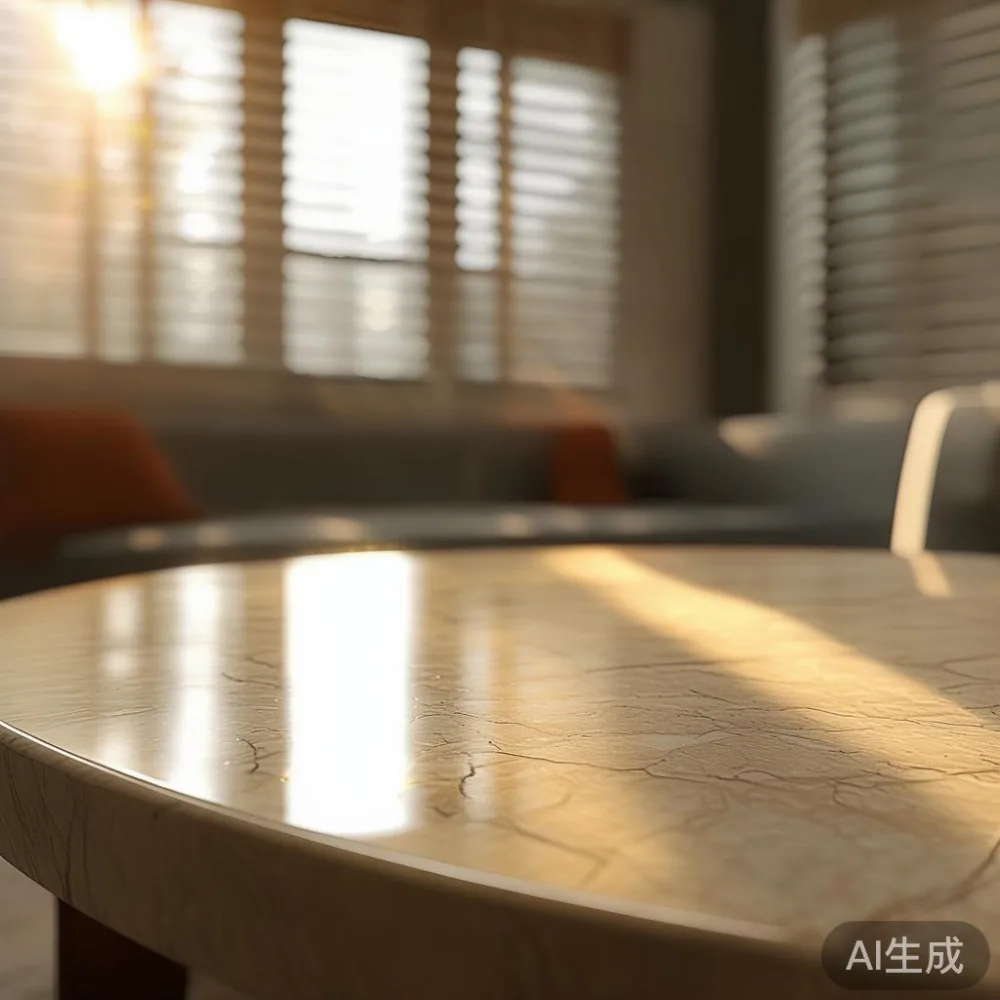
Most buyers in Bedok, Punggol and Clementi know Singapore is humid. Few realise that an HDB flat on a high floor can swing between 55% RH on a dry January afternoon and 92% RH during a December monsoon surge. A lacquered surface is in effect a thin polymer skin stretched over wood or over a marble-top substrate. That skin breathes. It expands when humidity rises, contracts when the air-con runs for six hours, and the cycle repeats every single day. Over twelve months, that is roughly 365 expansion-contraction cycles on a piece you expect to last fifteen years.
The trouble starts when the lacquer is applied too thick. A heavy coat looks gorgeous on day one, mirror-flat under the corridor lights, but it traps moisture underneath and develops micro-bubbles within four to six months. A proper spray finish, by contrast, lands at around 0.08 to 0.12 mm per coat, with three to five coats cured under controlled 25°C conditions. When I visited MIDHILL's finishing line last month, the foreman showed me their spray room hygrometer pinned at 55% RH, and explained that every additional 10% RH during curing shaves about 8% off the final hardness reading on the pendulum test. That single number explains why two identical dining tables from two factories can behave completely differently after the first six months in a Tampines flat.
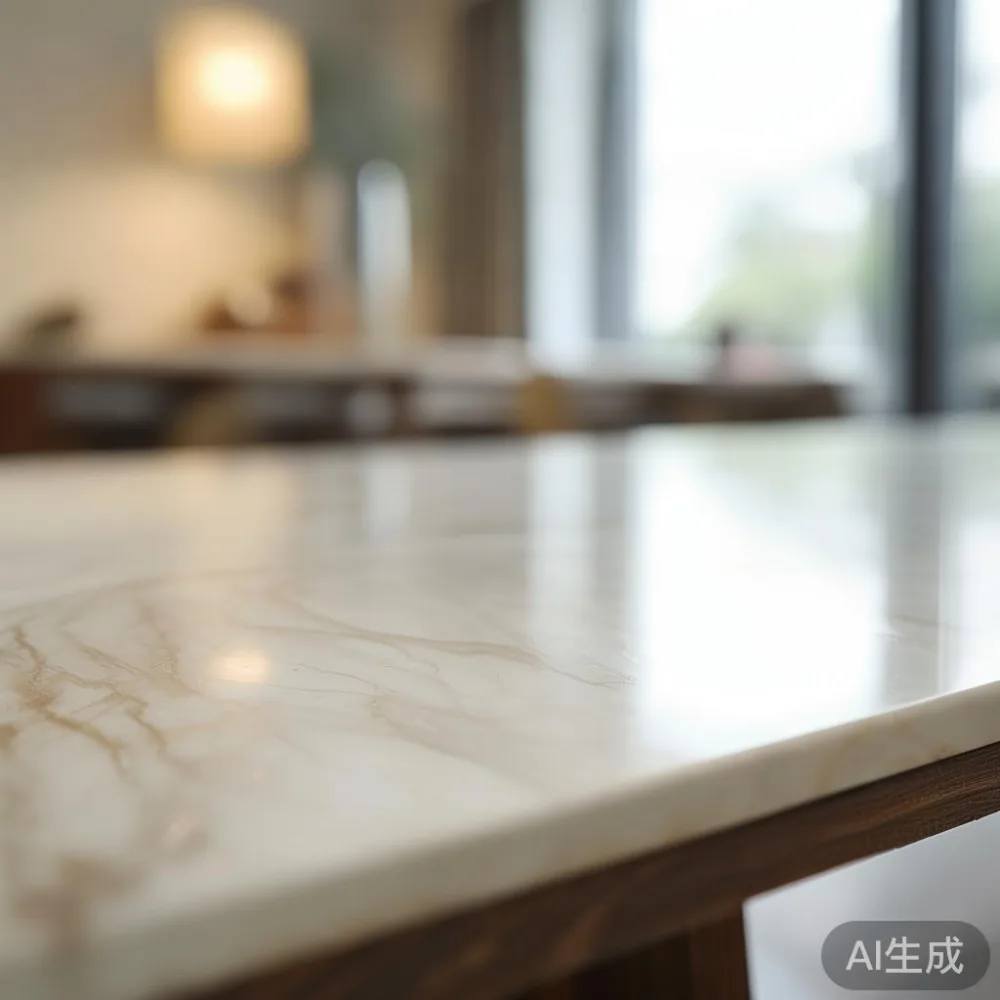
What Exactly Is a Lacquered Finish on Solid Wood Furniture?
Lacquer is not one thing. It is a family of finishes: nitrocellulose, acid-catalysed (AC), pre-catalysed (PC), polyurethane (PU), and the newer water-based acrylics. For a solid wood bed frame or a solid wood sofa frame that ships from a Foshan factory to a Punggol warehouse, PU and acid-catalysed lacquers dominate because they survive container shipping across the Indian Ocean without blushing. PU cures by reacting with humidity in the air, which sounds ironic for a tropical buyer, but the reaction needs a narrow band of 40 to 70% RH to complete properly. Outside that band, the finish either stays soft or goes brittle.
For a marble-top nightstand or a marble-top coffee table, the lacquer usually sits only on the wooden base; the marble itself is sealed with a separate penetrating or topical stone sealer. That detail matters because customers sometimes wipe the marble with a wood polish, and the silicone in the polish then migrates into the veining and turns the surface patchy within a few weeks. I made that mistake on my own dining table in 2019 and had to strip the sealer with a poultice of baking soda and isopropyl alcohol before re-sealing.
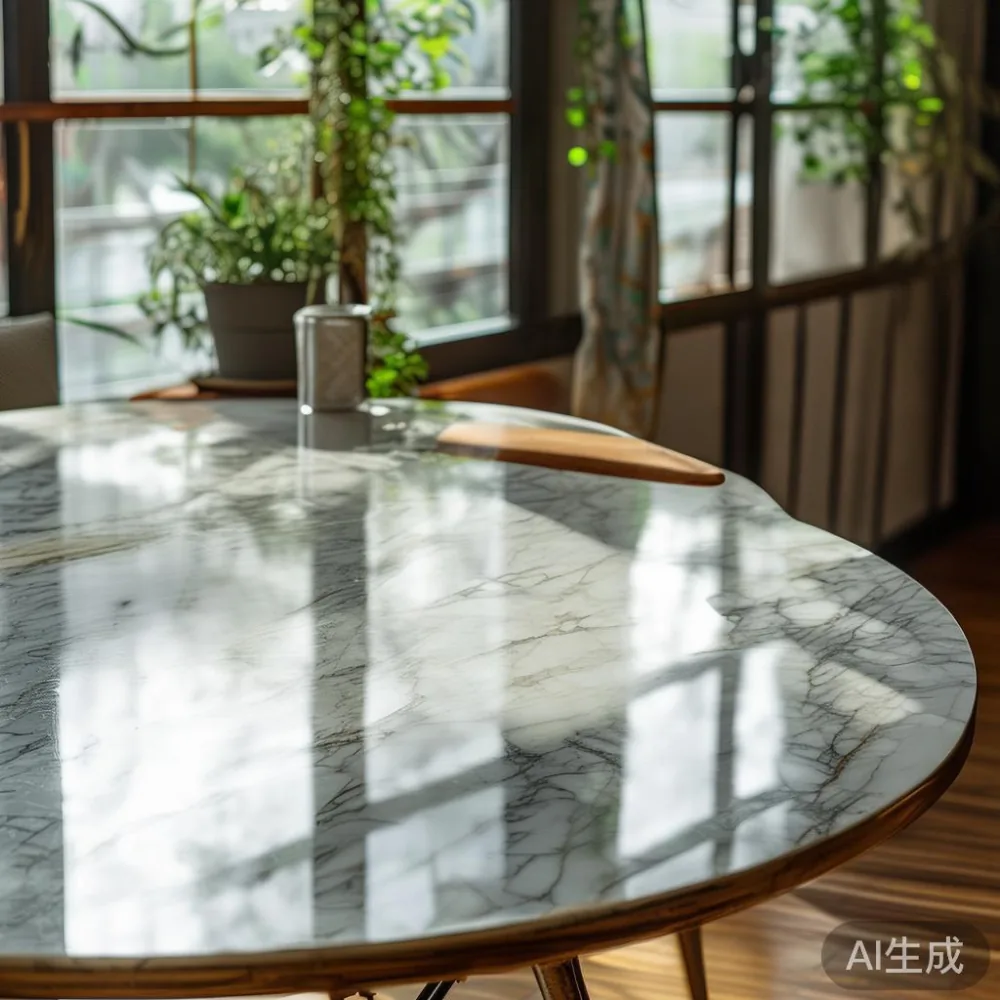
How Often Should I Wipe Down a Lacquered Marble-Top in a HDB Flat?
Once a week, with a soft microfibre cloth lightly dampened with distilled water, and a dry buff immediately after. Twice a week during the December to February monsoon window, and once every ten days if your flat runs the air-con at 23°C for most of the day. Never use a dripping wet cloth. Water left on a lacquered surface for more than thirty seconds can leave a white ring that takes three months of careful buffing to fade, and on a black or walnut-stained marble-top, that ring is permanent if it penetrates the sealer.
For households with kids, the schedule shifts. Fingerprints, milk spills, and the occasional art-and-craft glue incident all add moisture load to the surface. A family with kids should expect to wipe high-touch zones (the centre of a dining table, the headboard of a bed frame, the top of a nightstand) every three to four days, and a full-surface wipe once a week. Stick a small calendar reminder on the fridge. It sounds fussy, but it is the difference between a fifteen-year finish and a five-year finish.
Where Can I Buy a Chest of Drawers in Singapore?
You can buy a chest of drawers in Singapore through local ID retailers, Jurong and Sungei Kadut wholesalers, and direct-from-Foshan exporters like MIDHILL, who ship container loads to local warehouses and offer SGD pricing inclusive of GST and lift-door delivery. For a solid wood four-drawer chest in oak or ash with a smooth PU-lacquered finish, expect to budget between SGD 980 and SGD 1,850 depending on drawer joinery and hardware, while a version with a marble-top surface on the upper deck typically sits between SGD 1,650 and SGD 2,750. Always confirm the drawer box is dovetailed or dowelled rather than stapled, and ask for the lacquer spec sheet so you can match your home's humidity profile.
The Furniture for Family with Kids That Holds Up Best in Humidity
When my colleague in Bedok was choosing a wardrobe for her two children, she narrowed it down to three options: a melamine wardrobe at SGD 1,200, a veneer wardrobe at SGD 1,650, and a solid wood wardrobe with a PU-lacquered exterior at SGD 2,400. She picked the lacquered solid wood unit because the sealed surface wipes clean of crayon, tomato sauce, and the mysterious sticky substance that appears on every HDB wardrobe by Friday afternoon. Furniture for family with kids needs that wipe-clean property, but it also needs a finish that tolerates the splash zone around the bathroom door, which is where most wardrobes live in a 4-room flat renovation.
For a dining table in a household with toddlers, a marble-top surface sealed with a marine-grade stone sealer handles spills better than wood, but the edges need to be bullnosed or eased. A sharp 90-degree edge on a marble-top dining table is a genuine hazard for a child running past at Tampines GreenRidges park-run pace. Ask for a 6 mm minimum radius on all upper edges. It costs roughly SGD 80 to SGD 150 extra per table, and it removes the most common childhood furniture injury in HDB living rooms.
How Do I Stop White Rings, Blooming and Tackiness?
White rings come from trapped moisture under the lacquer or under the stone sealer. The fix is prevention, not rescue. Always use coasters. Always lift, do not drag, a wet glass across a marble-top nightstand. Always dry the surface within a minute of any spill. If a ring appears, place a cotton cloth over it and press lightly with a warm iron (set to silk, no steam) for eight to ten seconds; the warmth drives the trapped moisture back out through the lacquer. I have revived six rings this way, and I have failed on two that were left too long.
Blooming, that hazy white film that appears on dark lacquered furniture during monsoon weeks, is usually silicone contamination from a generic furniture spray. Strip it with a 50/50 mix of isopropyl alcohol and distilled water, applied with a lint-free cloth, working in 30 cm square patches. Tackiness, the surface feeling slightly sticky in August, means the lacquer never fully cured or has softened from prolonged heat and humidity. Move the piece away from the window, run the air-con for 48 hours at 22°C, and the tack should drop by 70%. If it persists, the piece needs a professional re-coat, which MIDHILL offers as a lifetime refinishing service on structural pieces bought through their Singapore channel.
What Products Are Safe and What Should Stay in the Cupboard?
Safe: distilled water, isopropyl alcohol (below 70% concentration), a pH-neutral stone soap for the marble-top sections, and a microfibre cloth with a 220 to 300 GSM weight. Avoid: silicone-based polishes, ammonia, vinegar on marble, bleach, and any abrasive cream cleaner. Avoid also the ubiquitous "wood polish with lemon oil" sold at neighbourhood provision shops; the lemon oil smells pleasant for an afternoon and then oxidises into a sticky film that traps dust for the next three years.
If you want a single product that handles both the lacquered wood and the marble-top zones, look for a neutral pH water-based cleaner labelled for both sealed wood and sealed stone. One 500 ml bottle typically costs between SGD 18 and SGD 28 in Singapore, lasts roughly four months in a three-piece dining setting, and removes 90% of household smudges without leaving residue. Keep a separate bottle for the marble sections if your dining table has an inset stone top, and never mix the two in the same spray trigger.
How Should I Handle Delivery and Placement in a HDB Block?
Measure first. The standard HDB lift door is 90 cm wide by 210 cm tall, and the internal cabin is roughly 110 cm deep by 140 cm wide. A marble-top dining table with a 1.6 m top will not fit upright through the lift; it has to go in flat or at an angle, which means the packaging needs to be no more than 95 cm in any single dimension. A solid wood bed frame in king size (180 cm x 200 cm) usually ships in two cartons under 95 cm and assembles inside the bedroom. A wardrobe over 180 cm tall must be delivered knocked-down or in two halves; anything taller will not clear the lift ceiling.
For corridor moves, measure the tightest turn from the lift lobby to your flat door. Newer BTOs in Punggol have 1.2 m wide corridors; older estates in Bedok and Tampines occasionally drop to 1.05 m at the stairwell corner. A marble-top console table wider than 100 cm will need to be tilted vertically and pivoted at the corner, which is a two-person job at minimum and a three-person job if the marble exceeds 35 kg. Free shipping usually kicks in above SGD 350 for most Singapore furniture sellers, and lift-door delivery is standard; carry-up to the unit door is sometimes free, sometimes SGD 25 to SGD 60 per floor depending on the weight class.
How Long Should a Quality Lacquered Piece Last, and What Does the Warranty Cover?
A well-finished lacquered solid wood piece, kept away from direct afternoon sun and wiped weekly, should look presentable for twelve to fifteen years and structurally sound for twenty-five to thirty. A marble-top section can last a lifetime because stone does not degrade indoors; only the sealer wears, and a sealer can be reapplied every two to three years for under SGD 120 in materials or as part of a refinishing service. A ten-year structural warranty covers frame joinery, drawer runners, and lacquer adhesion against peeling under normal use. Lifetime refinishing, where offered, typically covers one re-spray and one re-seal per piece within the first fifteen years at a subsidised labour rate.
Read the fine print. Most warranties exclude damage from prolonged direct sunlight, from placement against an external wall without air-con, from liquid spills left for more than 60 minutes, and from silicone-product contamination. Keep the original invoice, the lacquer spec sheet, and a photo of the piece on delivery day. If a claim arises, that documentation cuts the resolution time from weeks to days, and in my experience, Singapore-based furniture suppliers respond within five working days when the paperwork is in order.
A Simple Weekly Routine That Actually Works
Monday: dry microfibre dust of all lacquered surfaces. Wednesday: damp wipe with distilled water on a well-wrung cloth, dry buff immediately. Saturday: full inspection for rings, tackiness, and edge chips. Monthly: check the sealer on every marble-top by dropping a few beads of water on the surface; if the water does not bead, the sealer needs a refresh. Quarterly: tighten any visible drawer runner screws and door hinges with a manual screwdriver, never a powered drill, on a lacquered wardrobe. Yearly: a deep clean with the pH-neutral stone-and-wood cleaner, and a single coat of paste wax on the non-marble sections if the surface has started to feel dry.
That routine takes roughly twenty-five minutes a week for a typical three-piece dining setting and a four-door wardrobe. It is the cheapest insurance you will ever buy for furniture you spent between SGD 4,000 and SGD 12,000 on, and it keeps the finish looking like the day the delivery crew carried it up the service lift. Light luxury, in the post-modern French and American sense the market now talks about, is not about shiny surfaces and gold trim. It is about pieces that age gracefully because someone takes twenty-five minutes a week to look after them.