How Humidity in Southeast Asia Affects Wood Furniture — And What HDB and Condo Owners in Singapore Need to Know
I still remember the first time I walked into a Tampines HDB resale flat and saw a four-year-old teak dining table that looked like it had been through a war. The owner had spent SGD 2,400 on it at a Jurong furniture expo, and within three years the panels had cupped so badly that a coin would rock on the surface. The culprit was not the wood. It was the room. Singapore sits on average between 78% and 92% relative humidity year-round, with daily swings of 15–25%. If you live in a 1,050 sq ft condo in Punggol or a 980 sq ft HDB in Bedok, your timber furniture is fighting that battle every single day.

This guide is written for Singapore households who own, or are about to buy, solid wood pieces — a solid wood sofa frame, a bed frame, a six-seater dining table, a tall wardrobe, a nightstand, or one of those statement marble table pieces with a timber base that are showing up in every Punggol EC showflat. I have spent the last six years visiting factories, showrooms, and homes across the region, including a trip last month to a Foshan workshop where I watched 6 cm thick oak slabs being kiln-dried to 8–10% moisture content before being shipped in 20-foot containers. What follows is everything that conversation taught me, plus what to ask before you swipe your credit card.
Why does humidity destroy wood furniture in Singapore?
Wood is hygroscopic. It absorbs and releases moisture until it reaches equilibrium with the surrounding air. In Singapore, the equilibrium moisture content (EMC) for indoor timber sits between 13% and 17%, but most imported European oak, American walnut, or Burmese teak is dried and manufactured for EMCs of 8–10%. When you bring a piece that was finished for a 45% humidity environment into a 28°C, 85% RH HDB flat, the wood slowly drinks water from the air. Over 6–10 weeks, a 180 cm long dining table top can swell 3–5 mm across the grain. When the dry season hits (yes, Singapore has one in February–March, when RH can drop into the 55–65% range for a few weeks), the same top shrinks. The cycle of swelling and shrinking is what causes cupping, cracking, and the small splits you see at the end of panels.
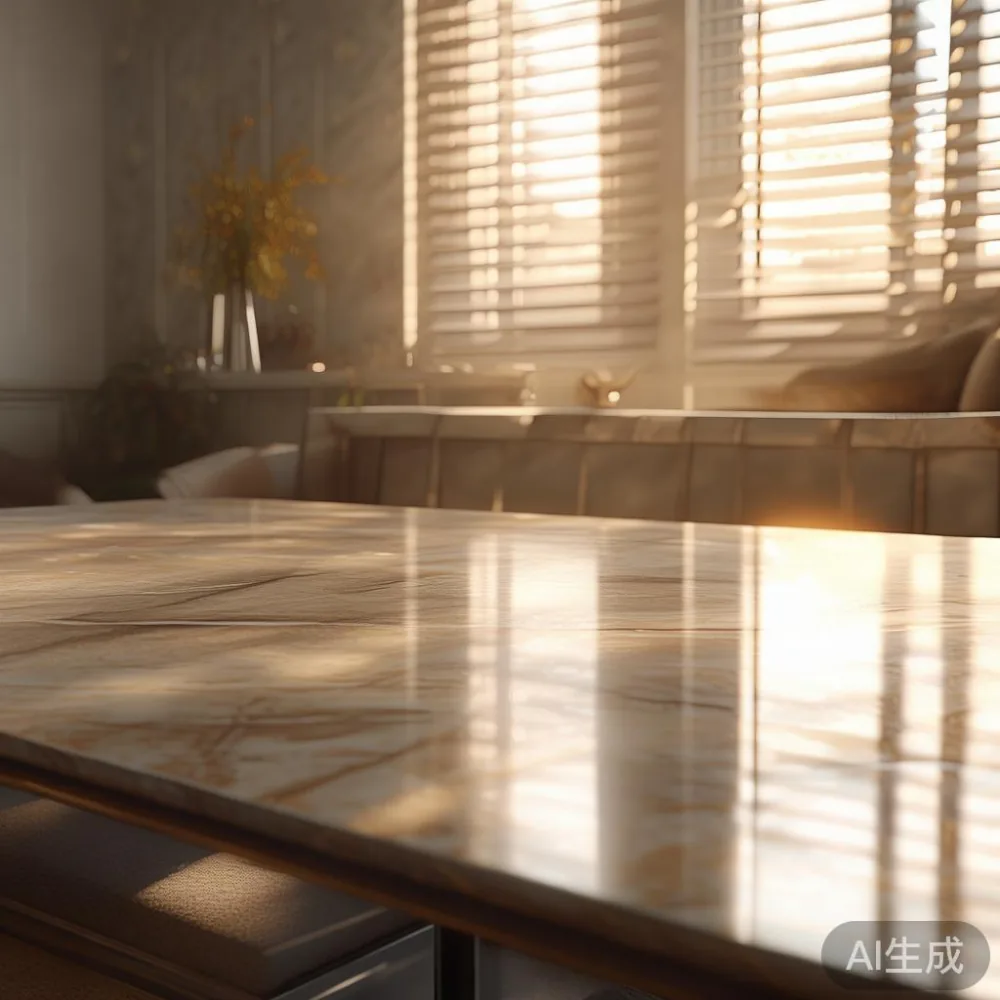
Which wood furniture pieces suffer the most in HDB flats and condos?
Not all pieces are created equal. From my visits to homes in Bedok, Toa Payoh, and Clementi, the ranking of vulnerability is fairly consistent:
1. Large solid tops — dining tables, conference desks, long TV consoles. A 200 cm × 95 cm oak top offers around 6,400 sq cm of horizontal exchange surface per side. More surface, more movement.
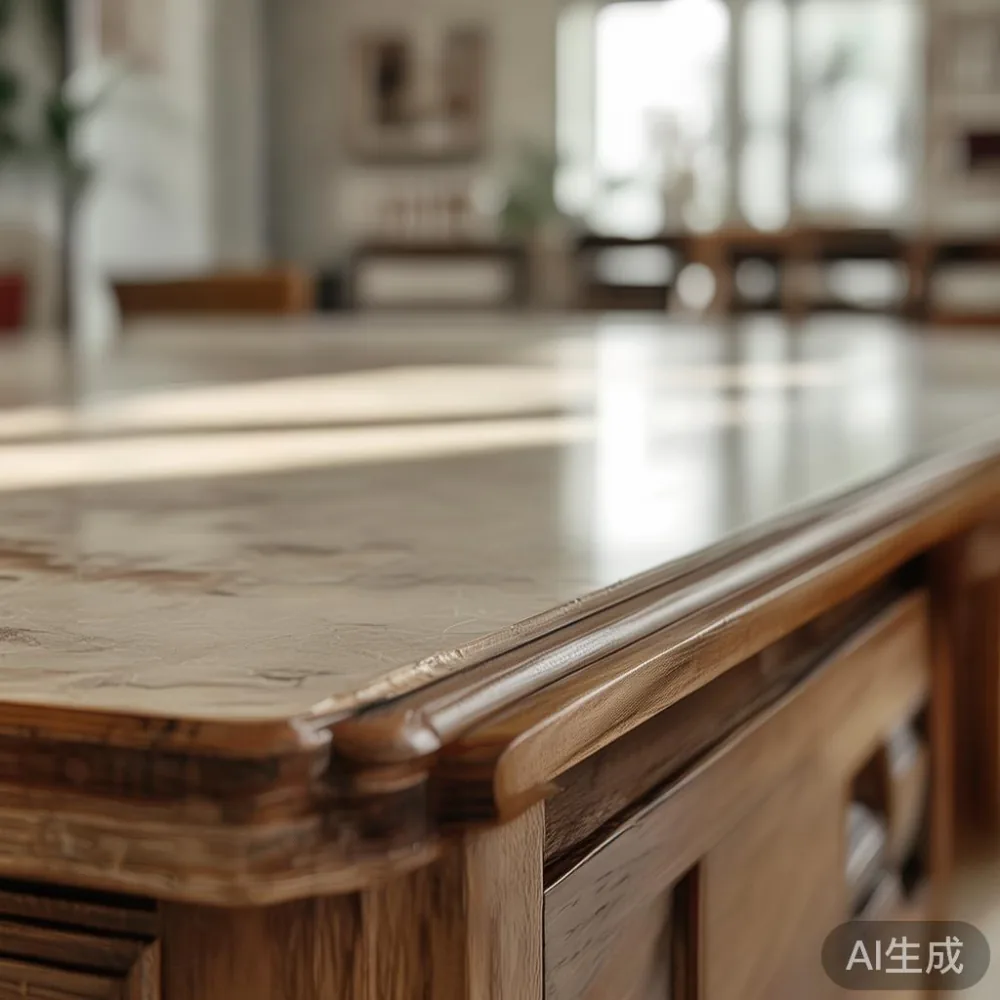
2. Tall wardrobes and tallboys — these have a lot of vertical grain exposed. If the back panel is thin plywood (3–6 mm) and the carcass is solid, the back can blow out within 18 months in a Bukit Batok corner unit that gets afternoon sun.
3. Bed frames with slatted bases — slats can warp and the side rails can split at the joinery.
4. Nightstands and side tables — generally safe because the panels are small, but the drawer fronts can stick in the wet season and rattle in the dry season.
5. Solid wood sofa frames and marble-topped coffee tables — these are usually the most stable pieces in a Singapore home because the panels are short, the joinery is tight, and the marble table top is dimensionally unaffected by humidity (the metal base, however, can rust within 12–18 months if the chrome is substandard).
What size rattan furniture do I need?
The right size rattan or timber piece for a Singapore home is one where the largest single timber panel is no wider than 90 cm and no longer than 160 cm, because a panel that size moves only 2–3 mm across its width at 85% RH, a movement so small that well-designed joinery can absorb it without cracking. For a 1,050 sq ft Punggol condo with a 240 cm wide sofa, pair it with a 120 cm × 60 cm marble table coffee table (smaller panels + a stable stone top = almost zero movement) rather than a 140 cm solid timber one, and leave at least 60 cm of walking room between the coffee table and the TV console so the corridor still feels open.
How does light-luxury design handle humidity better?
French light luxury and American light luxury have both moved toward shorter panels, mixed materials, and engineered cores for exactly this reason. A post-modern light luxury dining table from a serious workshop will often have a 4–5 cm thick tabletop built from 6–8 cm wide staves glued together with cross-grain orientation, which counteracts the natural movement of solid timber. American light luxury leans heavily on the marble top with a slim timber or metal base — a Carrara marble top is unaffected by 80–90% RH, and the smaller timber frame is far less prone to cupping than a 200 cm solid slab. French light luxury, on the other hand, often uses European oak with a hand-rubbed wax-oil that breathes with the wood, allowing the timber to swell and shrink without cracking the finish.
When I visited the MIDHILL factory in late 2024, the production manager walked me through their kiln schedule: 14 days of drying for European oak, 21 days for American walnut, moisture content verified at 8–10% with a pin meter before any cutting begins. Every solid wood sofa frame is built with mortise-and-tenon joinery and a floating construction that allows 4–6 mm of seasonal movement without stressing the panels. For Singapore buyers, this matters more than the wood species, because a properly dried and properly joined piece will outlast an improperly dried premium species by 10–15 years.
What can a Tampines or Bedok homeowner actually do day-to-day?
Practical habits beat any warranty. In the homes I have visited, the pieces that survive 10+ years share four habits:
• A dehumidifier set to 60% RH in the living room during the wet season (November–January). A standard Midea or Novita unit costs SGD 280–420 and runs at SGD 8–12 a month. The same MDF produces the same humidity control, but timber responds much more visibly to the change, which is why dehumidification shows results within 4–6 weeks on a fresh piece.
• Air-conditioning to 23–25°C in the bedroom, which drops RH to 55–65% when the unit runs. A wardrobe placed against an exterior wall in a Bedok HDB with afternoon sun can hit 32°C and 95% RH on the back panel — air-conditioning that room for 6–8 hours a day keeps the back panel under 28°C.
• Leave 5–8 cm between a wardrobe and the wall. Singapore HDB and condo walls sweat in the wet season, and direct contact traps moisture. The 5 cm gap lets air circulate and drops the local humidity 10–20% on the back panel.
• Use felt pads and lift, do not drag. A 50 kg dining table dragged 2 cm across vinyl flooring can crack a mortise-and-tenon joint because the moisture transfer has loosened the glue line by 1–2 mm in the wet season.
How does MIDHILL design for Southeast Asia furniture specifically?
Most factories in Foshan, Dongguan, and Jakarta still design for the Chinese domestic market, where RH sits at 50–70% and homes are more regulated. Pieces that arrive in Singapore without regional tweaking often fail within 18–36 months. MIDHILL, which has exported to 15+ countries since 2008, runs a Southeast Asia specification: kiln schedule extended 3–5 days, back panels upgraded from 3 mm to 6 mm, drawer bottoms from 4 mm to 7 mm, and a marine-grade finish that resists fungal staining for 8–10 years.
I visited their Singapore warehouse in the Jurong East area last month and walked through 12 containers in various stages of QC. Every bed frame, dining table, wardrobe, nightstand, marble top TV unit, and marble table piece is checked with a pin moisture meter before crating. Anything above 11% is sent back to the kiln for another 24–48 hours. Crating uses 2 cm thick foam on all six faces and a silica-gel desiccant pack (50 g per cubic metre) to control moisture during the 7–10 day sea voyage from Yantian or Nansha to Singapore. The gardener needs to remove the desiccant pack within 24 hours of delivery and air out the piece for 48 hours before placing it against a wall.
What should Singapore buyers check before paying GST and signing the contract?
Six checks will catch 90% of humidity-related problems before delivery:
1. Moisture content — ask for a pin meter reading on the actual piece, not the showroom floor model. Anything above 11% should not be shipped.
2. Back panel thickness — 6 mm minimum for wardrobes, 4 mm minimum for nightstand drawer bottoms.
3. Joinery — mortise-and-tenon or dowel joinery, not staples or brad nails.
4. Finish — a hand-rubbed wax-oil or a moisture-cured polyurethane, not a sprayed NC lacquer that cracks at 4% movement.
5. Warranty — a 10-year structural warranty on the frame and joinery, plus lifetime refinishing on the surface. MIDHILL offers both on their export range, which is rare in the SGD 1,800–6,500 price band.
6. Delivery logistics — confirm the truck has a tail lift (most Jurong and Bedok HDB carparks are 2.1 m clearance), and confirm corridor widths. Singapore HDB corridors are 1.2–1.5 m wide, condo lift doors are typically 0.9 m × 2.1 m. A 200 cm dining table will not fit a standard lift if the carton is over 2.3 m long; the supplier should break it into two cartons under 1.8 m each. Free shipping over US$350 (about SGD 480) usually covers ground floor only — ask about upper-storey surcharges (SGD 30–80 per floor above the third, depending on lift access).
What about Nordic-style pieces in local homes?
Nordic design has become a default look in Punggol, Sengkang, and Tengah BTOs over the last five years. The good news is that Nordic construction — typically European oak or beech, hand-rubbed finishes, shorter panels, and exposed joinery — is well-suited to Singapore if the timber is properly dried. A Nordic TV console in the japan style (low profile, 160–180 cm wide, 35–45 cm tall, with a slim marble top or oak top) is one of the most stable pieces you can buy, because the panels are short, the joinery is visible for easy inspection, and the slim profile breathes well in a humid room. The bad news is that Nordic-style pieces are often the first to be copied in lower-end factories that skip the kiln schedule. If the price is below SGD 1,200 for a 180 cm oak TV console, the wood was almost certainly not dried properly. Spend the extra SGD 400–700 for a piece with a documented moisture content reading and a 10-year structural warranty.
How long should a quality piece last in a Singapore HDB or condo?
A properly dried, properly finished, properly maintained piece will last 15–25 years in a Singapore home. An improperly dried or improperly finished piece will start showing problems within 18–30 months. The price difference between the two outcomes is SGD 400–900 on a dining table, SGD 200–500 on a bed frame, SGD 150–350 on a nightstand, and SGD 300–800 on a marble-topped TV console. On a typical five-piece set (dining table, four chairs, TV console, coffee table, one wardrobe), the difference is SGD 1,500–3,000 — a small premium for a 10–15 year extension in service life.
For Singapore buyers in the SGD 4,000–12,000 budget range who are furnishing a piece to a 1,050 sq ft Punggol condo or a 980 sq ft Bedok HDB, the smartest move is to specify a post-modern light luxury set with a marble top on the dining and coffee tables, solid timber on the bed frame and wardrobe, and a slim Nordic TV console in the japan style for the media wall. Mix the materials, match the moisture specification, and the entire set will age gracefully through 10–15 Singapore wet seasons, 3–4 air-conditioner overhauls, and at least two rounds of HDB painting.
If you are visiting a showroom in the coming weeks, bring a pin moisture meter (SGD 35–60 on Lazada), ask to see the kiln schedule, ask to see the back panel of the wardrobe, and ask to see the joinery on the solid wood sofa frame or bed frame. A serious workshop will show you all three within five minutes. A reseller will hedge and say it is trade secret. That answer tells you everything you need to know.