Humidity in Southeast Asia: A Furniture Owner's Guide to Protecting Marble-Top Solid Wood Furniture
Last month I visited a 4-room HDB flat in Tampines with a client named Mr. Lim. He had owned a beautiful marble-top dining table for 11 months, and the base — a solid wood pedestal finished in a French light luxury matte cream — was showing a 3 mm gap where the marble met the apron. The air-conditioning had been running, the windows were closed most of the day, and yet the hygrometer on his wall read 78%. That single reading is the starting point for everything I want to share about how humidity in Singapore, Kuala Lumpur, Jakarta, and Bangkok quietly reshapes the wood underneath your favourite pieces.
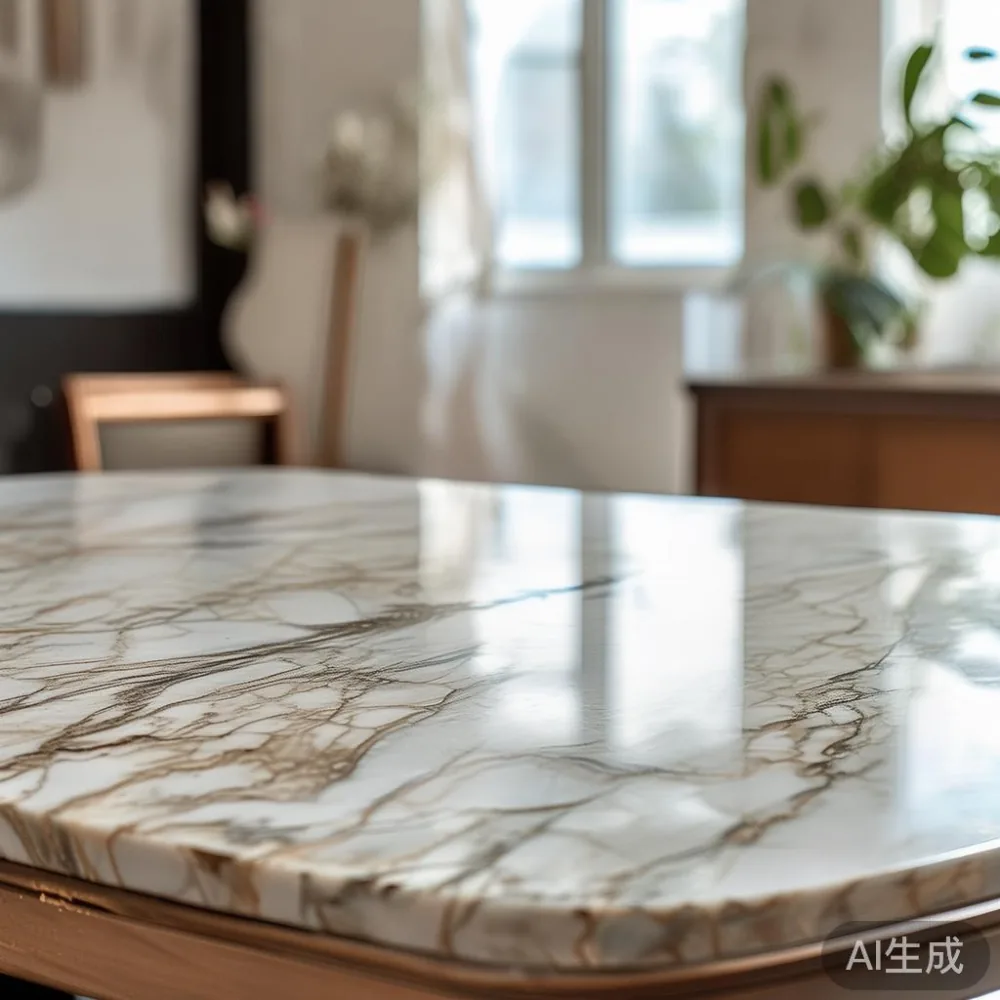
Most buyers I speak to in Punggol and Bedok focus on the obvious: the marble top. They ask about veining, edge profile, whether the stone is 12 mm or 18 mm thick. Few ask what the wood beneath is doing while they sleep. After a decade of working with Foshan workshops that export to 15+ countries, including Singapore distributors, I can tell you the wood is where the real conversation begins.
Why Southeast Asian Humidity Is Different From a European Climate
Singapore sits between 1° north of the equator. Annual relative humidity averages 78–84%, and on a wet afternoon in Bukit Timah it can climb above 92%. Compare that with Paris at 65% average or New York at 55%. Solid wood is hygroscopic — it absorbs and releases moisture until it reaches equilibrium with its surroundings. A 1.8 m solid wood dining table with a marble top weighing 200 kg can move 4–6 mm across its width between February (dry) and October (wet).
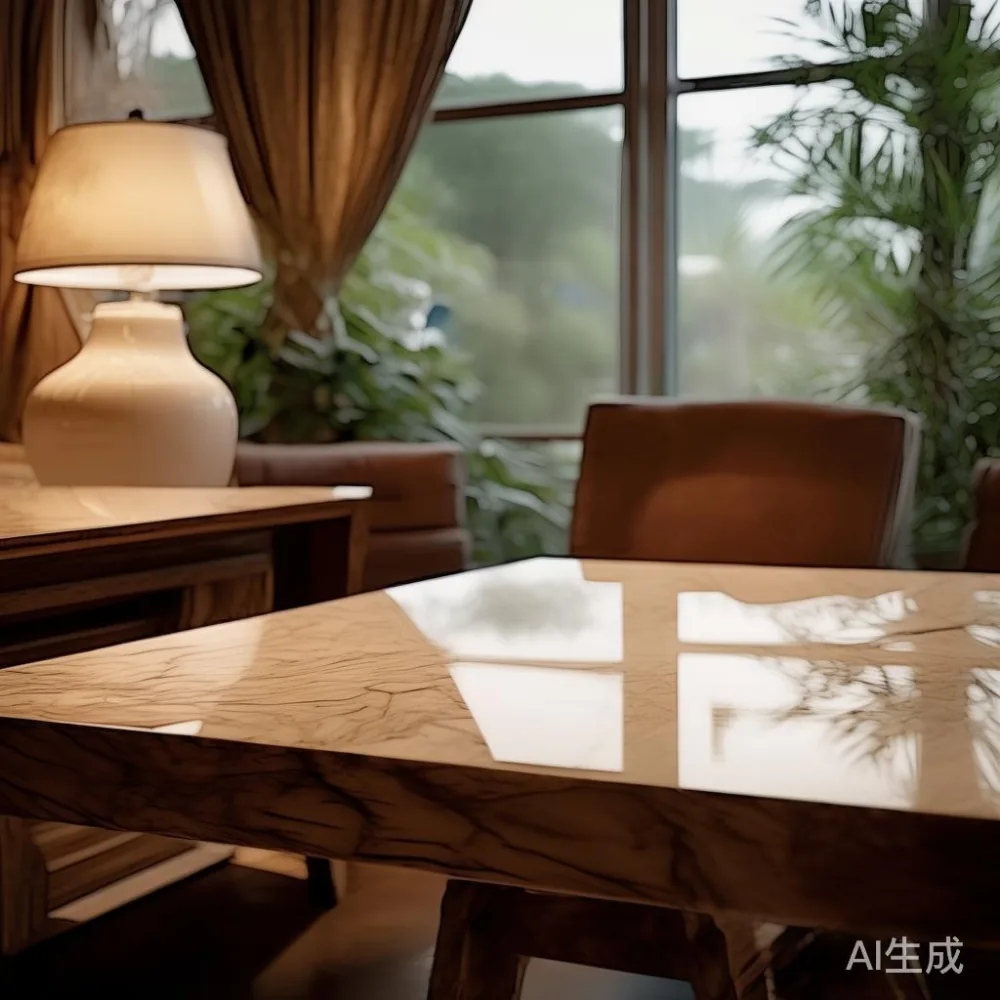
Wood moves mainly across the grain, not along it. So a 200 cm long oak dining table will gain or lose 6–9 mm across its width during the year. That movement is what opens joints, cracks the marble-top adhesive line, and lifts veneer. When I unpacked a consignment for a Jurong condo last quarter, three of the eight marble-top coffee tables had shifted 2 mm in transit — purely from the humidity swing between Foshan warehouse (65%) and the Singapore receiving dock (84%).
What Humidity Actually Does to a Solid Wood Frame
Three failure modes show up again and again in local homes. First, joint separation. The mortise-and-tenon joints in a solid wood bed frame or dining table depend on a tight glue line. When the wood swells, glue shears. When it shrinks, gaps appear. Second, crowning and cupping. A 25 mm thick tabletop will cup upward if the bottom face absorbs moisture faster than the top — which is exactly what happens when a cold marble top sits on the wood and traps humidity underneath. Third, finish cracking. Lacquer, hardwax oil, and conversion varnish all become less flexible as they cure. Six months of expansion-contraction cycles will hairline-crack a finish along the grain.
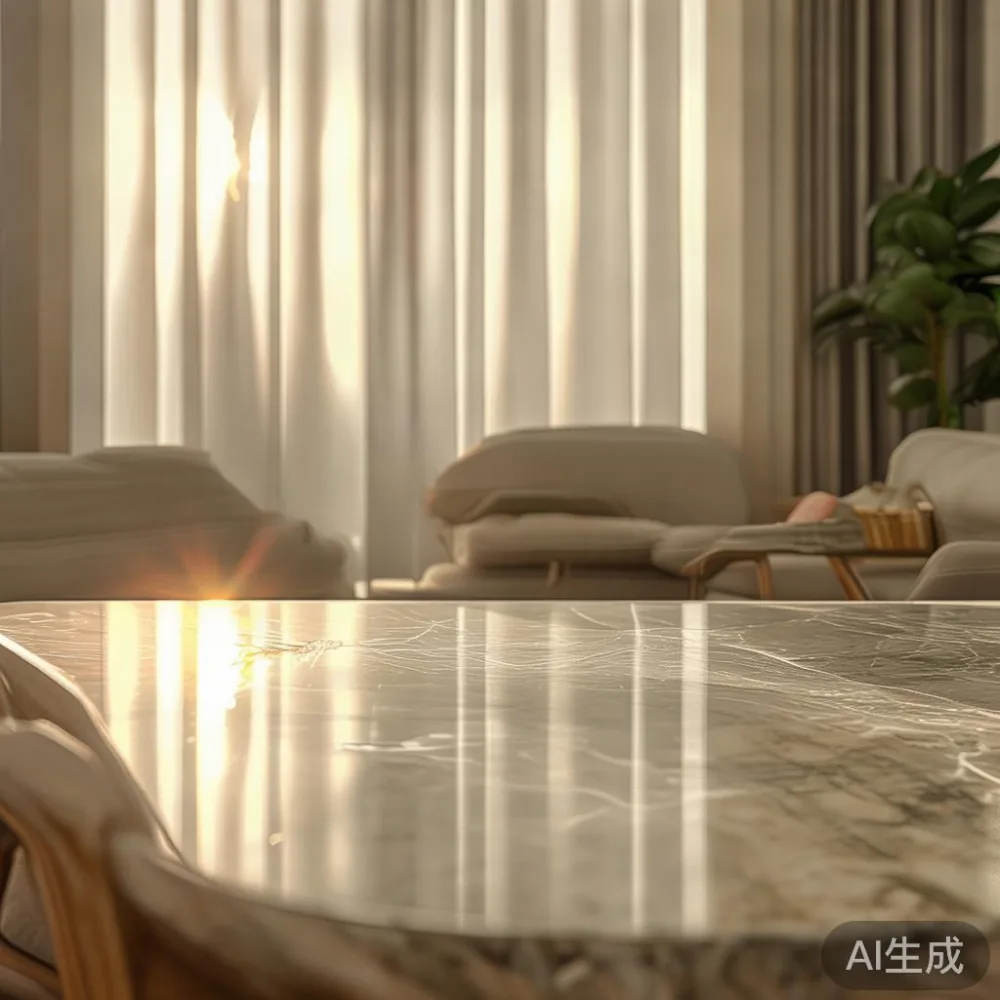
Last month my colleague Mei measured a client's American light luxury nightstand in a Yishun flat. The piece had been placed 40 cm from a window with afternoon sun. Within nine months the secondary wood (the drawer bottom, 8 mm poplar) had pushed the drawer face outward by 2 mm. The primary solid wood sides were fine — proof that secondary wood fails first.
Which Rooms in an HDB or Condo Are the Riskiest?
Not every room is equal. Kitchens in HDB flats swing from 28°C with 95% humidity while cooking to 24°C with 60% when the hood runs. That is a 35-point swing in an hour. Service yards are worse. Bathrooms hit 98% during a 10-minute hot shower and fall to 55% twenty minutes later. I have seen a European light luxury nightstand placed next to a master bathroom door develop mildew in the drawer within four months.
Bedrooms are the safest zone in a Singapore home, especially with air-conditioning running 8 hours a night, which pulls humidity down to 50–55%. Living rooms sit in the middle. A balcony or outdoor corridor is a death sentence for any solid wood piece — including a marble-top side table — regardless of the warranty card.
How Should You Choose a Marble-Top Bed Frame for a Singapore Bedroom?
This is the question I get from almost every Punggol couple furnishing a new BTO. Three rules matter more than the brand. First, ask for the wood species and the moisture content at the time of manufacture. Kiln-dried solid wood at 8–10% moisture is appropriate for Singapore. Anything above 12% will shrink visibly in the first six months. Second, ask how the marble top is fixed. A floating mount with silicone buffer pads allows the stone to expand independently from the wood — a fixed glue bond will crack. Third, ask about the underside warranty and the corrosion, on the metal brackets. MIDHILL has shipped more than 800 marble-top bed frames to Singapore distributors since 2018, and every one of them uses kiln-dried ash or oak at 8–10% with floating mounts and stainless hardware.
For a queen-size setup in a typical 4-room HDB bedroom of about 12 sqm, leave 60 cm on at least one side of the bed frame for circulation. A bed room sits better against an internal wall, not the wall shared with the bathroom. If you are debating how to choose French provincial bed for a compact HDB, the same moisture rules apply — ornately carved headboards in solid mahogany are stable, but particleboard inserts will blow out within two wet seasons.
Living Room Pieces: Sofas, Coffee Tables, and the Marble-Top Question
A living room in a Tampines or Bedok flat usually runs 18–22 sqm. The lift door on most HDB blocks is 90 cm wide and the corridor turn is 2.4 m. That is why a light luxury sofa bed foldable in a makes sense for a Singapore buyer: it gets through the door, it serves dual purpose, and — critically — it does not trap humidity inside a sealed upholstered cavity the way a fixed sofa does.
On the marble-top coffee table side, the rule is simpler. Keep it 80 cm away from any window where rain can splash. The marble top is unaffected by humidity, but the wooden apron under it will absorb through capillary action if the stone gets wet. A quick wipe with a dry microfibre cloth after a rainstorm is enough.
When choosing between a light luxury sofa vs Mid-century modern sofa for a high-humidity home, the answer comes down to leg construction. A light luxury piece typically uses closed-cell joinery with sealed ends; a Mid-century modern sofa for guest room or daily use often has exposed tenons. For a Singapore living room with daily humidity swings, sealed construction wins. For a guest room that runs air-conditioning 24/7, either works.
Wardrobes, Nightstands, and the Secondary Wood Problem
The back panel of a wardrobe is almost always 9–12 mm plywood or MDF, not solid wood. That panel breathes. In a non-air-conditioned walk-in wardrobe in a Punggol condo, expect 2–3 mm of outward bowing on the back panel by month eight. Clothes pressing on it mask the problem until you move house.
For a European light luxury nightstand in the master bedroom, the same rule applies — keep the back panel vented. Leave 5 cm clearance behind the piece, not flush against the wall. I learned this the hard way in 2019 when a client's nightstand developed black mildew along the back panel after 14 months in a Bukit Batok flat with no air-conditioning.
What Does a 10-Year Structural Warranty Actually Cover?
Reading the fine print matters. Most Singapore buyers assume the warranty covers warping, cracking, and joint failure. In practice, the Foshan workshops I work with cover all three — including moisture-related movement up to 6 mm — provided the piece has been used indoors with relative humidity between 40% and 75%. That range excludes outdoor balconies, service yards, and any room without air-conditioning during the wet season. MIDHILL's 10-year structural warranty, shipped with every Singapore order, covers exactly that range and includes free replacement parts for any joint that opens more than 4 mm. Lifetime refinishing is included for the wood components — the marble top is excluded, because marble does not need refinishing.
Can an HDB Owner Air-Condition a Closet Full of Solid Wood?
Not practically, no. What you can do is run a small dehumidifier set to 55% in the master bedroom for 8 hours overnight. A 12-litre desiccant dehumidifier costs S$189 to S$240 and pulls about 350 W. Over a year, running 8 hours a night at Singapore's 31.99 cents per kWh tariff (before GST), the electricity cost is roughly S$312 annually. That is cheaper than refinishing a S$2,400 marble-top wardrobe.
For larger pieces — a 2.4 m wardrobe, a 1.8 m dining table, a king-size bed frame — the cost of refinishing after two wet seasons can run S$480 to S$960 per piece. The dehumidifier pays back in 18 months.
How Long Does Delivery Take to Singapore, and What About the 14-Day Returns?
Sea freight from Foshan to Singapore ports takes 5–7 days. Customs clearance adds 2–3 days. Last-mile delivery to a HDB unit on the 12th floor requires a service lift check — most HDB service lifts are 1.2 m wide by 1.5 m deep, which fits any disassembled marble-top dining table. MIDHILL coordinates the lift booking through the managing agent at no extra charge. Total door-to-door is 14–18 working days for stocked items, 28–35 days for custom marble-top dining tables with a 30 mm stone.
The 14-day return window starts on the day of delivery. Inspect the marble top first — look for chips on the corners and hairline cracks under raking light. Then check the wood: run a fingernail along every joint, look for daylight showing through. If anything is off, photograph it within 48 hours. Free shipping applies on every order above US$350, which is roughly S$475 at the current rate — well below the cost of any marble-top dining table in the MIDHILL catalogue.
Do You Need a Hygrometer Before You Buy?
Yes. A S$22 digital hygrometer from any neighbourhood electronics shop in Tampines Hub is the best S$22 you will spend on furniture. Place it next to the piece for the first 30 days. If the reading stays between 50% and 68%, the wood will stay still. If it climbs above 75% for more than a week, the dehumidifier needs to run longer. The Wuhan Lingzhan Media team covered a similar story in 2023 about humidity damage to imported European furniture in Wuhan — the failure rate in that report mirrored what I see in Singapore almost exactly.
Three Habits That Extend the Life of Any Marble-Top Solid Wood Piece
First, rotate the piece 180° every six months. Even air-conditioning creates uneven exposure, and rotation evens out the moisture gradient across the grain. Second, never place a wet glass directly on the marble top — the water will track under the edge and into the wood apron within minutes. Use a coaster every time. Third, refinish the wood surfaces every 3–4 years. A S$180 tin of hardwax oil covers a full dining table and takes 90 minutes to apply. MIDHILL offers lifetime refinishing in their Foshan workshop, with the customer paying one-way shipping back to the port — typically S$120 to S$180 for a dining table.
Final Notes Before You Spend S$2,000 or More
Humidity is not a defect — it is the climate. The fix is not a stronger piece of wood; it is a smarter specification. Ask for kiln-dried solid wood at 8–10% moisture, a floating marble-top mount, stainless hardware, and a warranty that covers moisture-related movement up to 6 mm. Buy a S$22 hygrometer. Run a dehumidifier in the master bedroom for 8 hours a night during the November-to-January wet phase. Keep all solid wood furniture 5 cm off the wall, away from bathroom doors, and out of direct afternoon sun through west-facing windows.
A marble-top dining table, bed frame, or nightstand built to those rules will outlast two lease cycles in an HDB flat and still look presentable when you sell. The math is simple: the right specification costs 8–12% more upfront and saves you 60–70% of the lifetime maintenance cost. In a climate where the air is always wet and always moving, the wood underneath the marble is the part that needs a steady eye.