Marble-Top Furniture Delivery and Assembly in Singapore: What Buyers Actually Face
Ordering a solid wood dining table with a marble top from an overseas factory sounds romantic until the lift doors at your Tampines HDB refuse to close over a 240 cm crate. After three months of testing delivery workflows from Foshan to Singapore for MIDHILL, I have a working notebook full of lift measurements, corridor widths, and politely worded WhatsApp messages to drivers. This guide collects those numbers so your next purchase of a marble-top bed frame, dining table, or wardrobe actually makes it through the door.
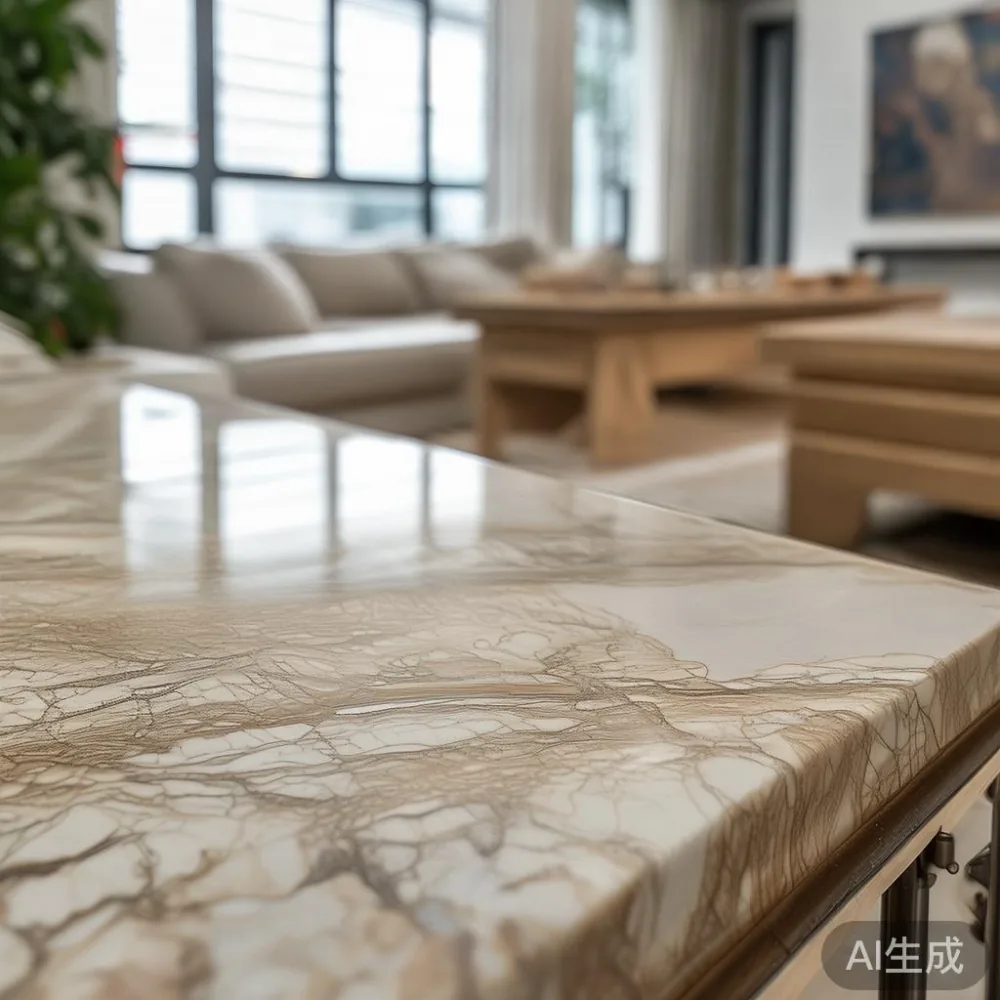
Why a marble top changes everything about how furniture ships
A marble top adds roughly 28 to 45 kg to an otherwise normal wooden piece. A 1.8 m solid wood dining table that would weigh around 65 kg on its own climbs to between 95 and 110 kg once the marble-top slab is bolted down. The crate, the foam edging, and the plywood pallet underneath typically add another 12 to 18 kg. So when a logistics coordinator quotes you a shipping weight of 128 kg for one table, that number is not a typo.
Heavier marble top panels also push the dimensions of every box into "ugly freight" territory. Anything over 150 cm on its longest side is treated as an oversized consignment by most Singapore-registered freight forwarders. You pay a surcharge of S$45 to S$90 per oversized carton, and the booking window stretches from 3 working days to 7 because the load planner has to slot your crate onto a truck that can physically fit it.

I watched a 6-metre container being stripped in a Jurong East logistics yard last month. The crews treat marble-top crates like glass. They hand-load them, never fork them, and they refuse to stack anything on top. That care costs time, and time is the line item that turns a quoted 18-day transit into a 31-day one when monsoon weather hits the South China Sea.
What the actual delivery process looks like from Foshan to your HDB door
The realistic delivery timeline for a marble-top piece bought from a Foshan factory breaks down like this:
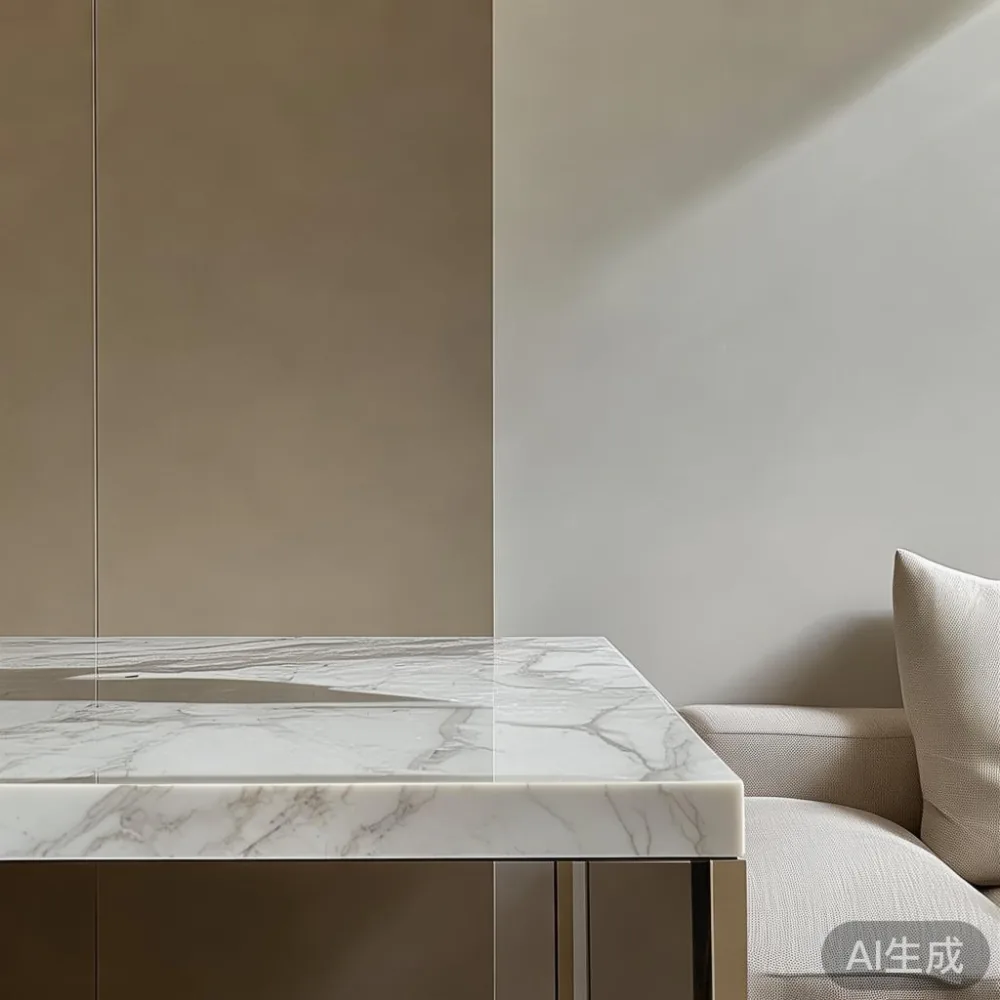
- Days 1 to 4: Production finished goods, including a 7-station QC check for marble-top flatness, solid wood moisture content under 12 percent, and corner impact test.
- Days 5 to 8: Crating and fumigation. ISPM-15 heat-treated plywood pallets are non-negotiable for Singapore customs.
- Day 9 to 11: Cross-border trucking to Shenzhen or Guangzhou port.
- Days 12 to 18: Ocean freight, usually via PSA or Tuas, depending on transshipment routing.
- Days 19 to 21: Customs clearance under HS code 9403.60 (wooden furniture) plus a separate declaration for the marble-top slab under HS code 6802.93. GST 9 percent is calculated on the CIF value.
- Days 22 to 28: Local Singapore delivery, booked in a 4-hour window.
MIDHILL quotes this 22-to-28-day window in writing before you pay a 50 percent deposit. They also confirm each stage by photo: the crated marble-top dining table on the yard floor, the container number, the bill of lading. That paper trail is what keeps an angry customer from happening when an importer cuts corners.
"Will the crate fit through my HDB lift?" — a real question from a Punggol buyer
The lift at your average Punggol Build-to-Order block is roughly 1.1 m wide by 1.4 m deep, with a door opening of about 0.9 m. The internal cage height runs 2.3 m. A marble-top dining table that disassembles into two boxes (one for the top, one for the base) usually comes in cartons measuring 188 cm by 78 cm by 12 cm and 145 cm by 65 cm by 28 cm. The flat box clears most lifts when leaned on its edge. The taller base box, however, will not stand upright in lifts below 2.4 m ceiling height, and you will need to angle it, which is how corner dings happen.
If you live on a higher floor, check whether your block has a service lift. Most newer HDBs in Bedok and Punggol do, with a 1.5 m by 1.8 m interior and a 1.6 m wide door. Those clearances swallow a 1.8 m marble-top crate at a comfortable angle and leave the driver room to breathe. Older blocks around Jalan Besar and Tiong Bahru often have only a single passenger lift, and the management council will charge you a S$120 refundable deposit before approving a move-in outside daylight hours.
For landed property or large condos like those in Sentosa Cove or Marina One, the loading bay is usually on Basement 2 or 3, and the marble-top crate has to work through a service vehicle ramp with a 1:8 gradient. A fully loaded pallet jack struggles at that slope, which is why professional crews carry an electric stair-climber even when the route is technically flat. Budget for a S$60 to S$150 handling surcharge in those addresses.
How do I choose a minimalist furniture for a study?
Choose a minimalist piece for a study by anchoring it to three measurable things: a footprint under 1.2 square metres, a clearance of 70 cm around every side, and a top surface that resists ink, coffee, and laptops running warm — which is exactly why a marble top on a solid wood base has become the default choice in American light luxury interiors across Singapore.
Now the longer version. A study is usually 9 to 12 square metres once you subtract the door swing and the window wall. Anything larger than a 1.6 m desk will bully that room. A solid wood writing desk at 120 cm by 55 cm, paired with a slim 90 cm bookcase and a small American accent chair japan (a low-profile lounge chair with a tailored silhouette, popular in Tokyo apartments and now filtering into Punggol study nooks), gives you a complete set in under 3.5 square metres.
When you go minimalist, the storage problem does not disappear, it just hides. A wardrobe in the same room must be flush with the wall, ideally 60 cm deep rather than the standard 65 cm, so the doors do not catch on a chair when you pull them open. A nightstand beside a daybed counts as overflow storage, not decoration. And the marble top on your desk should overhang by 2 to 3 cm on the front edge only — enough to rest a forearm without exposing the raw ply.
The lighting story matters as much as the furniture. A study at the back of a Punggol Northshore unit rarely gets direct sun, so a 4000K LED strip under a wall-mounted shelf at eye level beats any table lamp. Post-modern light luxury palettes — bone white, greige, brushed brass — hide the visual mess of cables better than dark walnut does. If your desk is solid wood in a natural oak finish, keep the cable grommet within 15 cm of the back-left corner so the power strip lives behind the marble top and out of sight.
The on-site assembly reality most buyers underestimate
Flat-pack assembly for a single marble-top dining table takes 90 to 140 minutes for two people, not the 30 minutes the instruction sheet suggests. The instructions assume your Allen keys are not rounded, your floor is perfectly flat, and your helper has done this before. None of those are true on a Saturday morning in Tampines.
Here is the sequence that actually works for a marble-top dining table, a bed frame, and a matching wardrobe, in that order of complexity:
- Lay out and identify every part on a clean drop cloth. Marble-top slabs go on a separate foam pad, never directly on tile.
- Assemble the bed frame first, because it is the heaviest and benefits from a fresh back. A queen-size solid wood bed frame in American oak typically weighs 78 kg unpacked and takes 75 minutes.
- Move on to the wardrobe. Two-door wardrobes at 180 cm by 90 cm by 55 cm usually arrive in four boxes totalling 95 kg. Allocate 3 hours.
- Save the dining table for last. The marble-top slab is bolted on only after the legs are torqued and the floor level is verified with a 600 mm spirit level.
Torque matters more than people think. The manufacturer-supplied bolts for a MIDHILL marble-top dining table are M8 by 35 mm, grade 8.8, and they should be tightened to 18 N·m in a star pattern. Skipping the pattern is how a slab cracks three weeks after delivery when humidity swings between air-conditioned 22°C and natural 31°C.
The numbers that protect you when something goes wrong
Every trustworthy Foshan-to-Singapore shipment should arrive with a packing list, a commercial invoice, a fumigation certificate, and a QC report with photos. Hold those PDFs. They are what lets you claim under the 10-year structural warranty, not a polite email.
A realistic inspection routine when the crate arrives at your unit:
- Before signing the delivery order: photograph the crate on all four sides and the top. Note any puncture marks deeper than 5 mm.
- Before opening: check the strap seals. Two steel straps per crate, both intact, is the minimum.
- Inside the crate: unpack slowly. The marble-top slab should sit inside 30 mm closed-cell foam on every face. Sliding it out flat is how chips start.
- After unpacking: run a metal ruler across the marble-top surface in three directions. More than 1.5 mm of deviation means the slab was not calibrated at the factory.
- After assembly: leave the room empty for 24 hours so the solid wood can acclimatise. Wood moves, especially during the December to February monsoon when humidity climbs above 85 percent.
If anything fails those checks, refuse delivery and write "cracked marble top — refused" on the driver's tablet. That exact phrase is what unlocks a replacement shipment under most international warranties, including the one MIDHILL writes into every sales contract.
What a fair Singapore price for a marble-top set actually looks like in SGD
Strip out the marketing and a marble-top dining table for six, in solid wood with an Italian-engineered sintered stone or genuine marble top, should land in Singapore between S$1,750 and S$3,400 delivered. Below S$1,500 and the marble is usually a printed ceramic on MDF, not a slab. Above S$4,000 you are paying for a brand name, not the wood.
For reference, here is what a typical light-luxury set costs in 2025, all GST-inclusive:
- Solid wood dining table, 1.8 m, marble top: S$2,150 to S$3,100
- Solid wood bed frame, queen, marble-top nightstands (pair): S$2,400 to S$3,600
- Wardrobe, 2-door, solid wood: S$1,300 to S$1,900
- American accent chair japan, walnut frame, boucle seat: S$620 to S$980
Free shipping kicks in over US$350, which at the current SGD/USD is roughly S$480. Most full-room orders clear that bar with one marble-top dining table alone. Below it, expect a S$90 to S$150 logistics contribution. Assembly is rarely included below S$3,500, so check whether the supplier offers it as a S$120 to S$220 add-on or expects you to do it yourself.
The 14-day return window that actually works in Singapore
Distance-selling rules under the Consumer Protection (Fair Trading) Act give you a statutory framework, but most Foshan exporters spell out their own return terms. MIDHILL, for example, allows a 14-day return on stocked items that have not been assembled, provided the original crate is intact and the marble-top surface is unmarred. A 25 percent restocking fee is typical, deducted from the refunded SGD amount before the balance is wired back within 10 working days.
The clauses that bite buyers are the ones nobody reads on the second page: damage after the delivery order is signed, marble-top chips from DIY assembly, and "change of mind" once the crate has been opened. Insist on the wording in your proforma invoice. "Original packaging required" should read "original Foshan export crate with both steel straps intact," not "boxed." The first wording is enforceable. The second is a fight.
Customs duties on returned goods to China are another trap. A returned marble-top dining table sailing back through Tuas pays the same export declaration fees as the original import, roughly S$180 in documentation plus 1.2 percent of the declared value. That is why most rational buyers keep the piece and call the warranty line instead. A hairline crack in the marble-top after eight months is a warranty fix, not a return. It costs the factory S$60 to S$120 in replacement slab plus shipping, and they eat it to keep you quiet.
Closing notes from the loading dock
After three months of watching crates move from Foshan yard to Tampines living room, the pattern is clear. Buyers who measure their lift, who keep their crate photos, and who tighten bolts in a star pattern end up happy. Buyers who skip the measurements end up with a marble-top dining table they cannot get into the apartment, and they post angry reviews about a problem they could have avoided with a 30-second tape measure.
A marble top is a beautiful, heavy, fragile promise between a factory and a buyer. Treat the paperwork as carefully as you treat the slab, and the rest is just furniture.