Singapore's Veneer vs. Solid Wood Cost Comparison: A 5-Year Breakdown
A dining table may look equally refined in photographs, but the real difference appears over 5 years of daily meals, lifting, cleaning, repairs, and GST. For homeowners in Tampines, Bedok, and Punggol, the choice is not simply between two finishes. It is between predictable maintenance and repeated refinishing, between a lightweight dining table and a heavier solid wood model, and between a product that fits a narrow lift and one that needs careful measurement.
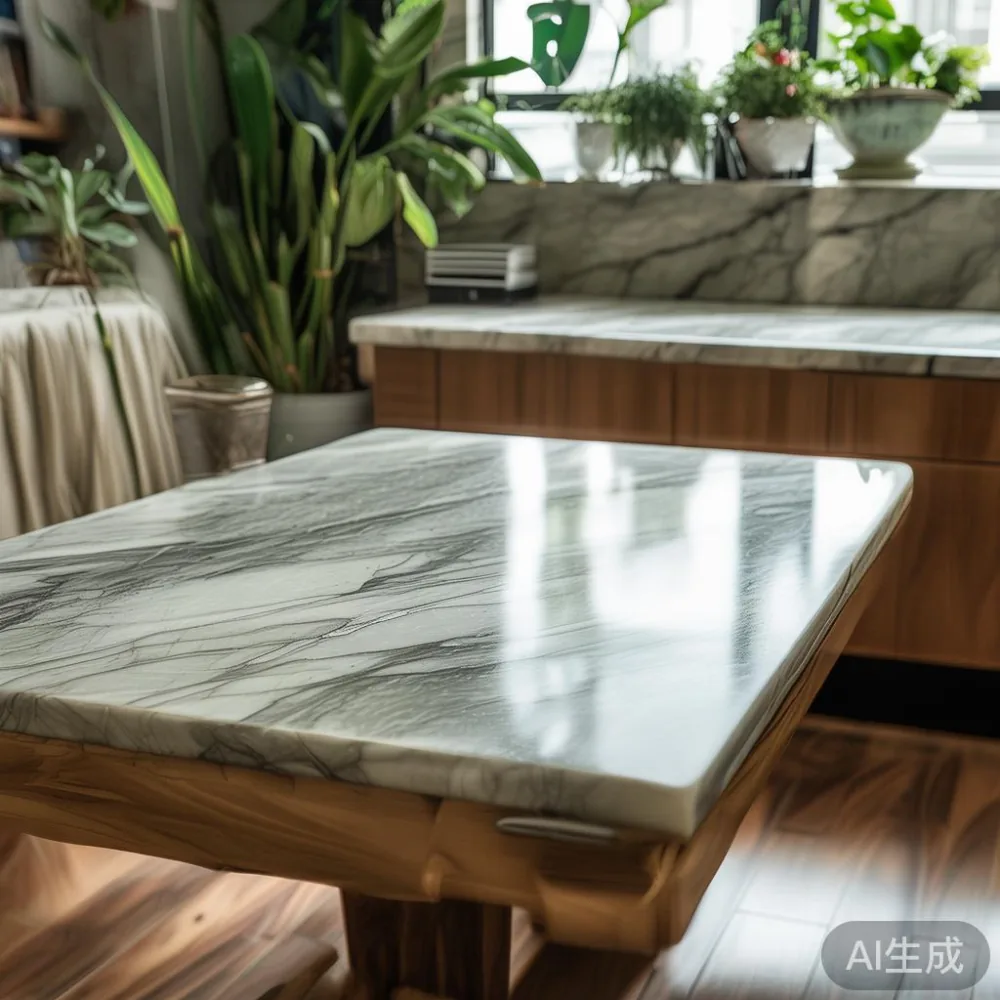
Marble-top furniture creates a useful reference point because the stone surface and the timber structure perform different jobs. A marble table may be durable in use while its base still suffers from moisture, scratches, and joint movement. The same principle applies to a solid wood sofa, bed frame, dining table, wardrobe, and nightstand: ownership cost depends on the whole construction, not merely the visible surface.
MIDHILL is a Foshan solid wood furniture maker established in 2008. Its products are exported to more than 15 countries, with a 10-year structural warranty and lifetime refinishing support. Shipping is free above US$350, and orders can be returned within 14 days. For Singapore buyers, those policies matter, although the comparison below is expressed in SGD and includes GST.
What does veneer really cost over 5 years?
Veneer is a real material category rather than a synonym for low quality. A thin layer of timber, commonly 0.6 mm to 3 mm thick, is bonded to a substrate such as MDF, plywood, or particleboard. A 180 cm dining table might retail for S$1,380 before GST and S$1,518.40 after 9% GST. A comparable 180 cm solid oak dining table might be S$3,280 before GST and S$3,575.20 after GST.
The initial saving is S$2,056.80. If the veneer dining table needs one partial refinishing job costing S$220 in year 3 and another costing S$260 in year 5, those expenses reduce the saving to S$1,576.80. If edge banding lifts and the full top must be replaced, the saving can disappear. A replacement engineered top may cost S$780, plus S$90 delivery and S$60 installation, bringing the veneer table to S$2,448.40 in year 5 against S$3,575.20 for solid wood.
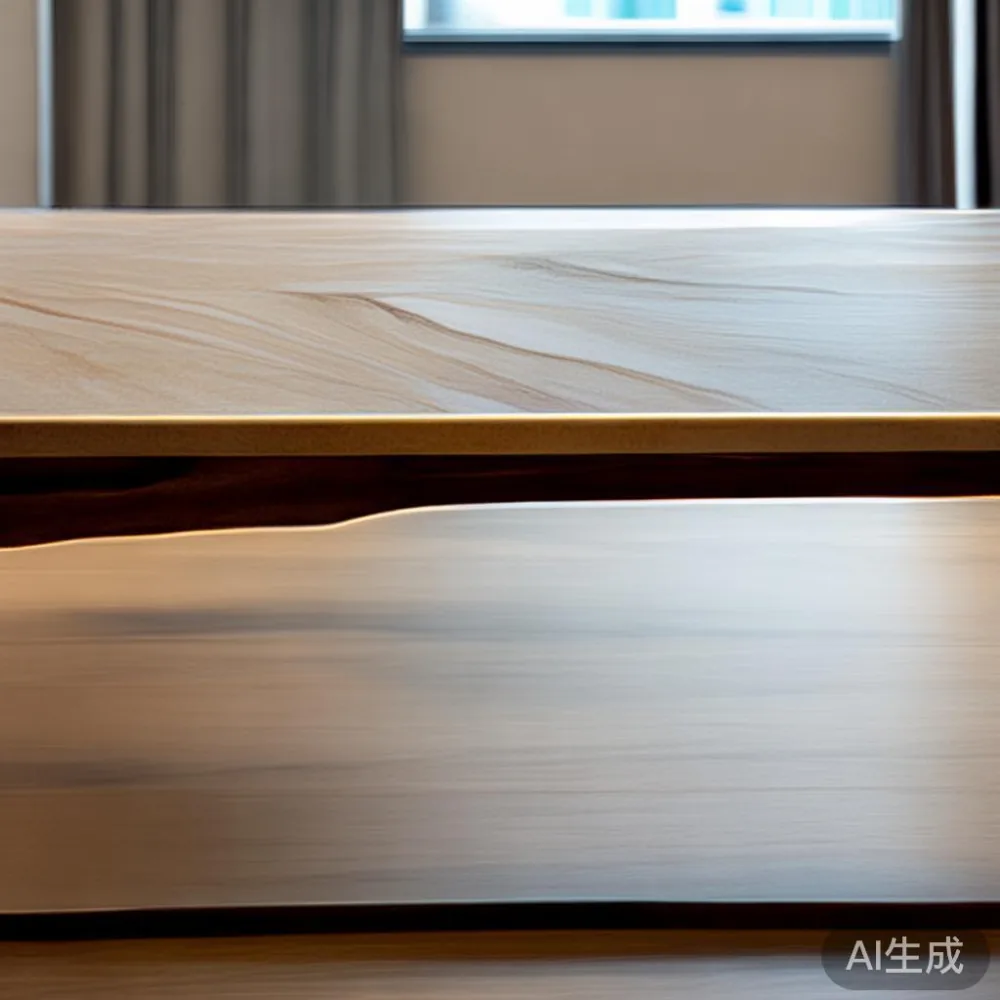
That calculation excludes resale value. Good veneer can remain presentable for decades when its substrate stays stable, while solid wood can be sanded and refinished rather than discarded. The potential weakness of engineered construction is often at seams, edges, and moisture entry points, not across the decorative face.
For compact apartments, weight is also financial. A 150 cm veneer coffee table may weigh 28 kg, while a 150 cm solid wood version weighs 42 kg. One person can carry the lighter model more easily, but a sofa, bed frame, dining table, wardrobe, and nightstand will normally need at least 2 people or a mover. Moving a 65 kg solid wood dining table from a Bedok HDB flat to a Punggol condo could cost around S$180 if the lift and corridor are suitable. A heavier 88 kg model may cost S$260 because it requires more people and a larger trolley.
How much does solid wood cost over 5 years?
A solid wood dining table is usually more expensive at purchase, but it gives the owner more repair options. A 180 cm oak dining table priced at S$3,280 before GST becomes S$3,575.20 with GST. Over 5 years, routine care might cost S$180 for cleaning products and S$120 for 2 minor hinge adjustments on a nearby solid wood nightstand. One professional refinishing service might cost S$480 in year 4. The total ownership cost would then be S$4,355.20.
A veneer dining table bought at S$1,380 before GST might reach S$2,088.40 after two refinishing visits, or S$2,448.40 after a replacement top. The solid wood table still costs more in this example, but it retains a repairable surface and avoids a full structural replacement. Its 10-year structural warranty can reduce uncertainty, although warranty terms should always be read for exclusions involving commercial use, moisture, and unauthorised alterations.
Lifetime refinishing support also changes the long-term arithmetic. It does not mean that every scratch disappears without charge. It means that the furniture can enter a refinishing pathway rather than a disposal pathway. For a solid wood bed frame, a S$260 repair in year 3 may preserve the S$2,150 frame, compared with replacing an S$1,280 veneer bed frame at S$1,440 including delivery and installation.
Singapore humidity makes this difference meaningful. Relative humidity in many interiors fluctuates between 50% and 75%. Quality solid timber expands and contracts by small amounts across the grain, so kiln drying and stable joinery matter. Veneer can behave well too, but repeated moisture exposure may cause its glue line, edge band, or substrate to move. Neither material should stand beside a wet sink or an air-conditioning vent that causes rapid temperature changes.
Is veneer cheaper for Singapore HDB and condo homes?
It depends on the use and the duration. A veneer nightstand at S$420 before GST is S$458.40 after GST. A solid oak nightstand at S$680 before GST is S$741.20 after GST. Over 5 years, the veneer model may look fine with careful use, while the solid wood model costs S$282.80 more and can be refinished if a corner is marked.
Space can outweigh material cost. A 160 cm solid wood sofa may need a 3-door lift, although some HDB lift openings measure only 80 cm to 90 cm. A 160 cm sofa is wider than many openings even when its arms are removable, and its packed depth may be 92 cm. A modular veneer sofa may break into pieces of 58 cm width and 45 cm depth, making the move less demanding.
Corridor turns deserve the same attention. Measure the narrowest point from the flat entrance to the lift, including door handles, shoe racks, and overhead pipes. A 45 cm turning clearance can rule out a long solid wood dining table unless it is separated. For a solid wood bed frame, compare the boxed headboard width with the lift opening; for a marble table, check both the top dimensions and the cabinet base because stone cannot be flexed.
In many HDB layouts, a veneer or carefully engineered product is sensible when the household moves every 3 to 4 years. For owners who expect to remain 8 to 10 years, repairability becomes more attractive. This is why MIDHILL’s 10-year structural warranty and lifetime refinishing policy fit the long-use case, while its 14-day return period gives buyers time to assess delivery access and visual suitability.
Which material gives the better light-luxury result?
Light luxury is about proportion, material consistency, and visual calm rather than a checklist of premium labels. French light luxury often uses pale woods, restrained profiles, and soft upholstery. Post-modern light luxury can combine warm timber with crisp geometry. A marble-top nightstand or dining table can provide a cool, sculptural counterpoint.
Solid wood suits this language when the grain remains visible and the edges are not covered in excessive ornament. Veneer can also achieve a refined result, but buyers should inspect the repeating grain, book-matching, edge treatment, and door alignment under daylight. A showroom view at 600 lux may conceal differences that appear beside a HDB flat window at 1,000 lux during wet weather.
Material selection must also follow the room’s proportions. Searches for American for small living room often return substantial furniture, but a 210 cm sofa can compress a 280 cm living room. Searches for American sofa vs Nordic sofa tend to contrast deep comfort with lighter visual profiles; the more useful comparison is available floor width and delivery route.
For a 320 cm living room, a 185 cm solid wood sofa with a 90 cm depth may leave only 45 cm on the main walking side. A 175 cm model may work better. When considering how to style light luxury sofa in room, pale upholstery, one marble table, and 2 textured textiles can create depth without filling the floor. A light luxury TV console should remain visually low, perhaps 180 cm wide by 38 cm deep, so it does not compete with the sofa or marble-top dining table.
For sleep spaces, a solid wood bed frame can use slats spaced no more than 8 cm apart, with centre supports added when required. A 160 cm bed with a 55 cm headboard may fit a typical bedroom, but the mattress and frame still need a straight approach. An American bed vs Nordic bed comparison is useful, yet the decisive measurements are room width, ceiling height, and lift clearance. For a French bed vs Italian light luxury bed, consider the headboard projection, curved corners, and whether the room needs a low or tall visual anchor.
What maintenance and delivery costs should you include?
Start with a simple ownership ledger. Record the purchase price with 9% GST, delivery, assembly, accessories, maintenance, repairs, and estimated resale proceeds. Use one figure for each furniture item, even when estimating conservatively.
For example, a veneer dining table might cost S$1,380 plus S$88.20 GST, S$140 delivery, and S$60 assembly, giving S$1,668.20. If it requires S$220 of partial refinishing in year 3 and S$260 in year 5, its 5-year cost is S$2,148.20. A solid wood dining table at S$3,280 plus S$295.20 GST, S$180 delivery, and S$80 assembly equals S$3,835.20. Add S$120 for care supplies and S$480 for refinishing in year 4: the 5-year total is S$4,435.20.
The difference is S$2,287. If solid wood later sells for S$1,000 while veneer sells for S$350, the net gap narrows to S$1,637. This is not a promise of resale value. It is a planning method that acknowledges furniture is not only a consumption cost but also an asset that can continue serving the home.
Delivery normally takes 7 to 14 working days after production, depending on the item and destination. International sea freight can take 20 to 35 days before local delivery, so customers should ask for the current schedule rather than assuming every order follows the same timeline. For a Punggol home, a narrow trolley and 2-person carry may cost S$120 to S$220. Additional stair carries, lift bookings, or restricted-access charges should be confirmed before dispatch.
Care costs also depend on the surface. Dust a marble top with a soft cloth, use a neutral pH cleaner, and wipe spills quickly. Avoid vinegar, lemon, bleach, and abrasive pads, which can dull or etch stone. A pH-neutral product may cost S$18 for 500 ml. Protect solid wood with coasters and wipe standing water. Use felt pads beneath table legs and inspect wardrobe runners every 6 months.
What should a buyer check before ordering?
Ask for dimensions in cm, material details, weight in kg, and a clear delivery diagram. For a dining table, confirm whether the stated 180 cm includes the overhang and whether the top separates from the base. For a sofa, ask whether the arms and back can be removed, the compressed dimensions, and the number of people needed for delivery.
Inspect joinery, not just finish. Look for flush drawer gaps of no more than 3 mm, solid timber drawer boxes where available, and hinges that operate without forcing them. On a wardrobe, test one sliding or hinged door, check wall fixings, and leave at least 60 mm of space behind doors where they open outward. A nightstand should have a stable footprint, with a base width of at least 38 cm for a typical 45 cm top.
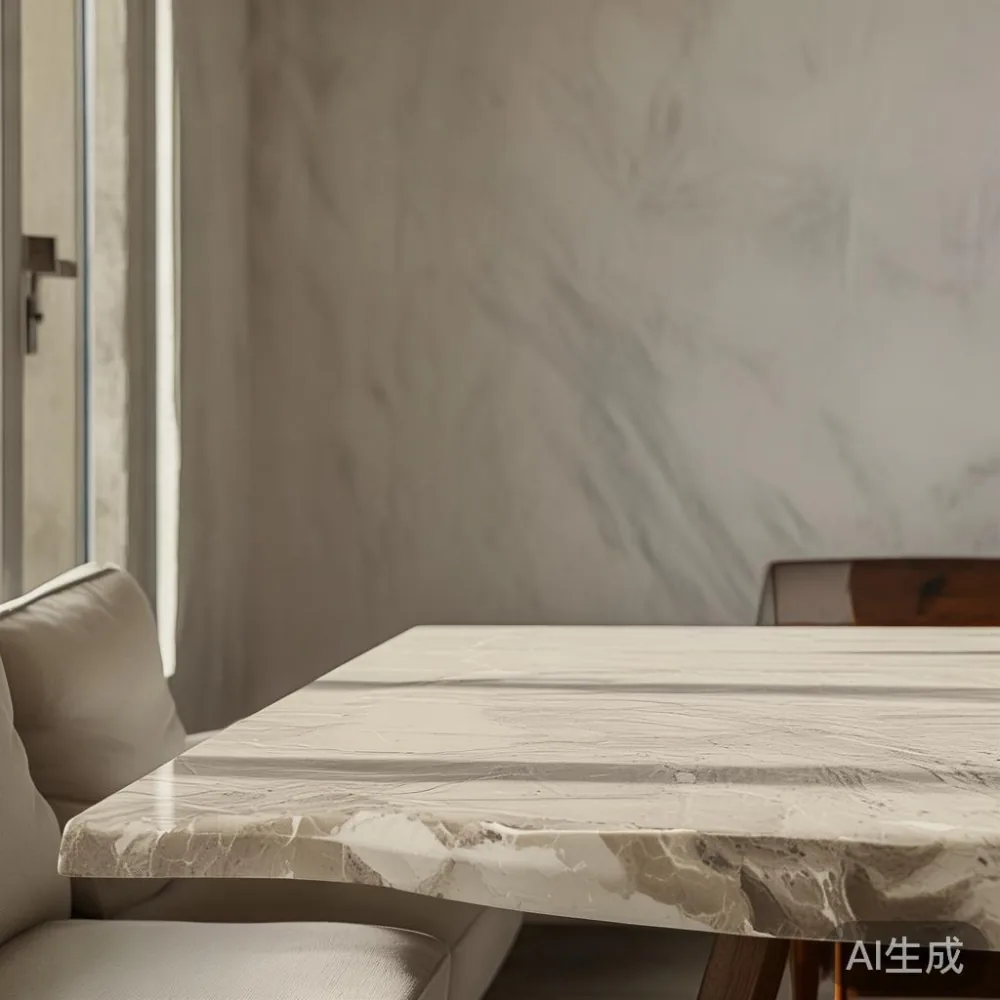
For marble, request the slab dimensions, edge profile, weight, and protection plan. A marble table may weigh 55 kg as a 120 cm square top, while a smaller 80 cm round version may weigh 32 kg. These are meaningful differences at a lift doorway measuring 80 cm.
Confirm that the supplier uses clear warranty and return terms. MIDHILL’s 10-year structural warranty applies to qualifying structural elements, while lifetime refinishing support offers a path for surface renewal. The 14-day returns policy allows a buyer to reconsider suitability, subject to the published conditions. Free shipping above US$350 is based on that stated threshold rather than a converted SGD figure, so the checkout total should be reviewed carefully.
Which option should Singapore homeowners choose?
Choose veneer when the budget is constrained, the furniture will move within 3 to 4 years, and the layout prioritises compact delivery. Choose solid wood when the piece will remain for 8 to 10 years or longer, the owner values repairability, and the surface will receive frequent use. A solid wood dining table, bed frame, wardrobe, or nightstand can justify its higher purchase price through longer service, especially when refinishing is realistic.
Do not choose either material without measuring the home. Record the lift opening, corridor width, doorway width, turning space, and staircase dimensions. Then compare those figures with the packed product. Marble-top dining tables and marble-top nightstands add weight; solid wood sofas and bed frames add bulk. Good access planning can prevent a S$200 delivery problem and protect the furniture before it enters the home.
Over a 5-year horizon, veneer can be the lower cash-cost option, but solid wood can offer the lower replacement risk. For a Singapore home expected to age with its owners rather than be replaced after a lease cycle, that long-term value deserves a place in the decision. Light luxury is not only about how a room looks on delivery day; it is also about whether the materials can continue to look composed after 1,825 days of ordinary family life.