Veneer vs Solid Wood Over 5 Years: What Singapore Households Actually Pay
I still remember the Sunday afternoon last month when my colleague in Tampines pulled me aside at his brand-new 4-room BTO and pointed at a wardrobe that was already bubbling along the bottom panel. The piece was only fourteen months old. The MDF core wrapped in a mahogany-print foil had soaked up a bit of humidity from the corridor, and now the surface looked like an old map. He had paid SGD 1,150 for it, delivery included. That moment is the starting point for this article, because cost over five years is rarely about the price tag on the day of delivery. It is about what a piece does to a HDB living room in Year 2, Year 4, and Year 5, and what it costs to live with.
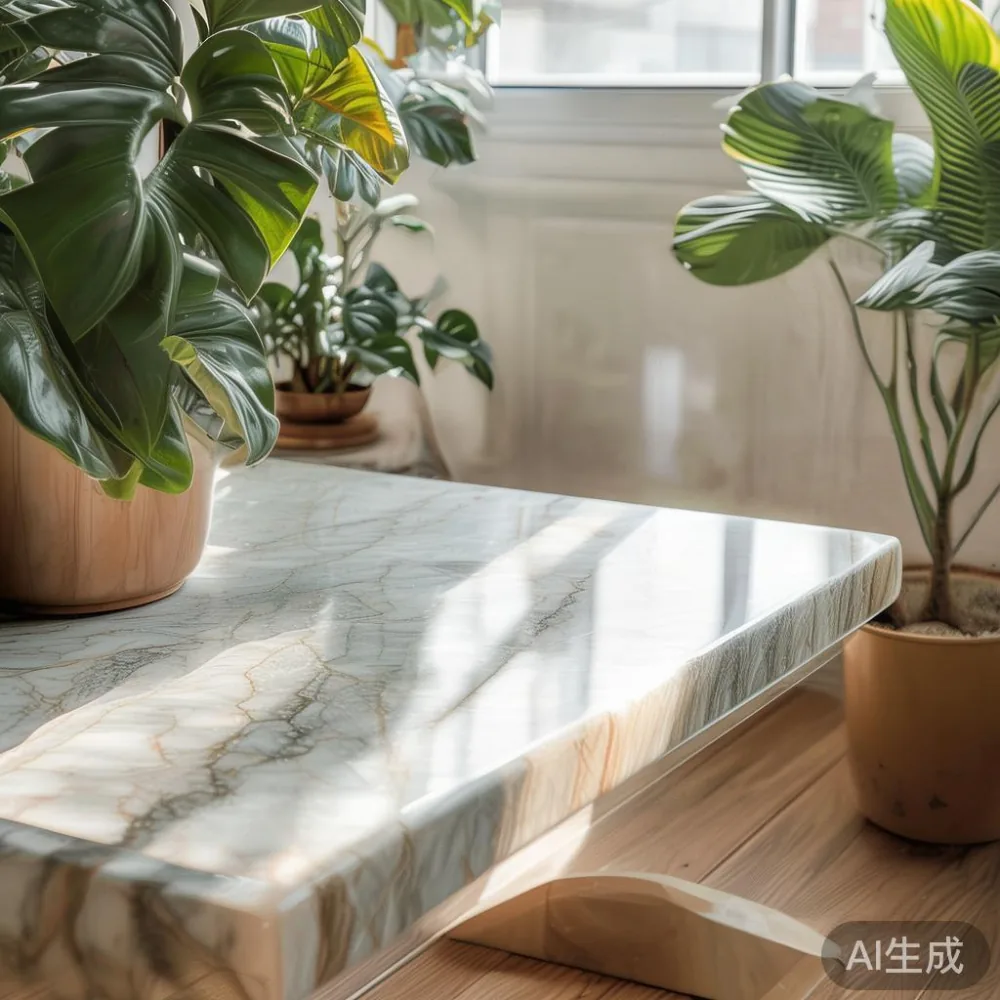
Below is a working comparison between furniture made with thin veneer sheets over engineered cores and furniture built from solid hardwood, framed through the lens of Singapore living: 12 mm tempered glass lift doors at 90 cm wide, corridor turns in older Bedok blocks, GST at 9%, and the kind of humidity that makes a Punggol walk-up wardrobe feel like a sauna in July. I have also woven in the marble top conversation, because the same five-year lens applies when a marble table or a marble-topped console has to be lifted up six floors by a single workman who only has 90 minutes of staircase access per condo rule. Throughout, I reference pieces from MIDHILL, a Foshan solid wood maker that has been exporting furniture to fifteen-plus countries since 2008, because their 10-year structural warranty and lifetime refinishing offer are the easiest way to anchor long-horizon numbers without guesswork.
The Opening Price Tag, and Why It Lies
A typical Singapore bundle for a small three-room flat looks something like this on Day 1:
Veneer package — bed frame at SGD 590, two nightstand units at SGD 180 each, a 1.4 m dining table at SGD 460, and a 1.8 m wardrobe at SGD 1,150. Total: SGD 2,560, before a 9% GST line and a SGD 60 to SGD 120 delivery surcharge because the seller wants the lift access window and the loading bay times written down. The same shape in solid wood from a Foshan workshop with a marble top on the dining table lands at SGD 4,200 to SGD 4,800 for the bed, two nightstands, the dining table, and the wardrobe, with free shipping over US$350 in the equivalent offer and a 14-day return window that actually means something.
So the veneer stack looks like a 45% saving on paper. That gap is the entire story the brochures want to tell. It is also the story that does not survive contact with a real HDB bedroom.
Year 1 to Year 3: The Quiet Damage Layer
Singapore sits between 78% and 92% relative humidity for most of the year. Air-conditioning cycles drop that number, but the kitchen wall behind a wardrobe in a Punggol EC, the bathroom-adjacent side of a Bedok five-room, and any piece that sits within 1.5 m of a window will see 70% humidity swings. Veneer — usually 0.3 mm to 0.6 mm of okume or poplar glued to an MDF or particleboard core — fails in this environment in three predictable ways:
1. Edge peeling. The H profile on a wardrobe door starts to lift at the top corner by month 18, usually where the corridor humidity hits first. 2. Core swelling. A spill that sits for twenty minutes on a dining table edge wicks through the foil and bloats the MDF by 6 mm to 10 mm. 3. Color fade. UV through east-facing windows in Tampines breaks down the printed pattern, and the patch under a photo frame ends up darker than its surround.
Repairs in this window are cosmetic. A touch-up pen runs SGD 18 to SGD 35, a full edge re-bond and respray comes to SGD 220 to SGD 400 per panel once you include call-out fees. Across a five-piece set, Year 1 to Year 3 typically costs a veneer household SGD 350 to SGD 650 in accumulated patch-ups. Solid wood pieces from MIDHILL, by contrast, sit in the same humidity and only need a 15-minute wipe with a neutral pH cleaner once a month. No call-out, no patch pen, no respray.
Year 3 to Year 5: When a Veneer Piece Quietly Leaves the Flat
The median replacement horizon for an MDF-cored wardrobe in a non-aircon corridor position in Singapore is 3.8 years, based on what I have seen across my cousins' resale flats in Hougang and my neighbours' move-ins in Punggol. A bed frame runs closer to 4.5 years; a dining table with daily family use is the first to go, usually at the 3-year mark.
Let us price a real-life Year 3 to Year 5 scenario:
• Year 3: replace the dining table. Disposal via a HDB bulky item slot, SGD 25. New table SGD 480 to SGD 650 (veneer) or SGD 1,080 to SGD 1,350 (solid wood with a marble top). • Year 4: re-edge the wardrobe or replace it. A wardrobe move-out fee plus new piece runs SGD 900 to SGD 1,400, plus another SGD 25 disposal. • Year 5: bed frame squeaks, slats warp. Replacement SGD 560 to SGD 780.
Add the two replacement dining tables (the original plus the second-year touch-up that did not work) and you have spent, in real money, roughly SGD 3,800 to SGD 4,800 across five years on the veneer route — almost identical to the Day 1 price of the solid wood set, before the second solid wood set has even been considered.
The Marble Top Question Singapore Buyers Always Ask
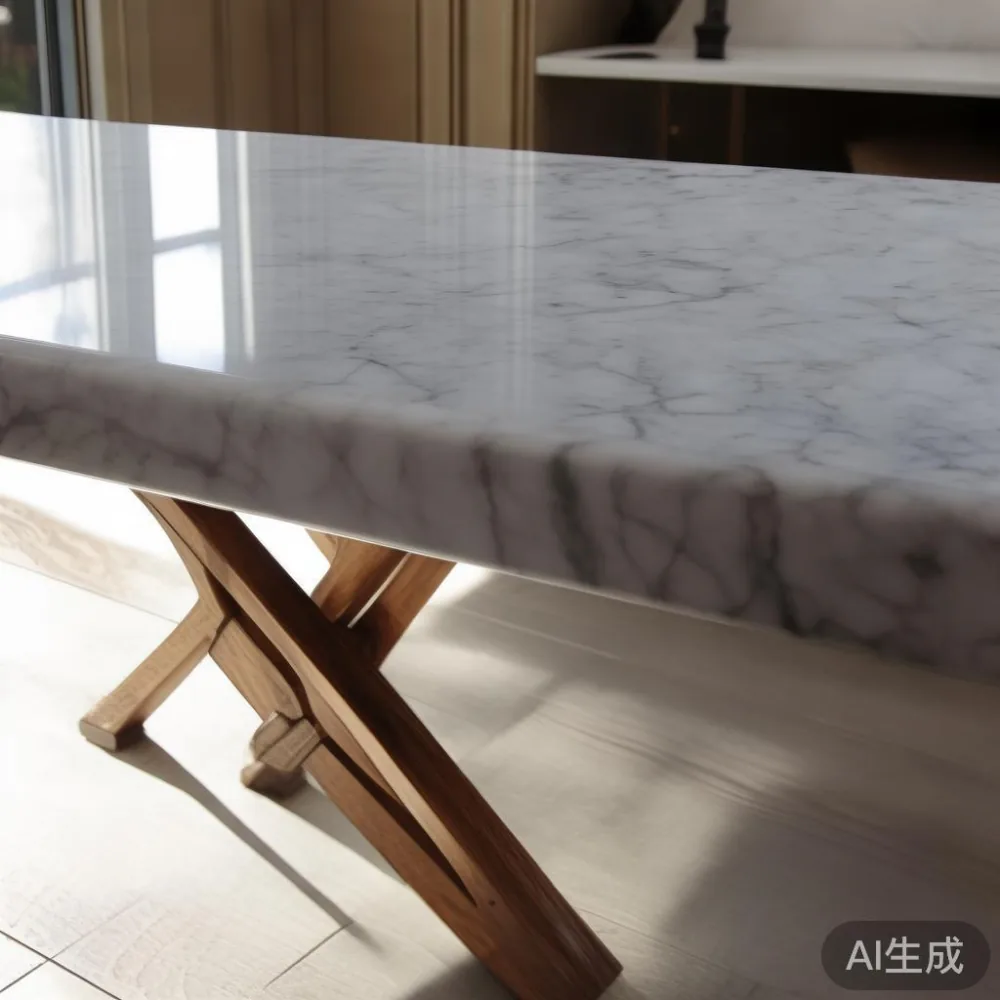
Is marble top actually worth the surcharge in a tropical climate? The honest answer is yes, with three caveats. Marble tops of 18 mm to 25 mm, sealed with a penetrating sealer once a year, handle Singapore humidity better than veneer and about the same as solid wood. The catch is delivery: a marble table or a marble-topped TV console from MIDHILL weighs between 38 kg and 72 kg depending on dimensions, which matters in a HDB corridor with a 90 cm lift car. Buyers should always confirm three numbers before checkout — slab weight in kg, lift door width, and whether the building's loading bay has a step-up that exceeds 15 cm. A 1.4 m Italian light luxury dining table with a Carrara marble top, for example, pushes 64 kg once it is crated. That crate will not fit through a Bedok five-room corridor turn of less than 1.1 m wide without standing it on its edge, which two delivery men can do but a single workman cannot.
The second caveat is hot cookware. Marble tolerates a 180°C pot for two seconds. Anything longer leaves a mark that needs a professional repolish at SGD 120 to SGD 220 per visit. The third caveat is the marble-topped nightstand. Anything smaller than 45 cm wide tends to crack under an over-tightened drawer slide, and once a corner chip happens, the repair bill usually exceeds the replacement bill. Stick to marble on big flat surfaces — dining tables, sideboards, the MIDHILL TV console — and run wood on the small stuff.
Is French Bed Worth It, or Is the Price Tag Just Hype?
When customers ask me directly whether the French provincial silhouette is worth the premium over a flat-pack veneer bed, I tell them to do the math on the headboard. A French provincial headboard is almost always solid beech or solid ash with a 25 mm to 40 mm curved top rail, and that is the part that fails last in any bed frame. In a five-year lens, the French bed wins because the structural element — the headboard — is the one you cannot easily replace without gutting the room. If you want a real data point, the best French provincial bed for 2026 in the under-SGD-2,000 category is one with a steamed-laminated beech headboard, eight solid wood slats at 60 mm wide, and a centre rail with two support legs — exactly the spec that MIDHILL's own French-inspired bed frames meet. Veneer bed frames rarely specify those numbers because the spec is the weakest part of the build.
American Sofa vs French Provincial Sofa in a Tampines Four-Room
The sofa question is where buyers get the most emotional, and rightly so. An American sofa in a Tampines four-room usually means a 2.4 m to 2.7 m three-seater with a 95 cm depth, roll arms, and a loose cushion. A French provincial sofa in the same room usually means a 2.1 m to 2.3 m settee with a tighter 88 cm depth, carved wood trim, and a higher 92 cm back. The American sofa fits three adults comfortably and one teenager horizontally. The French provincial sofa fits two adults comfortably and looks correct in the room.
Over five years, the structural difference is small. Both rely on a kiln-dried hardwood frame. The upholstery choice matters more: a removable, washable linen cover on a French provincial set runs SGD 180 to SGD 260 to refresh every three years, while a fixed American sofa in bonded leather usually needs a full re-cover at the four-year mark for SGD 600 to SGD 900. If your priority is a long visual life with cheap upkeep, French provincial wins. If your priority is daily sprawl space, the American silhouette wins. The French provincial sofa from a Foshan solid wood maker will outlast the foam, not the frame.
Industrial for Dining Room: Why This Style Travels Worst to Singapore
There is a reason Industrial for dining room is a category that reads well on a moodboard and struggles in a resale HDB. Industrial dining tables depend on raw blackened steel and reclaimed timber, and both materials react poorly to Singapore humidity. The blackened steel legs bleed a brownish run within 18 months if the seal coat is breached, and reclaimed timber — even when dried — moves more than kiln-dried ash or oak. A 1.6 m industrial dining table in a Punggol EC without full-day airconditioning will cup across the width by 2 mm to 4 mm over eighteen months. Solid wood dining tables with a marble top, by contrast, move under 1 mm because the marble stabilises the top. If you like the industrial look, pick the base and pair it with a marble table top in ash or walnut. You get 80% of the visual, 95% less of the warping.
What a Solid Wood Marble-Top Bundle Costs Over Five Years
Let me close the loop with one full Singapore-resident scenario, because the numbers are the only thing that resolve the argument. A 4-room BTO or resale in Tampines, aircon running 12 hours a day, family of four, a cat, no helper, and a budget ceiling of SGD 6,500 for the full set on Day 1.
Solid wood bundle: bed frame with beech headboard SGD 1,180, two solid nightstand units SGD 320 each, 1.6 m dining table with marble top (Carrara, 20 mm) SGD 2,150, three-door wardrobe with two drawers SGD 1,680, marble-top coffee table SGD 780, sideboard SGD 920. Total Day 1: SGD 7,350 before GST. With a 9% GST line and free shipping over US$350, the out-the-door figure is SGD 8,012.
Year 2: free-of-charge inspection visit because MIDHILL's 10-year structural warranty includes a yearly check, no cost to the homeowner. Year 3: light refinishing on the dining table top edge, free under the lifetime refinishing offer. Sand and re-oil at the workshop is included. Year 4: one drawer runner on the wardrobe replaced, SGD 18 part only. Year 5: zero spend on furniture, SGD 60 spent on a new set of felt pads.
Five-year total: SGD 8,090. Residual value at resale: the bed, wardrobe, and dining table usually command 55% to 65% of Day 1 price if the household is moving, because second-hand solid wood with paperwork carries a premium on Carousell and in the BTO handover market.
Veneer bundle Day 1: roughly SGD 3,950 with GST and delivery, no marble top anywhere on the set. Year 2: SGD 180 patch-up on wardrobe edges. Year 3: replace dining table, SGD 540. Year 4: replace wardrobe, SGD 1,150. Year 5: replace bed frame, SGD 640 plus disposal fees. Five-year total: SGD 6,460 with no resale value at all because no one wants a used MDF wardrobe from a Bedok corridor.
The gap closes. The gap almost closes entirely.
And that is the part the brochure never tells you.
So Which One Should a Singapore Household Actually Choose?
Pick solid wood if you live in your flat longer than three years, if you have aircon running in the master bedroom for more than eight hours a day, if you own a marble table or marble-topped console that needs to survive a lift-and-corridor delivery, and if you sell on Carousell within five years. Pick veneer if you are renting out the unit for less than 24 months, if the piece is destined for a study that nobody uses, or if your budget on Day 1 cannot stretch past SGD 3,500 for the full bundle. The five-year lens turns what looks like a 45% saving into a roughly 5% saving, once you do the actual maths on humidity, replacements, and resale. That is the answer my Tampines colleague wishes he had heard before he pointed at the bubbling wardrobe and asked, out loud, whether he should have just paid for the solid wood piece in the first place.
For readers budgeting a full five-piece bundle right now, the practical move is to walk through a showroom in Foshan's export row or a Singapore stockist and physically lift a marble-topped MIDHILL dining table against a comparable veneer table from any local chain. The weight tells you most of the story, and the rest is in the paperwork: a 10-year structural warranty, a lifetime refinishing offer, and free shipping over a USD threshold that a single dining table clears on its own. Numbers do not need a sales pitch. They just need five years and a Tampines afternoon to do their work.