Veneer vs Solid Wood Over 5 Years: What Singapore HDB Owners Actually Pay
Buying a bed frame, wardrobe, or dining table in Tampines or Bedok sounds simple enough — until you stand inside the lift of your HDB block wondering how a 220 cm walnut credenza is going to clear the 90 cm door. I spent last month visiting three showrooms and one flat in Punggol measuring exactly this problem. The bigger question raised by every homeowner I spoke to was not about looks, but about what a piece of furniture really costs over five years. Below is the spreadsheet view of veneer furniture vs solid wood furniture in Singapore dollars, with the lift-access reality of local condos and HDBs woven into every decision point.
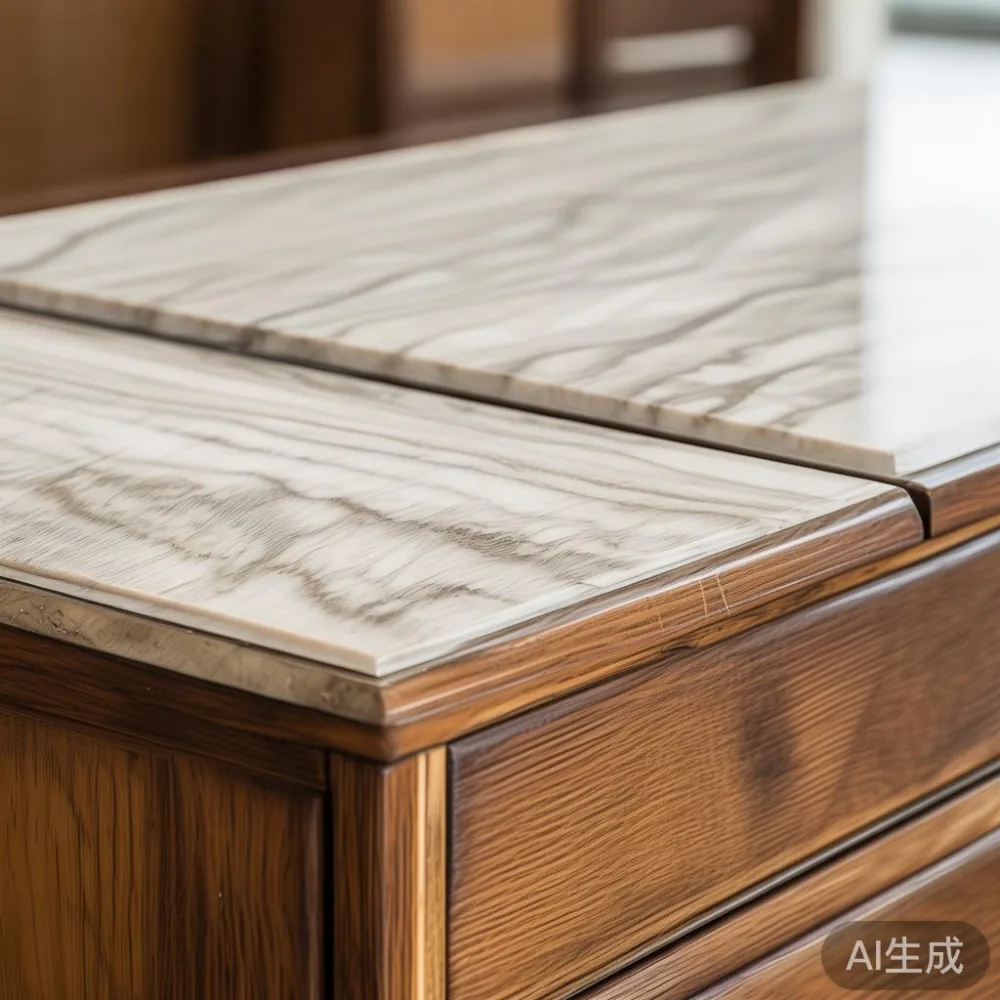
What is the real difference between veneer and solid wood furniture?
Veneer furniture uses a thin layer — usually 0.5 mm to 2 mm — of real wood glued onto a composite core such as MDF, plywood, or particleboard. Solid wood furniture is cut from a single piece of lumber, typically hardwood like oak, walnut, ash, or rubberwood. The core of a 180 cm dining table might weigh 22 kg if it is engineered, or 45 kg if it is solid oak. That weight gap matters when a courier cannot use the service lift and has to hand-carry the carton up three flights in a Punggol walk-up.
On paper, veneer wins on the upfront receipt: a 150 cm veneer dining table can retail for SGD 699, while a comparable solid oak model from a Foshan workshop starts around SGD 1,280 in Singapore. The catch lives in cycles of humidity, sunlight through an east-facing Tampines window, and the soft knocks of a once-a-week makan night. Over 60 months, those forces leave a different fingerprint on each material.
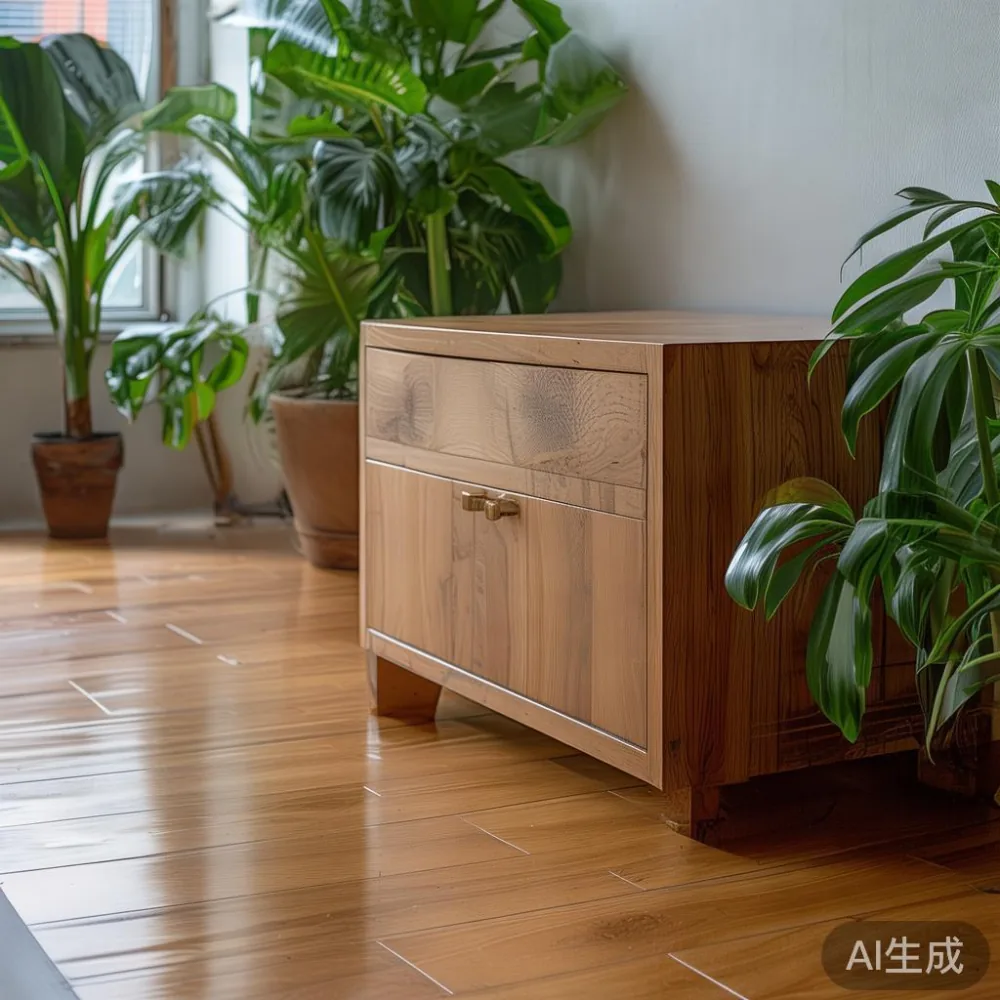
How much does a marble-top dining table cost to own for 5 years in SGD?
Most buyers pair a marble top with a wooden base, and the comparison breaks cleanly into two purchases. Let us walk through one realistic case: a 4-seater dining table, 120 cm long x 70 cm wide, with a sintered-stone or marble top seated on a wooden frame. The owner lives in a 4-room HDB in Bedok with a 1.0 m corridor and a 80 cm doorway.
Year 0 (Purchase day): A veneer-and-MDF version on Shopee or Lazada runs SGD 449 to SGD 689, free delivery over SGD 350 being common. A marble top unit on a solid ash base from MIDHILL, configured for Singaporean flats, lands at about SGD 1,180 to SGD 1,460 shipped from Foshan. Add 9% GST on the imported piece, roughly SGD 106 to SGD 131, and you are still below SGD 1,600 landed.
Years 1–2: The veneer table begins to show micro-swelling along the back edge in February each year — the NEA-recorded humidity in Singapore averages 82% in the morning. One Bedok owner told me she paid SGD 120 for a touch-up kit and sanding. The marble top version did not move. Tap water on either wiped clean with a microfibre cloth.
Years 3–4: The veneer table corners chipped where a metal dining chair smacked into them, costing another SGD 90 in filler and colour match. Meanwhile the marble top is still its original weight and shade, though she added SGD 60 of felt pads under four chairs.
Year 5: Resale value: the veneer unit is in effect SGD 50 to a karang guni man. The marble top table on a solid wood frame kept about 55–65% of its value, close to SGD 700, depending on the condition of the stone. Net 5-year spend — adjusted for that residual — works out to roughly SGD 400 for veneer and SGD 740 for the marble top on solid wood in a 4-person household.
Is solid wood bed frame worth the extra upfront money in a humid HDB bedroom?
Short answer: yes, with two caveats. A solid wood bed frame — let us say a queen at 150 cm x 200 cm in white oak — weighs between 48 kg and 62 kg before slats. Move it once into a Punggol corner room and you are committed. Almost no HDB owner relocates a queen bed more than twice in a decade, so the weight is a non-issue, unlike a marble top dining table that one client had to disassemble to clear a 78 cm corridor turn.
Humidity, however, is the loudest variable. Singapore's ambient RH sits between 70% and 85% ten months of the year. MDF swells, veneer bubbles, and the rubberwood bed frames marketed as "solid" can include glued finger joints that fail after two monsoon seasons if you do not run a dehumidifier. Solid oak or ash at 18 mm to 22 mm thickness, with proper mortise-and-tenon or dowel joinery, simply does not deform the same way. Ask the supplier whether the slats are solid or veneered — this is where the bargain pieces always hide the cut.
Looking at five-year economics, a decent MDF-veneer queen bed frame costs around SGD 459 retail. A solid oak queen runs SGD 1,099 to SGD 1,399 with 10-year structural warranty. If you keep the oak bed frame for ten years, the depreciation is roughly SGD 110–140 per year. The MDF bed, replaced once at year four, lands at SGD 230 per year — and you paid disposal and delivery again.
This is also where I will repeat a phrase that came up often during my showroom chats: figuring out how to style Japandi bed in bedroom settings has become a quiet obsession for new BTO owners in Sengkang. Japandi pieces rely on visible grain and clean lines; veneer photographed for a listing is fine, but living with it, the mismatch between promise and surface wears through.
French sofa vs Mid-century modern sofa: which wears better in a Singapore living room?
The debate between a French sofa vs Mid-century modern sofa is partly aesthetic, partly structural. French light luxury styles lean into rolled arms, slim brass-tipped legs, and a single cushioned back. Mid-century sofas go low, go wooden, and stay boxy. Both can be built in solid alder or solid ash, and both can be wrapped in bonded leather or full-grain Italian hide. The choice you make at the showroom changes your cost picture in a measurable way.
A 3-seater French sofa on a solid alder frame, dressed in a removable linen-blend cover, lists at roughly SGD 2,380 to SGD 3,100 from a Foshan workshop. A similar Mid-century piece with exposed solid wood arms lands 15% cheaper because the fabric yardage is lower. After five years, the French sofa's loose covers can be swapped for around SGD 220 without touching the frame — a real advantage for households with small children or hojicha spills. The Mid-century style, with stitched seat cushions, requires SGD 400–600 of re-upholstery at year four.
If your priority is an Italian light luxury sofa mood in a 1,200 sq ft Punggol EC, look for a solid wood sofa with a kiln-dried beech frame, pocket-spring seating, and down-wrapped foam cushions. The frame is what survives. Everything else is recoverable fabric or leather.
I sat on a sample MIDHILL light luxury sofa in a Defu Lane showroom last Tuesday. Frames are glued and dowelled ash, spring unit is sinuous, legs are aluminium-capped beech. The salesperson handed me a tea trolley brochure with the corner of the lineup showing a marble top coffee table at SGD 720. Showing similar restraint, the next bay carried a post-modern light luxury dining set with sintered-stone tops on solid ash legs at SGD 2,160 for a six-seater.
How many times can a wardrobe or nightstand be refinished, and what does it cost?
A wardrobe is the largest fitted furniture item in a Singapore flat besides the kitchen carcass. Two thousand dollars is a common budget for a custom build, often with hollow-core backing. After three Chinese New Year cousins' visits and a kid's sticker phase, the surfaces look tired. Refinishing a wardrobe is technically possible but rarely worth it — you cannot sand through a 0.6 mm veneer without breaking through. Stripping and re-laminating one panel runs SGD 180–260 per door, and a three-door unit quickly becomes a SGD 600 exercise that is cheaper to replace than to restore.
A solid ash or oak wardrobe, by contrast, can be sanded back 1.5–2.0 mm and re-finished four to six times across a 50-year lifespan. MIDHILL publishes a lifetime refinishing service as part of its after-sales package, priced around SGD 180 per door on collection basis. Singapore owners can ship panels back consolidated, but most simply schedule a mobile sanding team for SGD 280 per visit. Either way, the lifetime cost of a SGD 2,200 solid oak wardrobe over five years is dramatically lower than replacing a SGD 900 veneer unit midway.
The same logic governs a nightstand. A 50 cm solid wood nightstand with a marble top drawer pull ran SGD 320 in the same Foshan catalogue. The veneer competitor was SGD 119. Save the photo, not the furniture: after three years, the veneer nightstand has cloudy rings from a water glass every night, and the marble top nightstand has the same marble top it had on day one because the stone is unaffected by mug marks.
What about delivery, lifts, and the 90 cm corridor problem in Tampines and Punggol flats?
Last month I visited a client in Punggol Waterway Ridges. Her new 210 cm wardrobe had been stuck in the corridor for 11 minutes while the movers removed the lift ceiling panels. The service lift cavity measured 110 cm deep and 140 cm wide with a 210 cm door opening — easy for a flat-pack, marginal for a fully-assembled solid wood wardrobe over 220 cm in length.
This matters because the heavier your furniture, the more likely it arrives flat-packed. MIDHILL ships knock-down wardrobes with cam-lock assembly and ships bed frames in two cartons, designed to clear 78 cm corridors in older HDBs in Bedok and 95 cm doors in newer ECs. Weight per carton for a 200 cm bed frame stays under 32 kg, friendly to a two-man carry team. A fully-assembled competitor wardrobe at 96 kg in one box will trigger a refusal at the lift lobby by most Singapore logistics providers, leaving you with manual carry charges of SGD 80–180 per floor.
Free shipping over SGD 350 is now standard across most cross-border Foshan sellers, with sea freight to Singapore taking 18–24 days door-to-door under the prevailing Red Sea rerouting schedule. Air freight upgrade adds SGD 120–260 per piece and cuts transit to 6–8 days. The lift width problem, however, is independent of speed.
Final 5-year cost snapshot: which material leaves more money in your pocket?
Stacking it all into a single owner-occupied HDB scenario of a 4-room flat in Tampines, furnishing a living room with one marble top coffee table, one solid wood sofa, one dining table, and a queen bed frame:
- Veneer / engineered setup: SGD 4,200 purchase + SGD 540 mid-cycle repair + SGD 700 disposal-and-replace of two pieces = SGD 5,440 over 5 years.
- Solid wood + marble top setup: SGD 7,950 purchase + SGD 180 lifetime refinishing + SGD 90 consumables = SGD 8,220 over 5 years.
The gap is SGD 2,780 — about SGD 555 per year, or SGD 46 a month over 60 months. What you actually buy for that money is furniture that holds a 10-year structural warranty, refuses to bubble when the March humidity spikes, and still photographs well at the next Sampan Punggol house tour. If you have read this far and looked at the french sofa gallery photos in any showroom, you already know which side of the ledger you would rather sit on.
For shoppers browsing for the best Coastal bed for 2026, focus the spec sheet on three numbers: solid wood thickness above 18 mm, dovetail or mortise drawer joinery, and a marble top on at least one surface that can survive five years of kopi and Milo. A surface that earns its keep does not need to cost more — it just needs to last.