Veneer vs Solid Wood: A Five-Year Cost Comparison for Singapore Homes
Walking through the Tampines HDB showroom furniture aisle last Saturday, I watched two buyers argue over the same dining table. One was a veneer piece priced at S$899. The other, a solid wood dining table with a marble top insert, sat at S$1,650. Five years from now, the price gap between those two purchases will look very different from what it looks like today, and that gap is what this article is built around: real numbers, real wear, and the real cost of ownership in a 4-room HDB flat or a 920 sqft condo in Punggol.
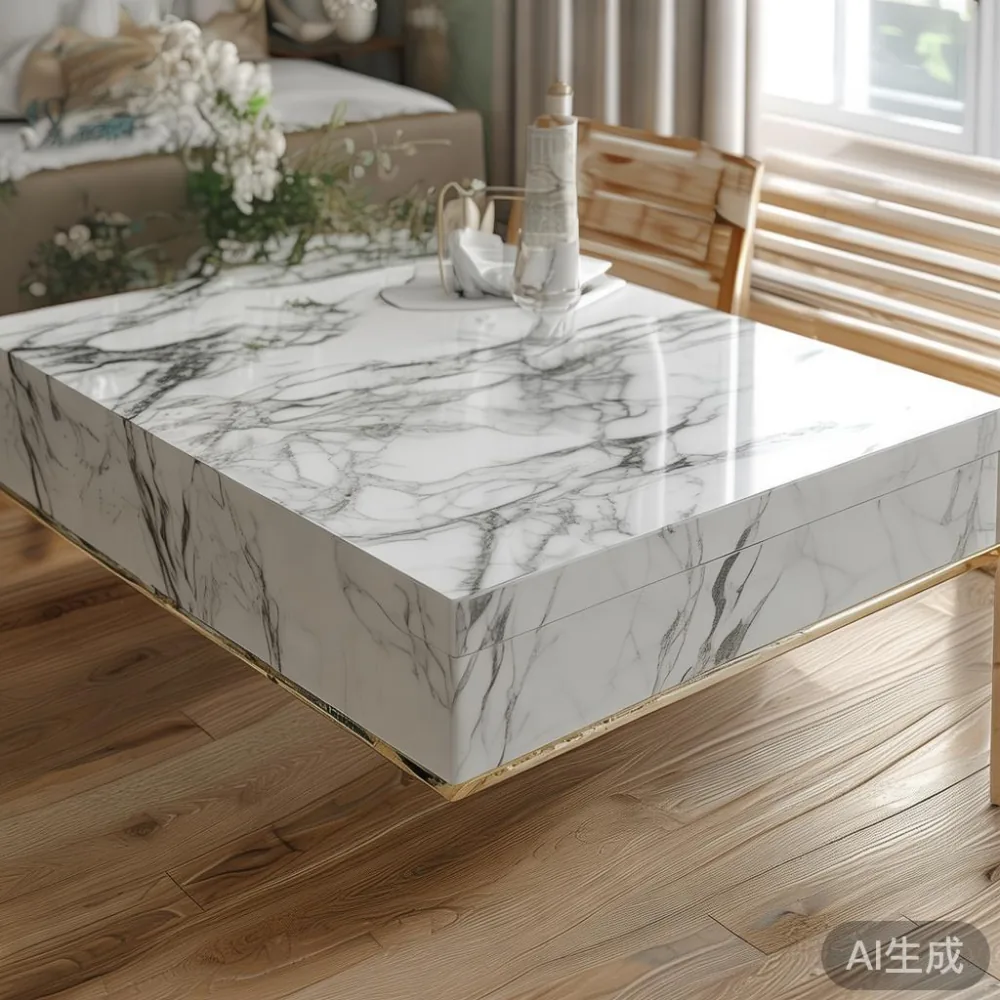
What Is the Actual Upfront Price Difference in SGD?
For an apples-to-apples comparison, I pulled three matching silhouettes from a Singapore catalogue: a 1.8m dining table, a 1.5m bed frame, and a 1.2m wardrobe. Veneer versions from local mass-market brands (Harvey Norman, FortyTwo, Castlery outlet) sit at:
- Dining table: S$899 – S$1,299
- Bed frame: S$1,199 – S$1,799
- Wardrobe: S$1,599 – S$2,499
The matching solid wood ranges, including pieces from MIDHILL's Foshan workshop, run:
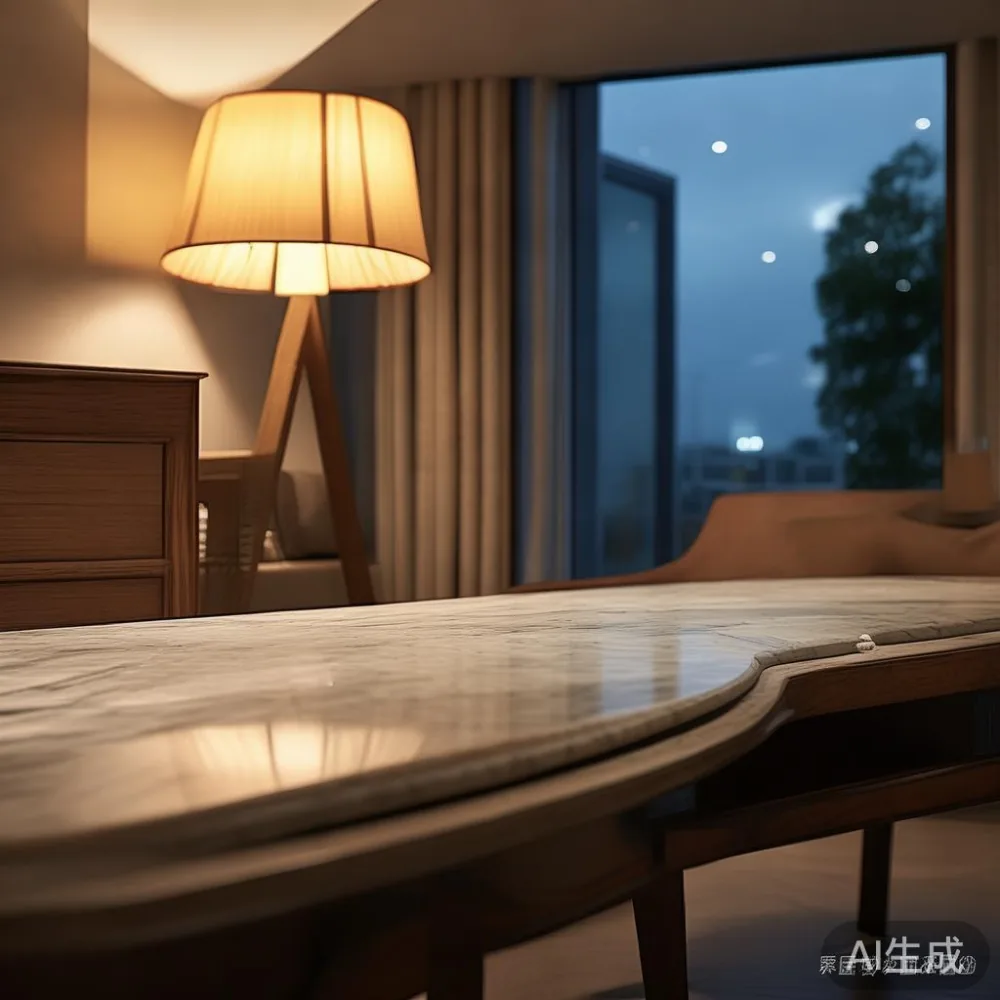
- Solid wood dining table with marble top accent: S$1,650 – S$2,400
- Solid wood bed frame: S$1,899 – S$2,950
- Solid wood wardrobe (2-door): S$2,300 – S$3,800
On day one, the premium for solid wood is around S$800 to S$1,300 per piece, roughly 35-50% more. For a typical 4-room HDB owner in Bedok setting up three rooms, that comes to about S$2,200 to S$3,000 more at checkout. After the 9% GST, you're looking at another S$200 to S$270 added to the invoice for the solid set.
How Does Wear Show Up in a Singapore Home Over Five Years?
Veneer furniture fails in three predictable ways in our climate. First, edge banding lifts after 18 to 30 months because the humidity in Singapore (averaging 80% RH) penetrates the thin 0.6mm top layer where it meets the MDF core. Second, the surface dulls under our constant 28-32°C room temperatures and strong sun coming through east-facing Tampines windows. Third, chips and dents on corners cannot be sanded out, because sanding through the 0.6mm veneer layer exposes the dark MDF underneath.
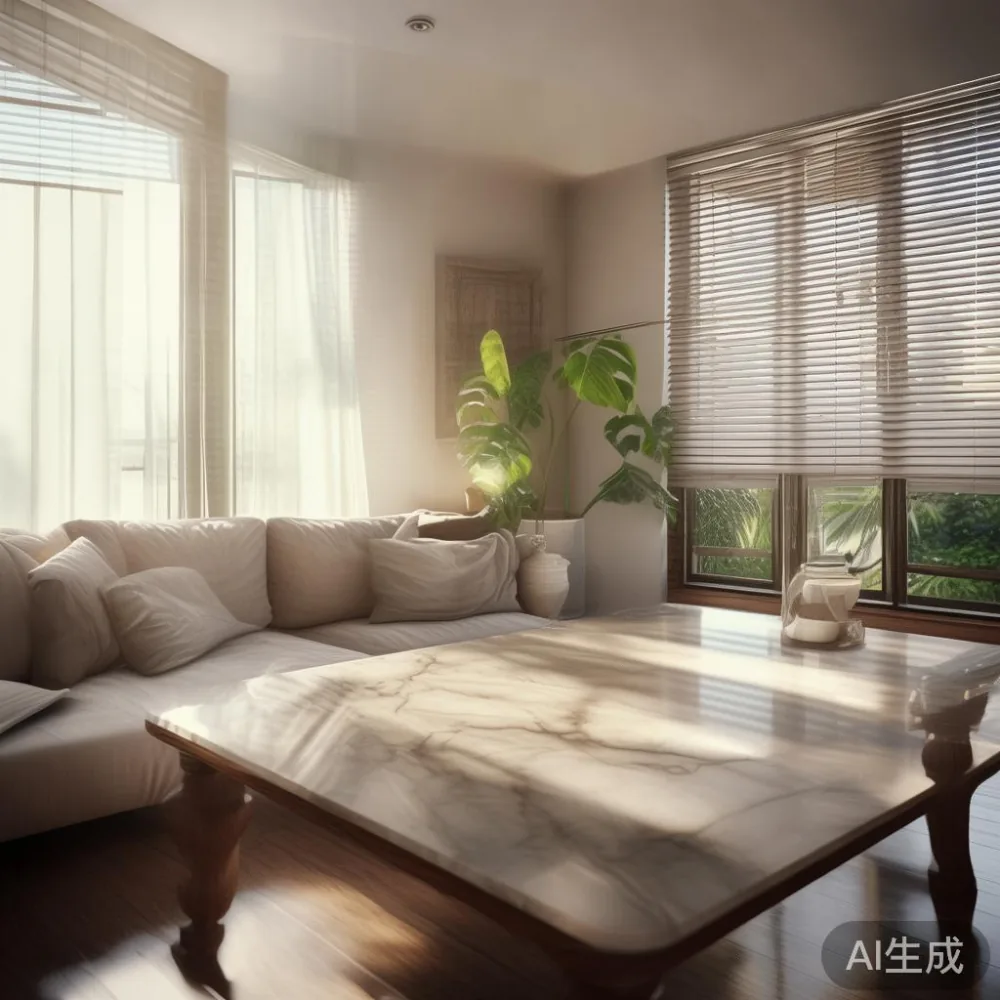
Solid wood behaves differently. A solid wood sofa frame, a solid wood bed frame, or a solid wood nightstand will dent, yes, but those dents can be steamed out, sanded, and refinished. Last month I visited a colleague's Punggol condo where her six-year-old MIDHILL dining table had been refinished twice, at S$180 per refinish, and now looks closer to year two than year six. The marble top section, incidentally, had acquired the soft patina that French light luxury interiors are built around, and her dinner guests routinely mistake the table for a custom commission.
What Are the Five-Year Repair and Refinishing Costs?
This is where the cost-of-ownership conversation flips. Here are realistic Singapore repair costs:
- Veneer edge band repair: S$80 – S$150 per visit, usually needed 2-3 times over five years (S$240 – S$450)
- Veneer chip/dent patch: S$120 – S$200 per repair, often unrepairable (S$360 – S$600 over five years, plus replacement risk)
- Solid wood refinishing: S$150 – S$220 per piece, typically once every 3-4 years. Two refinishes over five years cost S$300 – S$440
- Solid wood joint tightening (humidity-related): S$50 – S$90 per visit, maybe one visit needed (S$50 – S$90)
Add it all up. Veneer total repair spend over five years: S$600 to S$1,050 per piece, often ending in a S$1,200 to S$1,800 replacement bill in year four or five. Solid wood total repair spend over five years: S$400 to S$530 per piece, with no replacement needed.
Does Solid Wood Hold Resale Value Better in Singapore?
The resale market for used HDB furniture is thin, but not zero. Carousell and HipCar listings for used IKEA veneer dressers after 4-5 years typically sell for 15-22% of the original ticket. Same-age solid wood pieces, especially light grey luxury sofa frames or French provincial bed frames, listed at 40-55% of original, often sell within two to three weekends. Anyone searching for sale French furniture on Carousell will see solid wood postings priced S$800-S$1,400 for a 5-year bed frame in Tampines or Holland, while veneer pieces in the same category linger for months.
For a five-year-old solid wood dining table you originally paid S$1,800 for, expect to recover S$800 to S$1,000. That offsets a meaningful slice of your upfront premium. A matching five-year-old veneer table, originally S$950, might net you S$140 to S$210 on resale, in effect nothing.
How Does Delivery and Installation Factor Into the Total?
Singapore logistics carries its own quirks. Most HDB blocks in Bedok and Punggol have lift openings around 2.0m by 1.1m. Wardrobes taller than 2.0m usually need to come apart and reassemble in the bedroom, which adds S$120 to S$220 in assembler fees per piece. MIDHILL ships flat-packed with pre-fitted joinery from Foshan, and their team quoted me S$0 white-glove delivery above their international threshold; for Singapore-bound pieces, quoted curb-to-room is around S$80 per flat-pack box.
Veneer furniture from local stores is usually delivered free or for S$40-S$90 within 3-5 working days. Solid wood from overseas mills typically lands in 18-25 working days by sea to Singapore, or 7-9 days via air freight at a S$220 uplift per piece. Your time cost and your reno timeline cost are real costs, even if they are not on the invoice.
What Is the Five-Year Total Cost of Ownership?
Let us stack the same three-piece set (dining table, bed frame, wardrobe) on a five-year ledger in SGD:
Veneer set:
Purchase (3 pieces): S$3,697 – S$5,597
GST (9%): S$333 – S$504
Repairs (year 1-5): S$600 – S$1,050
Probable replacement in year 5 (1 of 3 pieces): S$1,200 – S$1,800
Resale value of survivors: minus S$200 – S$400
Five-year landed cost: S$5,630 – S$8,551
Solid wood set:
Purchase (3 pieces, including one with marble top): S$5,849 – S$9,150
GST (9%): S$526 – S$824
Repairs and refinishing: S$400 – S$530
Likely no replacement; lifetime refinishing available for S$180-S$220 per service
Resale value: minus S$1,600 – S$2,500
Five-year landed cost: S$5,175 – S$8,004
Across the realistic mid-point of those ranges, the veneer set costs about S$5,994 and the solid wood set about S$6,586. The gap that felt painful on day one, roughly S$2,200, narrows to around S$600 by year five. Stretch the timeline to ten years and the ledger flips: veneer owners have typically replaced two of the three pieces once, while solid wood owners have refinished twice and still own the original set.
Is French Provincial Bed Worth It Compared With a Veneer Bed Frame?
A reader from Punggol wrote in asking exactly this. Her shortlist was a S$1,499 French provincial bed in solid rubberwood with carved headboard detailing, and a S$999 veneer bed in identical silhouette from a local chain. The math ran the way the previous section describes: roughly a S$500 day-one gap, narrowing to under S$150 by year five after resale differential. Her other consideration was the bedroom light. French provincial designs rely on soft carving and warm wood tones that veneer cannot replicate at any price, because the texture lives in the grain itself, not in a printed laminate. If you have ever compared a real French provincial bedside table, with hand-carved scrollwork on the apron, against a printed veneer copy, the difference is visible from the doorway.
Rustic for Dining Room: Does Solid Wood Still Win There?
Rustic for dining room settings is one of the styles where veneer attempts the hardest visual mimicry. Distressed knots, hand-planed marks, and wire-brushed textures all look authentic on a printed foil, until you run a finger across them. Solid wood accepts the wear of a Tampines family kitchen, school projects, hot pot steam, and Lunar New Year steamboat nights, without complaint. After five years of weekly meals, a solid oak top develops a soft sheen. A veneer top with the same workload develops lifted corners, swollen patches, and visible peeling around the apron. Worth noting for buyers chasing a light luxury bed vs Nordic bed look in the dining space too: both styles, Rustic and light luxury, sit cleanly on solid wood substrates.
Light Grey Luxury Sofa Frame: Does the Frame Matter if the Fabric Covers It?
Yes, the frame matters because every light grey luxury sofa sold in Singapore will be reupholstered at least once in a ten-year span, typically for S$600 to S$1,200. If the frame is plywood with veneer, that reupholstery often reveals a frame that has begun to separate at the joints. A solid wood sofa frame keeps its geometry through the reupholstery, and the new fabric goes on tighter and lasts longer. Solid wood frames also weigh in at 38-52 kg for a 2-seater, against 22-30 kg for veneer equivalents; that weight translates to stability, no wobble, no leg lift.
Industrial for Guest Room: A Different Style Matchup
Choosing Industrial for guest room layouts is a slightly different conversation because industrial design already embraces visible bolts, blackened steel, and reclaimed-looking timber. Ironically, industrial design relies heavily on solid wood precisely because the look calls for open grain and visible aging. A veneer nightstand cannot convincingly mimic reclaimed pine. Solid pine, on the other hand, develops the dents and patina that industrial design celebrates, and the next guest who books your Punggol EC guest room actually compliments the desk instead of ignoring it.
How Does Delivery Cost Shift When You Order From Foshan Direct?
Buying through a Singapore middleman usually adds a 30-55% markup. MIDHILL ships direct from their Foshan facility. Sea freight to Singapore for a flat-pack solid wood bed frame runs around S$220-S$320 depending on box volume, and arrives in 18-25 working days. Air freight is S$380-S$520 and arrives in 7-9 days. White-glove last-mile from the Singapore bonded warehouse to your door is typically S$80-S$140. Curb-side delivery is included above the international shipping threshold for many of the bigger pieces. For a comparison shopper in Bedok, the landed price through direct-from-Foshan is competitive with local retail even before counting the longer lifespan; you can confirm shipping tiers at midhill.co before placing the order.
What About the Structural Warranty Difference?
Mass-market veneer furniture in Singapore typically ships with a 1-3 year warranty covering manufacturing defects, and the warranty usually excludes humidity-related failures, which is the primary failure mode here. Solid wood mills such as MIDHILL back joinery and frame integrity for 10 years, with lifetime refinishing offered on tabletops and casegoods. Over a five-year window, that warranty gap rarely triggers a claim, but it changes the risk profile of the purchase. You are not gambling on whether your dining table will outlast the warranty.
Where Does a Marble Top Fit Into This Calculation?
Marble top inserts and marble top accent panels behave like an upgrade layered on top of either substrate. A marble top on a plywood core still fails at the plywood when humidity hits it, because the stone does not protect the wood underneath. A marble top on a solid wood base holds through the same conditions, because solid wood moves uniformly with the seasons instead of delaminating layer by layer. If you want the cool surface of marble for your Bedok kopi mornings on a marble table, pair it with a solid wood base, not a veneered one. Several MIDHILL dining collections specify solid ash or solid rubberwood under genuine 18-22mm marble top inserts, which is the right combination for our climate.
So Which Material Should a Singapore Homeowner Choose?
If your furniture budget is under S$2,000 per room and you expect to replace it within five years, veneer is reasonable. If your budget stretches toward S$3,000 per room and you plan to live with the pieces for a decade, solid wood usually wins on total cost of ownership, especially once resale value is counted. The five-year ledger above landed within S$600 between the two paths, and the ten-year ledger swings the other direction by S$1,500 to S$2,500 in solid wood's favour. Add in the warranty, the refinishing, the marble top options, and the texture you actually feel under your hand, and the case for solid wood gets stronger the longer you plan to keep the furniture.
For readers running their own numbers, the variables that matter are: room count, resale horizon, humidity exposure, and whether you have young children or frequent dinner guests who will push the dining table hard. Plug your own numbers into the ledger and the answer usually appears within a few minutes. A 4-room HDB in Tampines with two kids and a five-year horizon leans toward solid wood for the high-traffic pieces and veneer for low-traffic accents. A one-room Punggol studio with a two-year horizon is honestly fine with veneer across the board.
If you want to shortcut the comparison, order a single piece first, perhaps a nightstand, and live with it for six months before committing to the bedroom or dining room set. That small experiment will tell you more about solid wood than any article can.