Veneer vs Solid Wood Over 5 Years: A Real Singapore Cost Breakdown
Last month I visited a friend's new BTO in Punggol and watched two men wrestle a particleboard dining table through a 1.1 m wide corridor. The veneer along the edge had already chipped after eighteen months of use. By the lift, the table would not fit upright, so they tilted it and a corner dragged against the wall. The whole move took 45 minutes. That single afternoon convinced me that the question of veneer versus solid wood deserves more than a quick glance at the price tag, especially when you live in a Singapore HDB flat, pay 9% GST on top of every dollar, and plan to stay at least five years.
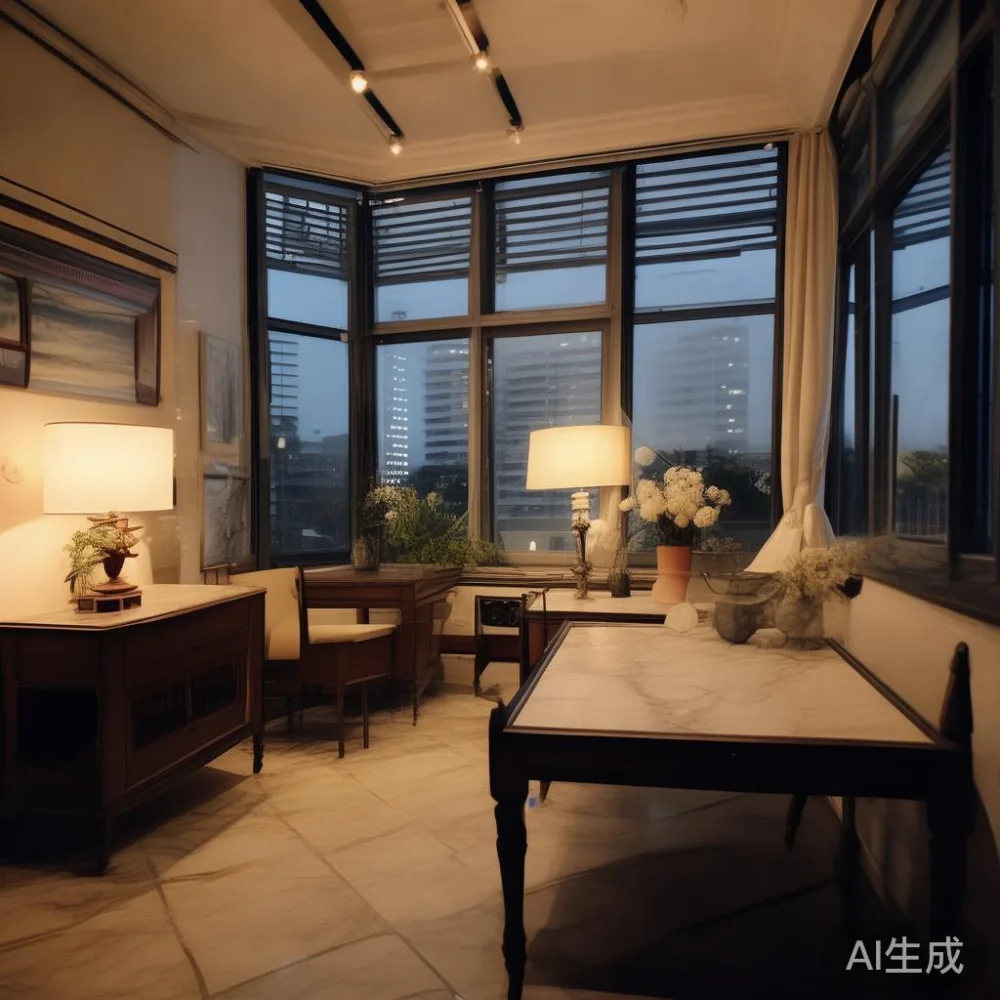
This guide compares a veneered MDF bedroom set with a solid wood set across a realistic five-year window, using Singapore dollars, Singapore logistics, and Singapore humidity. It also touches on how a marble-topped piece such as a marble-top dining table or marble-top nightstand changes the maths. If you are browsing options and want to see what a Foshan-made solid wood line looks like, the collection at midhill.co is a useful reference point for build quality and pricing benchmarks.
Why Singapore Homes Are a Tough Proving Ground for Wood Furniture
Singapore sits in climate zone Af, with average humidity of 78-90% year-round and indoor temperatures that hover between 24°C and 32°C. Particleboard and MDF swell when humidity crosses 60% for long stretches, and the laminate skins that mask their cheap cores start to peel at the corners first. Solid wood, by contrast, breathes. A solid wood bed frame or a solid wood wardrobe can take daily swings of 10-15% relative humidity and still come back to centre when the air-conditioner runs.
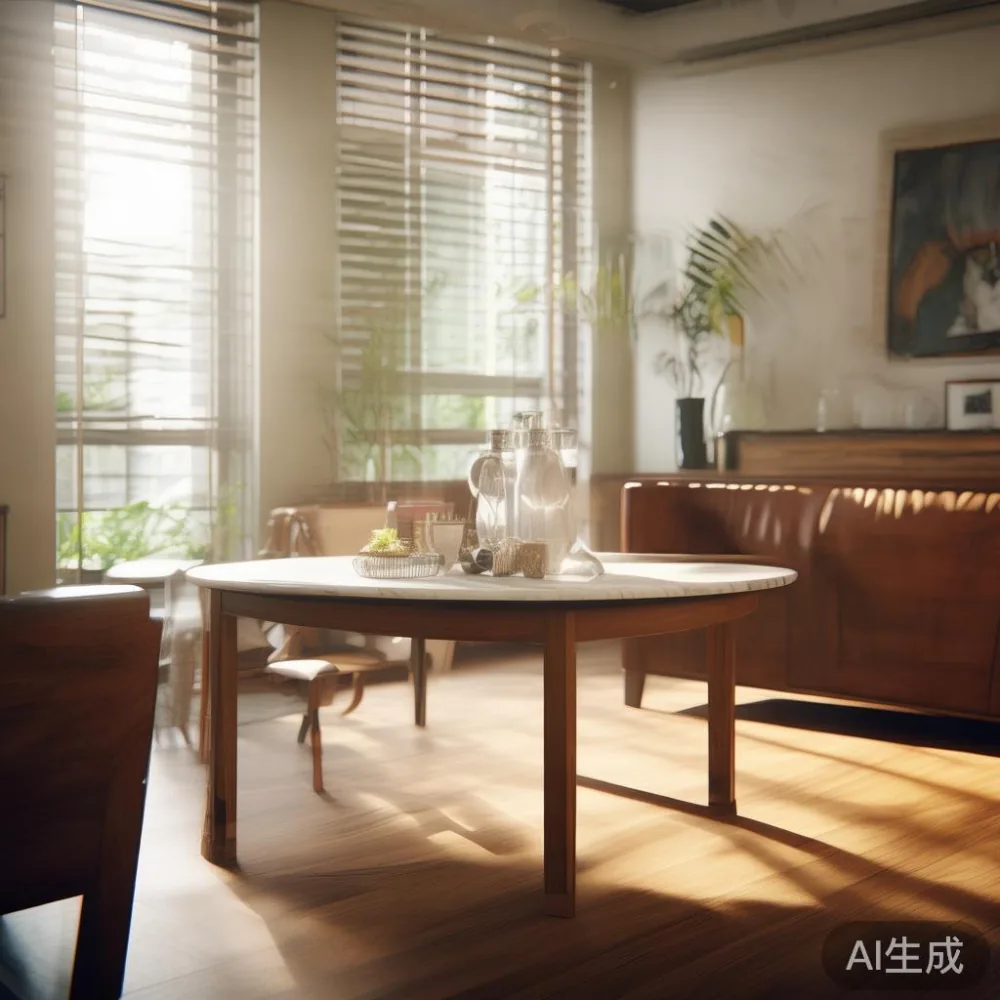
Then there is the lift problem. Most HDB passenger lifts measure about 1.1 m wide by 1.4 m deep, with a door opening of roughly 0.9 m. Private condo service lifts in developments around Bedok and Tampines are slightly larger but rarely exceed 1.2 m by 1.6 m. A fully assembled four-poster bed frame will not go through. That is one of the hidden reasons buyers in Singapore gravitate towards flat-pack veneer furniture: it fits. But flat-pack usually means particleboard, and particleboard is the material that fails first in this climate.
What Does a Veneered Set Actually Cost in SGD?
Let us price a credible entry package from a Tampines retailer. A 1.5 m veneer bed frame costs S$450, a 1.8 m wardrobe costs S$780, a six-seater veneer dining table costs S$620, and a pair of small nightstands costs S$220. Add a 1.2 m marble-top coffee table from the same showroom at S$1,150, a 9% GST line item of about S$290, and S$80 for delivery up the lift to the 12th floor. Subtotal delivered: S$3,590.
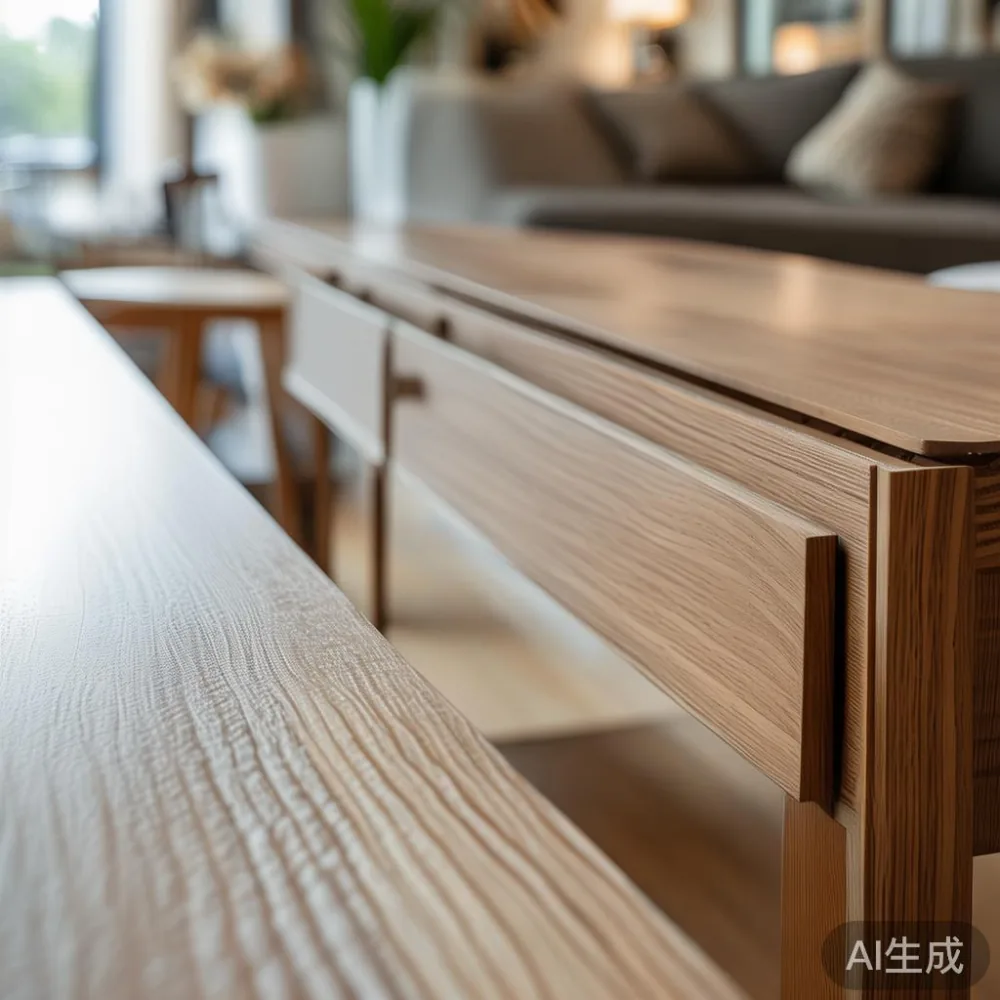
Over five years you should plan for three real costs. First, one round of touch-up for chipped corners at S$120-180 per piece, so S$300-400 across the set. Second, a wardrobe re-laminate at year four at roughly S$500 because the MDF core has swollen along the back panel. Third, a full replacement of the dining table at year five because the substrate has cracked under the marble top, adding another S$650 plus delivery and GST. Add a 14-day return cushion that you will likely use once, costing you one-way delivery at S$40. Five-year landed cost for the veneer path: roughly S$5,300.
What Does a Solid Wood Set Actually Cost in SGD?
The same configuration in solid wood from a Foshan maker with a Singapore stockist lands higher up front. A 1.5 m solid wood bed frame in white oak runs about S$1,250, a 1.8 m wardrobe about S$1,950, a six-seater dining table about S$1,780, and a pair of solid wood nightstands about S$380. Add a 1.2 m marble-top console at about S$2,200. GST at 9% adds roughly S$670, and white-glove delivery into the home and up the lift runs about S$180. Subtotal delivered: S$8,410.
The maintenance line is gentler. Solid wood accepts a light sanding and re-oil every two to three years at S$80-120 per piece, so figure S$400 across the set over five years. Swollen panels and chip-outs do not happen because the substrate is the same wood as the surface. If you want a zero-cost end-of-year-five scenario, a maker like MIDHILL offers lifetime refinishing on structural items, which means the only thing you actually spend on in years four and five is your time. Five-year landed cost for the solid wood path: roughly S$8,950.
The gap between the two paths is about S$3,650 over five years, or roughly S$60 per month. Spread across a solid wood sofa, a bed frame, a dining table, a wardrobe, a nightstand, and a marble table, that monthly number is the price of one kopi at a neighbourhood café.
How Does a Marble-Topped Piece Change the Maths?
Marble tops are heavier than engineered stone or sintered stone by 18-25 kg per square metre, and that weight is the silent partner in this comparison. A 1.2 m marble-top dining table in the MDF path weighs about 38 kg, sits on a hollow substrate, and starts to crack at the joint within two to three years because the substrate cannot hold the stone's cantilever load when the legs flex. A solid wood dining table with the same dimensions tips the scales at 56-62 kg, and the marble top sits on a kiln-dried frame that simply does not flex under load.
This is also why you see a marble-top nightstand sold as a "decorative" piece in many Singapore showrooms. The marketing copy quietly admits the substrate is MDF. In a Tampines resale flat I visited last month, a S$980 marble-top nightstand had bowed so badly by month fourteen that the drawer would not close. A solid wood equivalent at S$560 looked untouched at year four. The cheaper sticker hid a 12% annualised cost. If you are comparing a marble top for daily use, treat the substrate question as non-negotiable and check whether the maker publishes the dry weight of the wood frame.
"Will a Solid Wood Bed Frame Actually Fit Through My HDB Lift?"
Yes, with planning. A 1.5 m wedge bed frame from a Foshan maker arrives in two side rails, a headboard, a footboard, and a slat kit. Each piece is under 35 kg and under 1.0 m wide, which fits a 0.9 m lift door with 5 cm to spare. Assembly in-room takes about 40 minutes with two people and a single hex key. A 1.8 m wardrobe arrives in three vertical panels, a top, a base, and pre-assembled drawers, each under 28 kg. Two movers charge about S$120 for the in-room assembly and remove the carton waste.
If you live on a high floor in Bedok Reservoir or Punggol Fields, ask your seller for the packed dimensions, not the assembled dimensions. The packed height for most wardrobe panels is 2.15 m, well within the 2.4 m lift car ceiling. The packed depth is usually 0.55 m, which leaves room for one mover to stand and guide. If a piece truly will not fit, ask for a flat-pack solid wood version. Several Foshan factories, including the one behind midhill.co, ship a flat-pack solid wood wardrobe as a default option for HDB delivery.
"Does Style Matter as Much as Substrate in a Small HDB Bedroom?"
In a 9 sqm second bedroom in a four-room HDB flat, the visual weight of the bed frame sets the tone for everything else. American bed vs Italian light luxury bed is a fair question for this room size: an American-style solid wood bed frame in walnut or oak pairs well with French light luxury wall colours like greige and ivory, while an Italian light luxury bed usually leans on upholstered headboards in linen, which traps humidity against the wall and grows mildew in Singapore within a year. For most HDB bedrooms, a solid wood platform bed with a low headboard does the same visual job as a French provincial piece, weighs 30-40 kg less, and survives the move to your next flat.
For the wardrobe, knowing how to style Japanese wardrobe in room in a compact space means using sliding panels, exposing the wood grain, and letting one neutral tone carry the whole elevation. A 1.8 m Japanese-style three-panel wardrobe with a 30 cm depth fits a 12 sqm bedroom, leaves 60 cm of walkway, and creates the calm room feel that makes a small HDB bedroom feel like a Japanese ryokan guestroom. Most Japanese wardrobes in Singapore are made of MDF wrapped in a paper laminate that peels at year three. A solid wood equivalent adds about S$450 to the budget and survives the same five-year window without a single corner lifting.
Living Room and Dining Room: Where Light Luxury Style Meets Daily Wear
The living room sofa takes the worst punishment in any HDB home. A solid wood sofa with a removable, washable cover on the seat cushions handles Singapore's dust, pet hair, and afternoon sun. If you want the light luxury bed vs Mid-century modern bed debate extended to the living room, a Mid-century modern solid wood sofa with a 180 cm depth is the closest cousin to a light luxury silhouette, but with joinery you can repair. Look for mortise-and-tenon corners, finger-jointed rails, and a 10-year structural warranty on the frame.
For the dining table, if you want the marble-top look, pair a 1.4 m solid wood base in oak with a 12 mm marble top, and budget 70-75 kg total. Keep coasters under hot pots; marble stains if you leave a curry pot overnight. A six-seater solid wood dining table without marble is a different product entirely and is the safer pick if you cook daily. For families in Punggol and Sengkang, the dining table also doubles as a homework station, which is another argument for choosing a finish you can sand and re-oil.
Bedroom Styling: French Provincial, Japanese, and Small-Living-Room Practicality
If you have ever wondered how to style French provincial bed in bedroom in a way that suits a Singapore resale flat, the answer is restraint. Skip the carved mahogany look and pick a single French-inspired curve in the headboard, painted in a warm ivory, against a soft grey wall. Keep the nightstand solid wood with a marble top to echo the French light luxury vocabulary without committing to the full chateau look. One French accent in a calm room reads as luxury; four French pieces in a 9 sqm bedroom reads as clutter.
For the lounge, rustic for small living room is a phrase worth using carefully. A heavy rustic solid wood coffee table can swallow a 14 sqm living room. The trick is to pick a 110 cm rectangular coffee table with a 6 cm top thickness, visible tenons, and a warm oak finish. Pair it with a low-profile solid wood sofa, a linen throw, and one ceramic vase. You get the texture, the grain, the warmth, and none of the visual weight. Many buyers browsing the top 10 Japanese furniture lists end up choosing a single Japanese-inspired low table for the living room and a more traditional solid wood dining set for the kitchen, which is a sensible split for HDB layouts.
The Five-Year Verdict, in Singapore Dollars
The veneer path lands at about S$5,300 over five years, with a 40% chance of a partial replacement by year three. The solid wood path lands at about S$8,950, with a 90% chance of being the same set you bought on day one. The monthly delta is roughly S$60, which is the cost of one family meal at a hawker centre. If you are staying three years or less, veneer is a defensible choice. If you are staying five years or more, solid wood is the cheaper outcome, and you get the refinishing option that lets you change the colour of your bed frame in year four instead of buying a new one.
Either way, check the substrate. Ask the seller to publish the dry weight of the frame, the country of origin for the timber, and the warranty term on structural joints. Anything less than a 5-year structural warranty on a piece that costs more than S$1,000 is a red flag. For buyers who want a Foshan-built solid wood line with a 10-year structural warranty and lifetime refinishing on key items, the range carried at midhill.co is a sensible benchmark. The piece you pick should outlast your tenancy, your mortgage, and possibly your lease on the flat itself.