Sizing a Marble-Top Coffee Table for a Singapore HDB Living Room: A Practical Guide
I spent the first Saturday of last month at a client's 4-room HDB flat in Tampines, tape measure in one hand and a cup of kopi in the other. The couple had just moved in after their BTO settled, and they wanted a marble-top coffee table — but every showroom piece looked either too bulky for their 3.2 m by 4.1 m living room or too flimsy for daily use with a toddler. We measured the sofa, the corridor lift opening, and the gap between the TV console and the sofa back. By the end of the afternoon we had a shortlist: three rectangular pieces between 110 cm and 130 cm long, each between 55 cm and 60 cm wide, and none taller than 42 cm. That single visit reminded me how often Singapore homeowners buy a marble-top table on aesthetics alone and then discover the lift door is 80 cm wide, or the service yard turning radius cannot accommodate the box.
Why HDB dimensions change everything about a marble-top coffee table
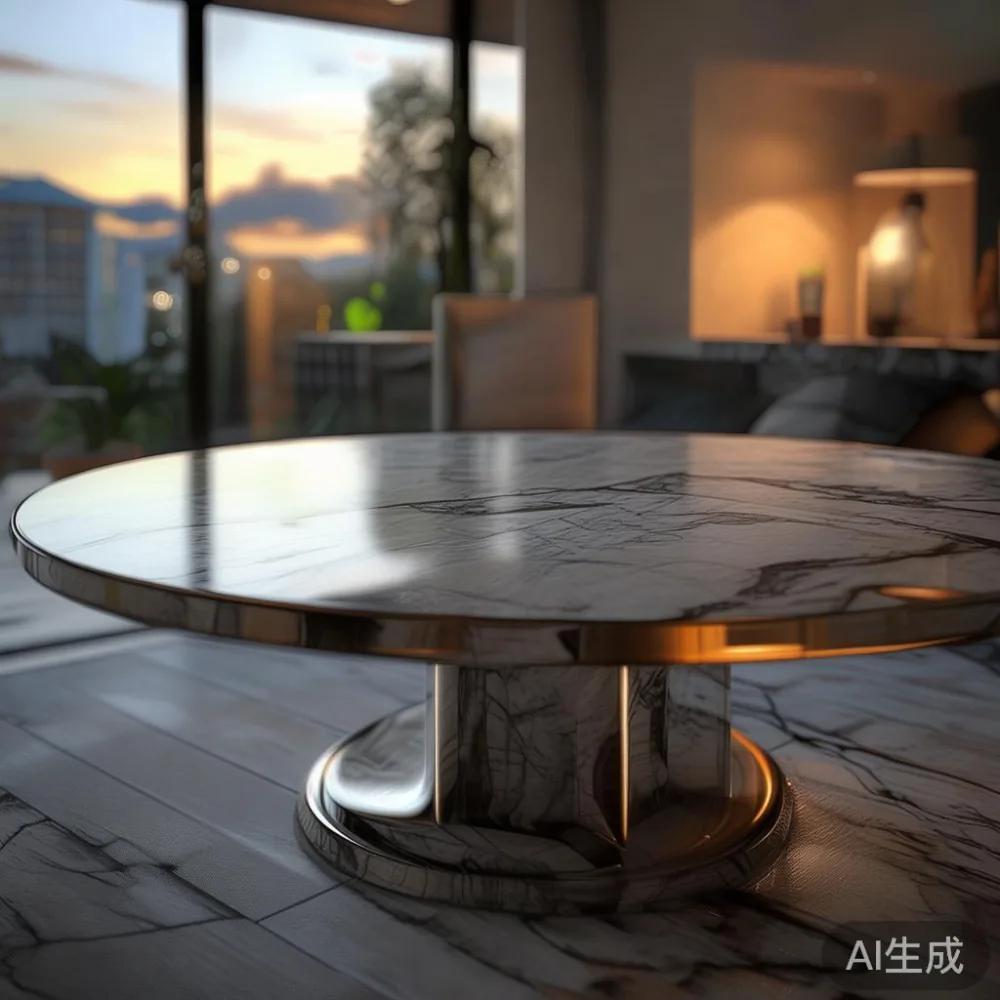
The standard HDB living room in a 4-room or 5-room flat is roughly 3.0 m to 3.6 m wide and 4.0 m to 5.0 m long. Once you place a 2.4 m solid wood sofa against the longest wall, you have about 90 cm to 1.2 m of clearance behind it for walking. The coffee table has to fit inside the remaining footprint, usually 2.6 m by 1.6 m, without crowding the TV console or the walkway to the kitchen.
A good rule I share with every client: keep 35 cm to 45 cm between the sofa seat and the table edge, and leave at least 60 cm of clear path from the table to the nearest door or corridor. For a typical Tampines or Bedok BTO, that means a coffee table no longer than 130 cm and no wider than 65 cm. Anything beyond 140 cm by 70 cm starts to eat into the room.
What size marble top works for a 4-room HDB?
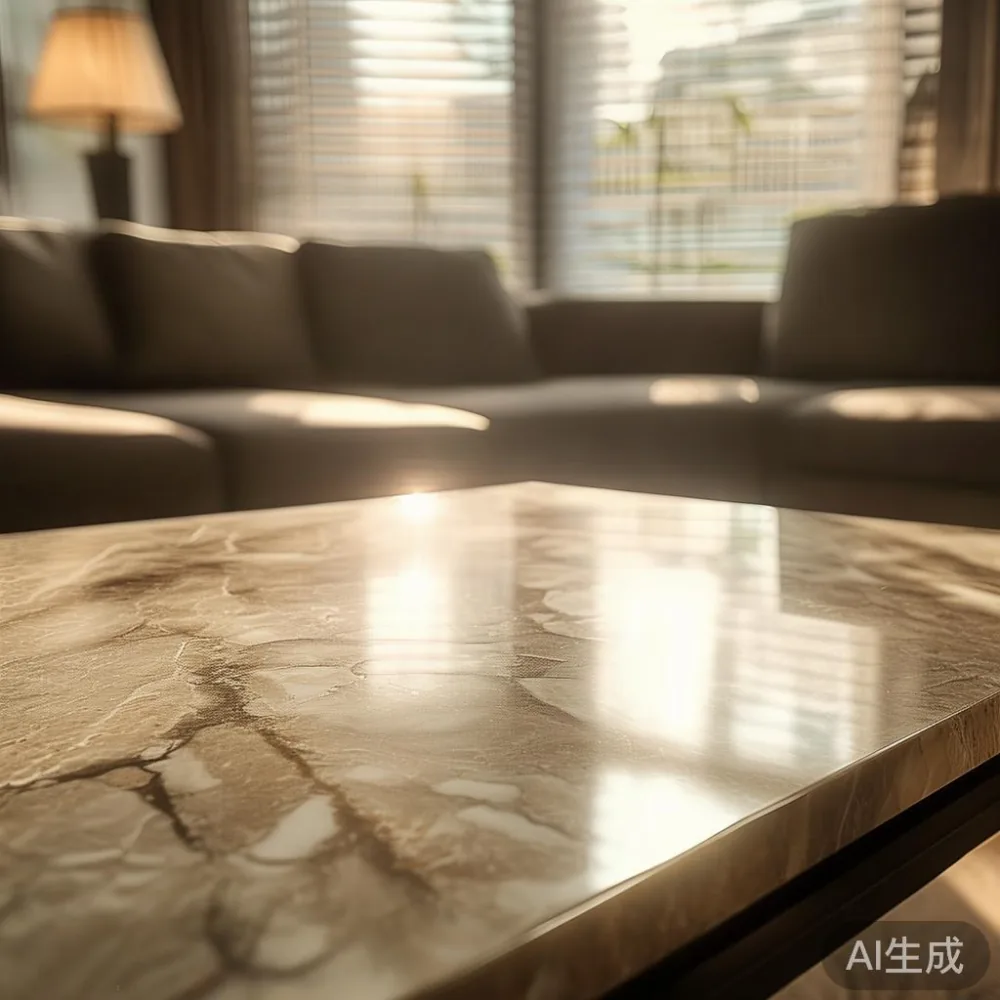
For a 4-room flat around 90 sqm, the safe range is 110 cm to 130 cm long, 55 cm to 65 cm wide, and 38 cm to 42 cm tall. A 120 cm by 60 cm piece is the sweet spot — long enough to anchor a 2.2 m to 2.4 m sofa, narrow enough to keep both walking sides open. If your sofa is deeper than 95 cm — common with American light luxury styles that favour plush, rolled arms — drop the table length by 10 cm so the proportions still feel right.
For a 5-room flat or a compact condo in Punggol with a slightly wider living room, you can push to 130 cm by 65 cm. Beyond that, the table stops looking like a coffee table and starts behaving like an island. Most homeowners I have advised end up wishing they had stayed below 130 cm.
How do I get a marble-top table through the lift and corridor?
Singapore's lift doors on most HDB blocks are between 80 cm and 90 cm wide, and the lift car interior is roughly 1.2 m deep by 1.5 m wide. Service lifts in some older blocks in Bedok and Toa Payoh can be as narrow as 70 cm. Corridors between the lift lobby and your unit door are usually 1.2 m to 1.5 m wide, but the 90-degree turn near the staircase can shrink your turning radius to about 1.8 m.
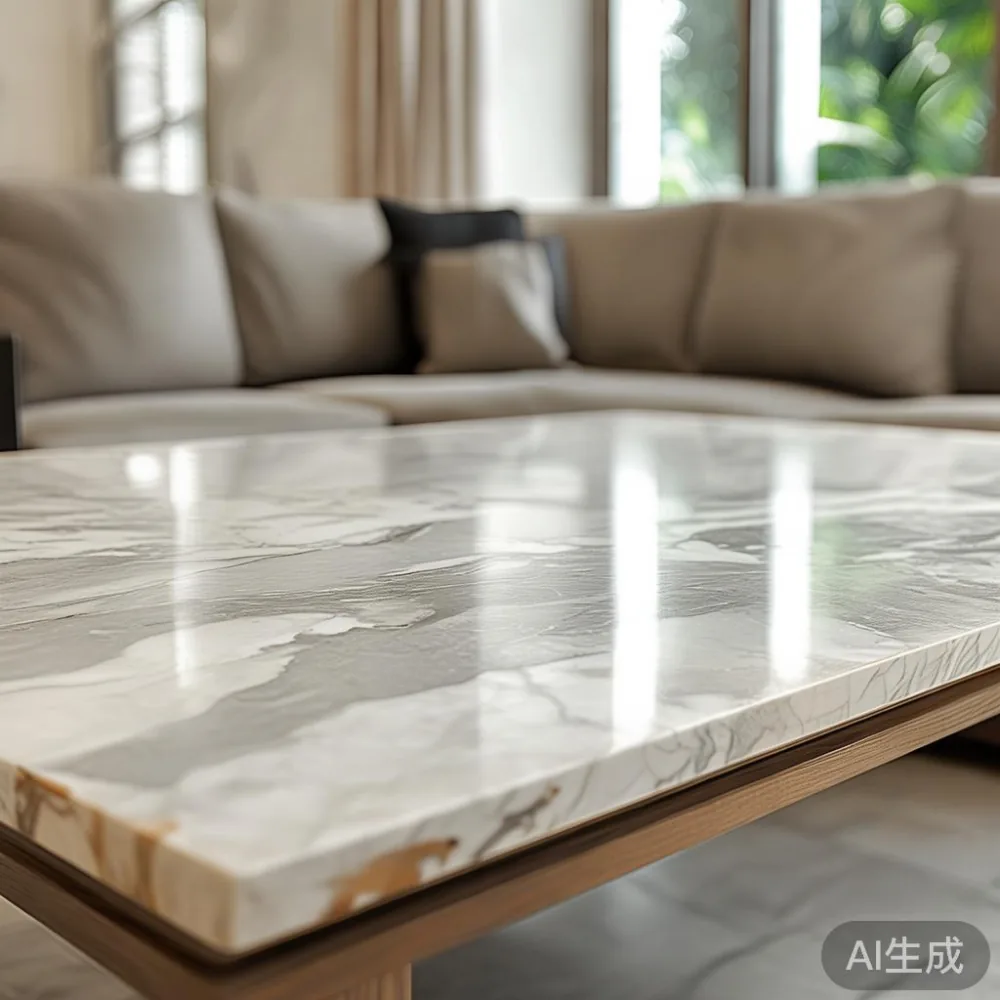
The practical check: the marble-top slab itself, before the base is attached, is usually 2 cm to 3 cm thick and can weigh 35 kg to 55 kg for a 120 cm by 60 cm piece. The disassembled base — legs, frame, hardware — usually ships in a second carton under 25 kg. A reputable supplier will deliver the table in two boxes so neither exceeds the 60 kg single-person lift limit most movers in Singapore prefer. Always ask the seller for the packed dimensions of each carton, not just the assembled size. A marble top that fits your living room but cannot clear your lift door is a common regret.
What is the difference between Modern light luxury sofa and modern furniture?
Modern furniture refers to the design movement rooted in the early-to-mid 20th century — clean lines, functional forms, and minimal ornament, often built from solid wood with exposed joinery; a sage ash wood mid-century modern dining chair or bed frame is a textbook example. Modern light luxury sofa, by contrast, takes that modernist skeleton and dresses it in softer proportions, brushed brass or champagne-metal accents, performance fabrics in muted tones, and slightly taller, cushioned silhouettes that read as refined without feeling ornate — closer to French light luxury or post-modern light luxury in spirit. The frame is still solid wood, often ash or rubberwood, but the upholstery, the curve of the armrest, and the metal detailing carry the "light luxury" signal.
For your HDB, this matters because modern light luxury pieces tend to be 5 cm to 10 cm deeper and slightly taller than strict modernist designs, which affects how much room you have around a marble-top coffee table. If you already own or plan to buy a modern light luxury sofa, keep the table shorter (110 cm to 120 cm) and the room gap tighter (35 cm) so the seating still feels connected to the surface in front of it.
Matching a marble-top table with a solid wood sofa, bed frame, and dining set
One of the most common mistakes I see in Punggol and Sengkang BTOs is treating each furniture piece as an island. A marble-top coffee table looks coherent when the wood tones around it share a family. If your solid wood sofa frame is warm walnut or honey ash, choose a marble with grey or beige veining rather than stark white — the contrast reads harsh in a small room. If your bed frame and wardrobe are in a cooler oak or ash tone, a Carrara-white marble top with soft grey veins tends to harmonise.
For a full-room approach, consider these pairings that MIDHILL often specifies for Singapore shipments: a 120 cm marble-top coffee table with a 2.2 m solid wood sofa and a 140 cm by 80 cm six-seater dining table built from the same ash or rubberwood. A nightstand in the same wood family, around 50 cm wide and 55 cm tall, carries the link visually into the bedroom. When the wood grain, the marble undertone, and the metal hardware all share a temperature — warm or cool — the room reads as one composition rather than a collection of purchases.
How thick should the marble top be for daily family use?
For an HDB household with children or elderly parents, 18 mm to 20 mm marble is the practical minimum. Anything thinner feels unstable when you lean on it and risks cracking at the support points during a 12 kg to 15 kg impact — say, a toddler standing on it or a laptop dropped from sofa height. A 25 mm slab is heavier (roughly 45 kg to 60 kg for a 120 cm by 60 cm top) and gives a more substantial feel that suits post-modern light luxury interiors, but the base must be engineered for that weight or the table will rack over time.
Ask the supplier whether the marble is backed with a fiberglass mesh and whether the substrate is plywood or MDF. Solid plywood backing adds 3 kg to 5 kg but dramatically reduces the chance of a hairline crack during delivery. I have visited flats in Bedok where a thinner, unbacked marble developed a crack in transit — the lift vibration plus the 90-degree corridor turn was enough. A 20 mm marble with plywood backing, paired with a solid wood or powder-coated steel base rated for at least 80 kg, is the configuration I recommend for family use.
Budgeting in SGD for a marble-top table that ships from Foshan
A solid-wood-base marble-top coffee table sized for HDB (110 cm to 130 cm long, 20 mm marble, plywood-backed) typically lands in Singapore between SGD 850 and SGD 1,950 including GST, depending on the marble grade, the wood species, and the shipping terms. Lower-tier beige marble with a rubberwood base sits around SGD 850 to SGD 1,200; mid-range Carrara or grey-veined marble on an ash or walnut frame lands at SGD 1,300 to SGD 1,650; premium Calacatta or book-matched slabs with French light luxury detailing can reach SGD 1,800 to SGD 1,950.
Shipping from Foshan to Singapore by sea takes 18 to 26 days door-to-door, plus 3 to 5 days for customs clearance and a final SGD 80 to SGD 150 for lift-level delivery in HDB blocks. Some Foshan makers, including MIDHILL, offer free shipping above a certain order value, which usually covers a coffee table plus a small matching piece. Budget another SGD 120 to SGD 250 for optional GST-inclusive installation and rubbish removal if you are replacing an existing table.
How do I measure my living room before ordering?
Take three measurements and write them on a floor plan sketch: (1) the length and width of the room in cm, (2) the width of the lift door on your floor and the lift car depth, and (3) the narrowest point of the corridor between the lift and your unit door, including any 90-degree turns. Photograph each of these with a tape measure in frame — it saves back-and-forth emails with the supplier.
Then mark the position of the sofa, the TV console, and any door swing. The clear walking path from the sofa to the kitchen or the corridor should stay above 60 cm. The marble-top table, when placed, should leave 35 cm to 45 cm from the sofa front and at least 45 cm from the TV console edge. If the numbers do not work on paper, no amount of "we can squeeze it in" on delivery day will save you. One client in Punggol measured only the room and ignored the lift; the 135 cm table had to be returned at a SGD 180 collection fee.
Common sizing mistakes Singapore homeowners make
Three patterns come up again and again in my visits. First, choosing a table longer than 130 cm because the showroom version looked proportional — in a 3 m wide HDB living room, anything over 130 cm starts to dominate the seating. Second, ignoring the marble thickness and the resulting weight, which affects both the base design and the lift logistics. Third, forgetting that a marble-top table needs a felt-lined or rubber-padded base to protect vinyl HDB flooring, and that a heavy table on castors will dent the surface if dragged — use felt pads and lift, do not slide.
A fourth, less obvious mistake: underestimating the visual weight of a dark-veined marble in a small room. A heavily patterned Calacatta slab looks stunning in a 25 sqm condo showroom but can shrink a 10 sqm HDB corner visually. For compact HDB living rooms, a lighter beige or soft grey marble with subtle veining keeps the room feeling open.
Delivery, warranty, and after-sales questions to ask the supplier
Before you pay a deposit, confirm five details in writing. (1) The packed dimensions and weight of each carton, and whether the marble top ships separately from the base. (2) The total delivery time to your HDB block, including the lift-level delivery fee if any. (3) The warranty — a 10-year structural warranty on the frame and a 1- to 2-year warranty on the marble surface is standard for quality Foshan makers. (4) The return policy — at least 14 days is fair, with the buyer covering return shipping only if the item is not defective. (5) Whether refinishing, marble resealing, or part replacement is offered after the warranty period.
For Singapore buyers, also ask whether the supplier has experience shipping to HDB blocks specifically, not just to private condos. The difference matters: HDB corridors, lift sizes, and loading bay access follow a different set of rules, and a supplier familiar with MIDHILL-style Foshan-to-HDB routes will usually plan the delivery around your block's lift booking schedule. Ask for two or three Singapore customer references if possible, and check that the marble-top table, the solid wood sofa, or the bed frame you are ordering has been delivered locally before.
Final checklist before you confirm the order
Room width after sofa placement: minimum 90 cm. Marble-top table length: 110 cm to 130 cm for most HDBs. Lift door width: confirm the marble carton fits with at least 5 cm clearance on each side. Marble thickness: 18 mm to 25 mm with plywood backing. Clear walking path: minimum 60 cm. Delivery lead time: 21 to 31 days door-to-door including customs. Budget: SGD 850 to SGD 1,950 all-in for a quality marble-top piece from a Foshan workshop.
If those numbers line up, the table will arrive, fit through the lift, and sit comfortably in your Tampines, Bedok, or Punggol living room for the next decade. If even one number is off — the lift is too narrow, the room is too tight, or the marble grade is too soft for daily use — keep measuring, keep asking, and wait for the right piece rather than forcing a compromise.