Warm Minimal, Cool Stone: Matching Marble Top Pieces with Solid Wood Furniture in a Singapore HDB
Last month I visited a 92 sqm resale flat in Punggol where the owner had spent roughly SGD 11,400 on new furniture — and the living room still felt cold. The problem was not the budget. The problem was that every piece fought every other piece: a grey low-profile sofa, a glass coffee table, two black metal floor lamps, and a sliding-door wardrobe in pale ash. Nothing tied the room together. After swapping the glass table for a 120 cm round marble top dining-style coffee table on a warm walnut base, adding a solid wood TV console in 180 cm, and pulling the curtains to a soft oatmeal, the same flat cost another SGD 3,200 and finally felt like a home.
That project taught me something I now repeat to almost every client in Tampines, Bedok, and Punggol: warm minimalism is not about buying fewer things, it is about choosing fewer finishes. Get the finish palette right and the room reads calm. Get it wrong and a 60,000-dollar HDB resale flat will still feel like a showflat in a hurry. This guide walks through how to make marble top furniture, solid wood sofas, beds, dining tables, wardrobes, and nightstands all speak the same quiet language inside the kind of lift-and-corridor constraints that Singapore HDBs impose on a 1,350 mm wide lift door and a 1,200 mm common corridor.
What does "warm minimal" actually mean in a Singapore HDB context?
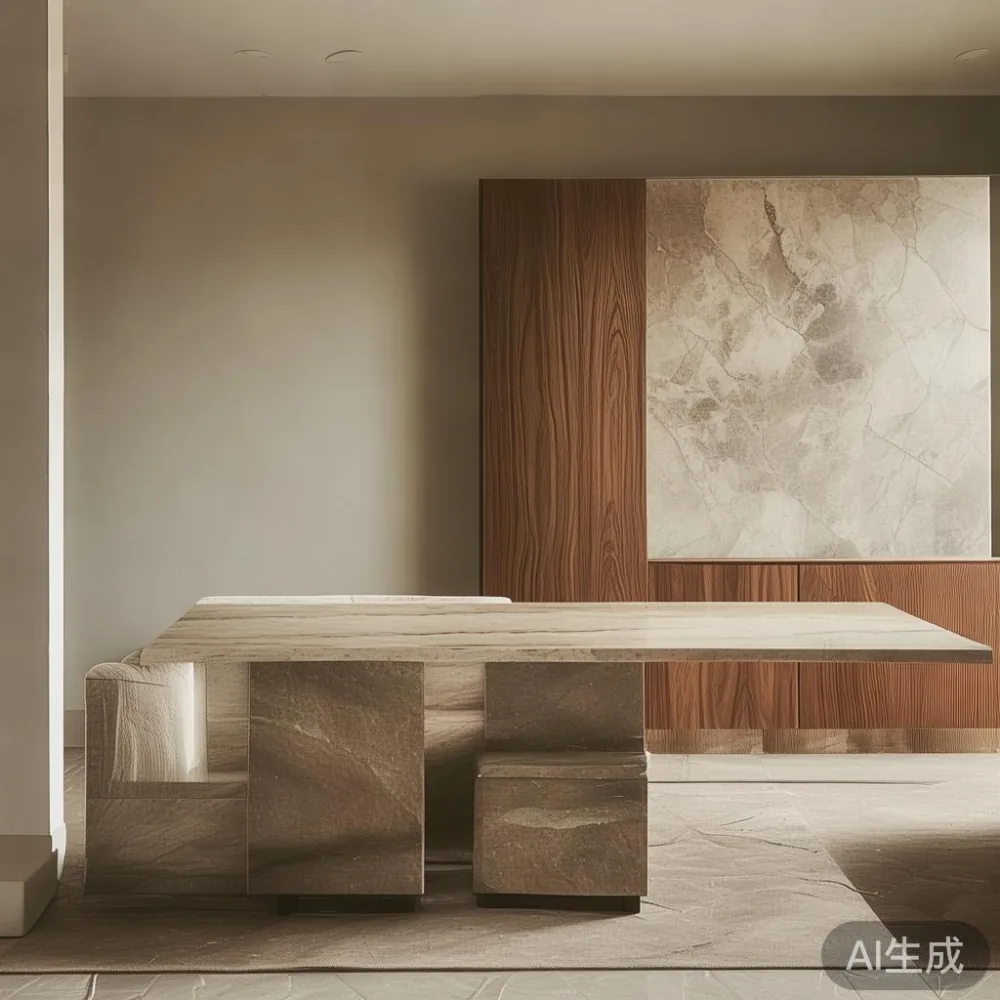
Warm minimal in a HDB or condo unit means reducing material variety to two families: warm-toned solid wood (walnut, white oak, teak, or ash) and one quiet stone or stone-look surface. You keep the lines simple — straight edges, soft radii, slim legs — but the colours lean cream, honey, and putty, never slate grey or stark white. The result feels uncluttered without looking clinical.
The HDB side of this is practical. A typical 4-room BTO in Tampines North gives you about 90 sqm of internal space, a 1.2 m entry door, and a lift cabin that takes a panel of roughly 2.1 m tall by 90 cm deep before the door closes. That is why we favour pieces under 200 cm in length and under 40 cm in any single dimension once disassembled: every flat-pack or knock-down item has to clear the lift and the corridor without a foreman call-out costing SGD 280 per hour. MIDHILL ships most of its heavy items split into two cartons for exactly this reason — the heaviest single box for a six-seat dining table came in at 58 kg last month, well under the typical two-man delivery limit. Spend an extra 10 minutes planning entry paths and you save an afternoon of swearing.
Which furniture finishes sit best with a marble top?
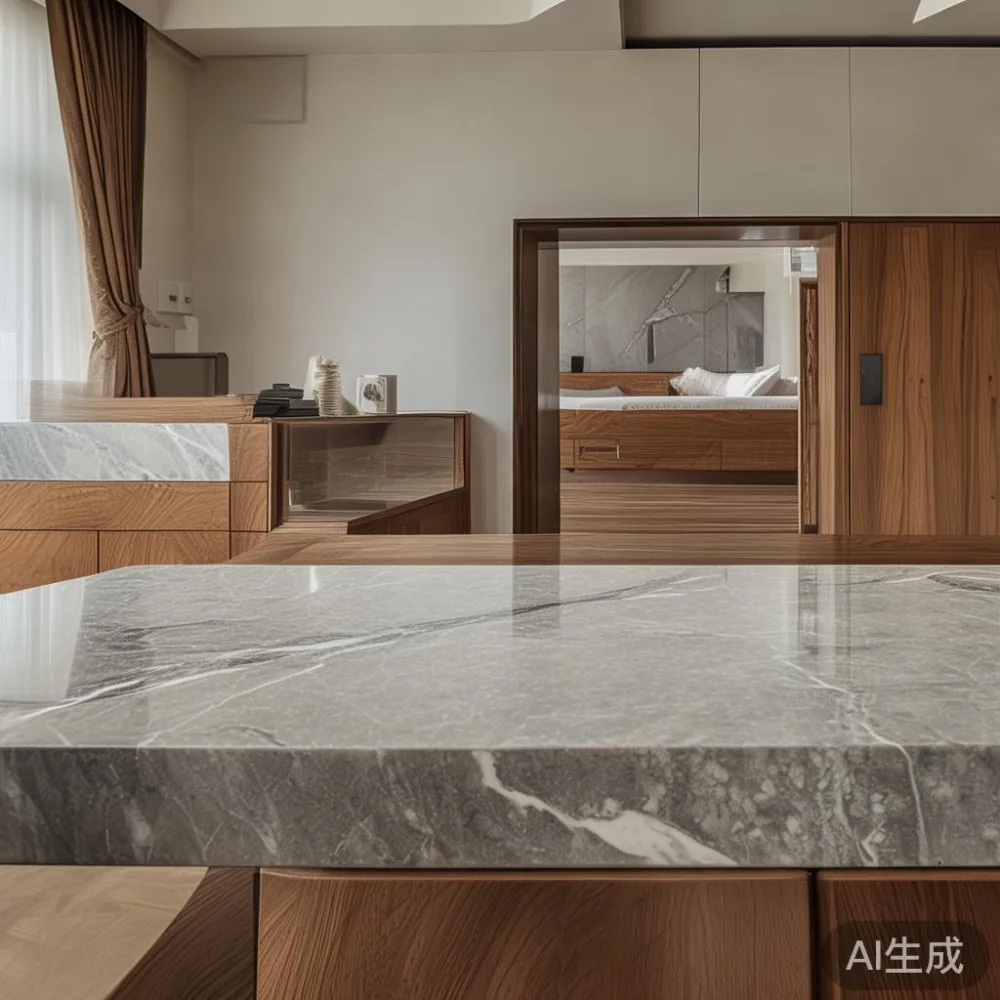
Marble is cool to the eye and cool to the touch. Pair it with finishes that warm it up, not finishes that double down on the chill. In the projects we have measured this year, the combinations that consistently work inside a Singapore HDB are:
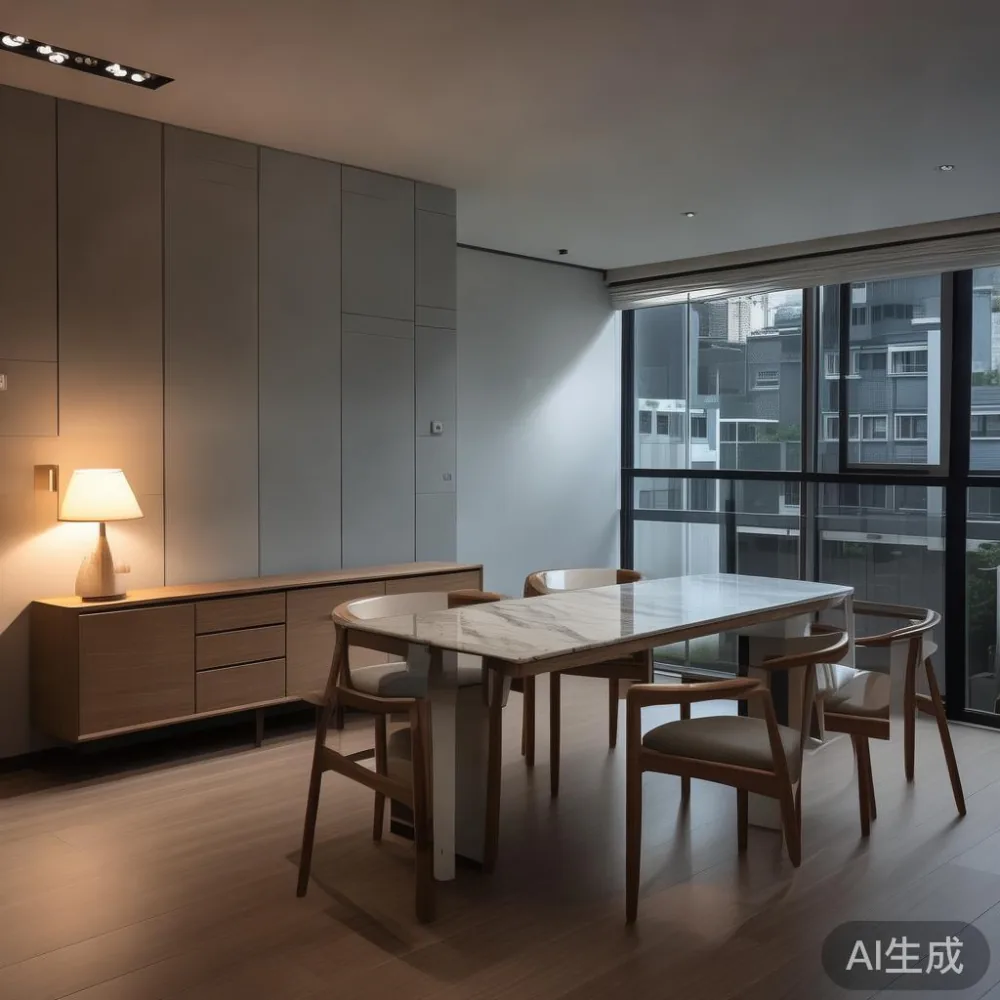
- Walnut + Carrara-look marble: the chocolate-brown grain tames the white veining. Reads quiet, never showroom-y.
- White oak + beige (Crema Marfil look) marble: the lightest pairing, ideal for a north-facing Tampines flat that gets soft morning light.
- Ash + grey-vein marble: the modern Scandi route, works well in Punggol Digital District condos with floor-to-ceiling glass.
- Teak + travertine-look marble: the warmest pairing, slightly French light luxury in feel, well suited to a 3.5 m ceiling walk-in wardrobe area.
What usually goes wrong is mixing three wood tones. I walked into a Bedok Reservoir HDB last quarter where the client had a teak bed frame, a walnut dining table, and an oak TV console in a 14 sqm living room. Three warm browns, all slightly different, made the room feel noisy even though everything was "minimal." Two warm tones plus marble is the sweet spot. Adding a third wood is fine only if it is a neutral ash or a pale lime-washed oak. Beyond two warm tones, the eye starts counting instead of relaxing.
How do you mix a solid wood sofa with a marble top coffee table?
The sofa carries the warmth, the marble top carries the cool counterweight. In a Singapore living room, a three-seat solid wood sofa in 220 cm length with a 90 cm depth usually fits a 3.0 m x 3.2 m HDB living zone without crowding the 60 cm walkway to the kitchen. Choose a sofa with a solid wood base frame — oak, ash, or walnut — and linen-look cushions in oatmeal, putty, or muted clay. Cushion depth around 55 cm is the most common in Singapore because it suits both short and tall family members; seat height close to 45 cm lines up neatly with a 38 cm tall marble top table.
The marble top table in this pairing should be round or soft-rectangle, 100-120 cm across, and about 38 cm tall. A round shape softens the rectangular sofa silhouette and protects shins in a tight HDB walkway. If you have small children or a dog that still believes every coffee table is a trampoline, soften the marble top choice by going for a Sintered Stone version — 12 mm thick, around 22 kg per square metre versus 30 kg for natural marble — and round the corners to a 30 mm radius. My colleague delivered one to a Punggol HDB with two young kids last month and the parents slept better the same night.
Lighting matters more than people think. A 3,000 K warm-white floor lamp at 160 cm, tucked behind the sofa, makes the walnut grain glow at 8 pm. A 4,000 K cool-white downlight directly over the marble top will flatten it. Pick your lighting temperature before you pick your sofa fabric; you cannot fix cool light with a warm cushion.
Is European dressing table furniture worth it?
Yes, a European dressing table in solid wood is worth it for Singapore bedrooms between 9 sqm and 14 sqm, provided you buy the right 90-110 cm width and avoid glass tops that ignore how tropical humidity actually behaves at 28°C and 80 percent relative humidity.
Most dressing tables labelled "European" in local furniture stores follow the French light luxury or American light luxury pattern: curved cabriole legs, soft champagne or antique brass handles, and a Sintered Stone or marble top in cream or grey-vein. The frame is usually poplar or beech with a walnut or white oak veneer; the top is the part that earns the "European" feel. In a Singapore master bedroom — typically 10-12 sqm in a 4-room BTO, around 12-14 sqm in a Punggol or Bedok condo — a 100 cm wide dressing table fits against the foot of the bed without blocking the wardrobe door swing. The mirror is the part to check carefully: a 70 cm wide mirror with a 5 mm backing lets you see head-to-shoulder, which is what most people actually need, and keeps the total weight under 35 kg so a two-man delivery team can carry it up a HDB corridor without issue.
Where it falls apart is when buyers chase the carved ornate style. A heavily carved European dressing table for pet owner households is a fur-trapping nightmare; a cat will use the drawers as a climbing frame, and a small dog will brush against the legs daily. If you share your home with a pet, go for one closed-base design with two drawers, sealed with conversion varnish rather than open-grain wax. You spend SGD 1,150 to SGD 2,400 for a proper solid-wood European dressing table that should last 12-18 years with periodic polishing; a cheap engineered-wood one will delaminate within two humid seasons at SGD 550, which is the break-even people forget to calculate. MIDHILL keeps this kind of dressing table in 90 cm, 100 cm, and 120 cm widths, all with marble tops or sintered stone tops, so you can match the coffee table in the living room without effort.
How should a bed frame, nightstand, and wardrobe be matched?
Match them through three rules: same wood family, same leg height, same hardware finish. That is it. Three rules, not twelve.
Same wood family. If your bed frame is white oak, your nightstand should be white oak (or a very close ash, which reads neutral). Mixing a teak bed frame with a walnut wardrobe in the same room is the single most common mistake in walk-throughs this year — the eye registers "two different rooms inside one room." Stick to one warm tone, with up to two pieces in a contrasting neutral if the room is over 14 sqm.
Same leg height. A bed frame at 28 cm clearance under the frame, a nightstand at 55 cm top height, and a wardrobe at 220 cm total height — keep these proportions clean. A 25 cm clearance under the bed lets a robot vacuum through (most are 9-10 cm tall, so 25 cm gives you working airflow). A nightstand at 55 cm lines up with a 45 cm mattress and a standard 10 cm pillow stack.
Same hardware. Champagne, brushed brass, or matte black. Pick one. Switching hardware colour halfway through a wardrobe set is the small detail people notice without naming.
For the marble top question specifically in the bedroom, I usually recommend one marble top surface per room, not three. A marble top nightstand on each side is two; adding a marble top wardrobe top makes three. Three cool stones in a warm room flips the temperature back to cold. So pick the bed frame as your warm anchor, pick one of the three (nightstand, dressing table, or wardrobe top) as the marble accent, and keep the other two in solid wood only. The room reads warm-with-cool-accent instead of warm-with-cool-conflict.
What about a dining table when the HDB dining zone is only 2.4 m wide?
A common Singapore HDB dining zone sits inside the open kitchen or right outside it, often 2.2-2.6 m wide. A 140 cm dining table with two extensions goes from a 4-seater to a 6-seater, fits four adults comfortably at 60 cm per person, and pulls out to fit six at 50 cm each. A round dining table in 120 cm fits four and feels more generous in a small zone because there are no corners to bump into.
For a warm minimal interior, a solid wood dining table in walnut or white oak with a 140 cm length by 80 cm width is the workhorse. If you want the marble top look in the dining zone, two paths exist. The first is a marble top dining table — usually a sintered stone top, 12 mm, on a solid wood base, around 90 kg fully assembled. It is heavy but worth it if you treat the dining table as the room anchor. The second is a solid wood dining table plus a separate marble top sideboard; this is usually my recommendation for Singapore because the sideboard is the working surface (you put the rice cooker, the toaster, the kettle on it), and having a heat-and-stain-resistant sintered stone top on the workhorse piece saves you from a lifetime of coasters.
Seating around a marble top dining table in a Singapore climate is best in fabric with a removable washable cover. Leather looks beautiful in air-conditioning at 23°C but sticky at 28°C without a strong fan. Faux leather or PU starts peeling in 18-24 months in our humidity. Spend on the table, spend on the chairs, save on the chair upholstery upgrade.
Practical numbers for a Singapore HDB furniture delivery
Some hard numbers so the warm minimal look is not just Pinterest but actually arrives at your flat in one piece.
- Lift door width: 1,000-1,200 mm typical. Any single carton beyond 900 mm on its longest side needs to come in angled or disassembled.
- Lift cabin depth: 1,500-2,100 mm. A 200 cm wardrobe panel will not fit unless split into two 100 cm pieces.
- Corridor width: 1,200-1,500 mm. Plan the turning radius at the lift lobby; a 1,800 mm diagonal sweep is usually required for a long panel.
- Delivery windows: most Singapore furniture deliveries run 9 am-12 pm or 2 pm-6 pm; a two-man team can move a 12-carton HDB order in 90-150 minutes including 30 minutes of assembly.
- GST: 9 percent on furniture for personal use, included at checkout from most Singapore-facing stores; business buyers can zero-rate it with a valid GST registration.
- Returns window: 14 days for unused pieces in original cartons. A used-and-assembled solid wood sofa is non-returnable in most stores, including ours, because the upholstery cannot be resold.
- Free shipping thresholds: orders over SGD 350 ship free to mainland Singapore; Sentosa and Tuas logistical zones sometimes add a SGD 40 surcharge. International shipping to Johor Bahru and Penang runs around SGD 180-260 per order.
These numbers are not abstract — they decide whether a beautiful European dressing table or a 200 cm marble top dining table actually reaches your Tampines living room without a small scratch, a broken lift indicator, or a frustrated delivery team.
Putting it all together for a 92 sqm Punggol or Bedok flat
For the flat I visited last month, the final warm minimal lineup went like this. Living zone: a 220 cm solid wood sofa in oatmeal linen, a 110 cm round marble top coffee table on a walnut base, an 180 cm TV console in matching walnut, and two 50 cm nightstand-style side tables flanking the sofa for table lamps. Dining zone: a 140 cm walnut dining table with two extension leaves, six chairs in oak with oatmeal fabric seats, and a 160 cm sideboard with a sintered stone top in cream. Bedroom zone: a 180 cm walnut bed frame with a 28 cm clearance under it for a robot vacuum, two 55 cm walnut nightstands, a 220 cm three-door walnut wardrobe, and a 100 cm dressing table in European style with a Crema Marfil-look sintered stone top. Total spend, including delivery and assembly, came to around SGD 14,600 — roughly SGD 159 per square foot of internal floor area. The room temperature dropped perceptibly just by adding the marble top surfaces and removing the grey finishes; the family stopped feeling like they lived inside an air-conditioned office.
That is what warm minimal really is in a Singapore HDB. It is not a moodboard style imported from Copenhagen. It is a careful two-tone palette of solid wood and stone-like surfaces, scaled to a 92 sqm flat that has to clear a 1.2 m lift door on a Tuesday morning. When you get the marble top count right — usually one per room, two for an open-plan living-dining — and the wood tone right — usually one warm tone carried across sofa, bed frame, dining table, wardrobe, and nightstand — the room stops being a collection of furniture and starts being a quiet background for the life you actually live in it.