Furniture Warranty 101: Don't Get Fooled
A furniture warranty can look reassuring on the first page and become frustrating on delivery day. The difference often comes down to 4 details: what is covered, what voids coverage, how claims are handled, and whether the promise matches the product you actually bought. For Singapore households furnishing an HDB flat or a compact condo in Tampines, Bedok, or Punggol, those details matter because furniture must pass through common corridors, fit into lifts, and work within a room measured in square metres rather than showroom displays.
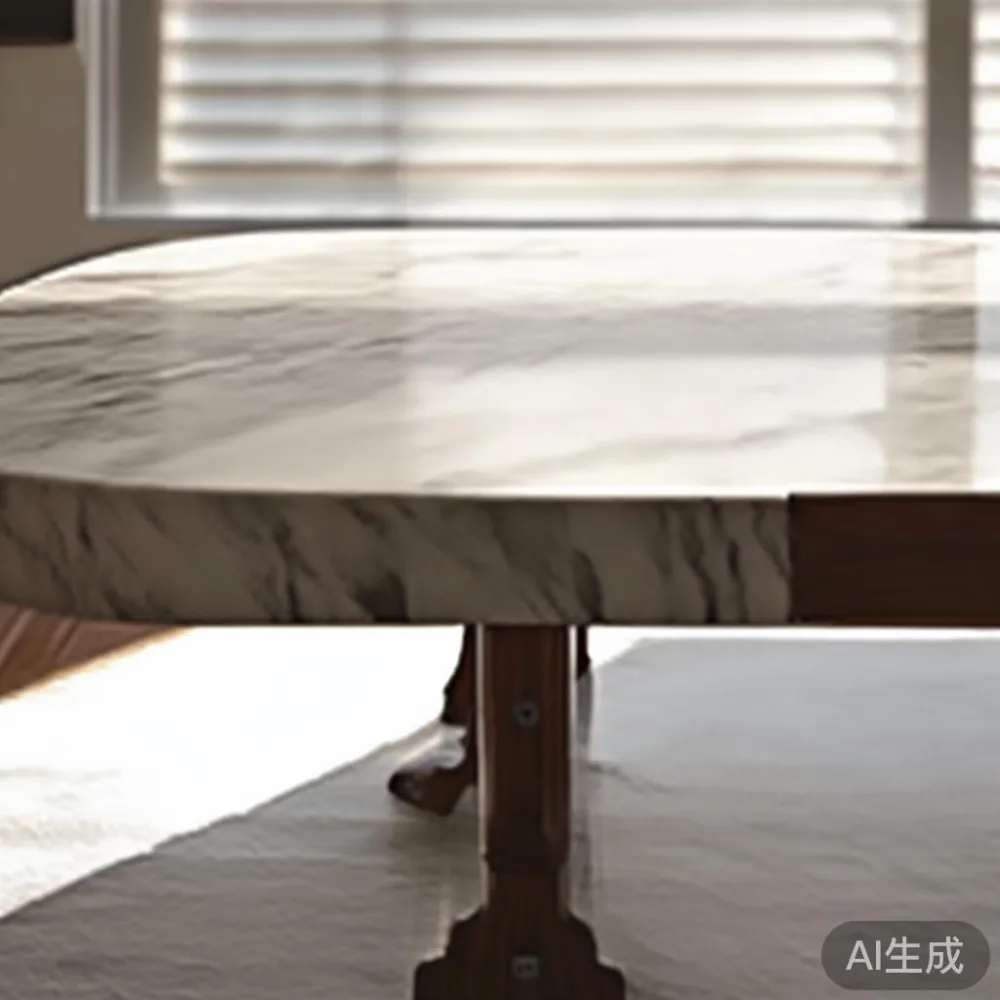
This guide applies directly to solid wood sofas, bed frames, dining tables, wardrobes, nightstands, and marble table pieces. It also explains why material, joinery, movement, moisture, and installation should all be considered before you sign. MIDHILL is a Foshan solid wood furniture maker established in 2008, exporting to more than 15 countries and offering a 10-year structural warranty, lifetime refinishing, free shipping over US$350, and 14-day returns. Shipping figures outside Singapore may appear on an international site, so local GST and delivery terms should still be confirmed before payment.
What does a 10-year structural warranty actually cover?
A 10-year structural warranty usually means the manufacturer will address qualifying defects in the frame or load-bearing construction. It does not automatically mean every scratch, stain, dent, or loose fitting is covered. Read the wording around “structural”, “defect”, and “wear”. A timber joint that separates under normal use may qualify; a tabletop marked by a hot pan usually falls under care or use.

For a solid wood bed frame, ask whether the warranty includes the headboard, side rails, centre support, slats, and fasteners. For a solid wood sofa, check whether the frame is covered separately from the upholstery, cushions, springs, and fabric. For a dining table, establish whether movement, splitting along a joint, or a defective base is treated as structural. For a wardrobe, confirm that hanging rails, shelf supports, door alignment, hinges, and carcass panels are included. For a nightstand, drawer runners and the cabinet body may have different terms.
Confirm what happens after the warranty period. A seller offering lifetime refinishing may restore scratches, uneven colour, or surface wear, but this is not the same as unlimited replacement of damaged components. Ask whether refinishing is available once per item, what the customer pays, and whether marble tops are excluded because they cannot be refinished in the same way as timber.

One practical test I conducted last month was to compare 6 furniture warranty pages from Singapore and international sellers. Only 2 clearly separated structural defects from cosmetic wear, while 4 used broad phrases such as “manufacturing defects” without listing the components covered. That made the price of a product less informative than the actual claim process. A longer warranty is useful only if the evidence required is reasonable and the repair route is stated.
Is a marble top covered for chips, cracks, and stains?
Marble requires its own warranty review because stone is brittle, porous to some liquids, and sensitive to sudden temperature changes. A marble table should not be described as protected against every impact. Check whether chips at an edge, hairline cracks, corner damage, sealer failure, and staining fall inside the warranty. Some makers cover manufacturing or processing defects, while damage from impact, improper support, or misuse is excluded.
Inspect the marble top on arrival. Use a 30 cm ruler to measure any crack and photograph it with a coin beside it for scale. Check the edges under bright light, run a clean cloth across the surface, and confirm that doors, drawers, and aprons do not press against the stone. A 180 cm dining table may weigh roughly 70–110 kg depending on its design, so an uneven base or unsupported overhang can create stress that a customer might mistakenly blame on the marble.
Also establish the difference between a natural stone characteristic and a defect. Veining, colour variation, small pits, and differences between slabs may be normal if the sales description says so. A stain caused by red wine or cooking oil is usually a care issue unless the surface failed to meet its stated sealing standard. If the top has a protective coating, ask how often it should be renewed and whether household cleaners containing acids or strong alkaline ingredients are prohibited.
In Singapore’s humid environment, allow indoor marble to acclimatise rather than place it beside an air-conditioning vent that causes rapid cooling. A stable indoor range of about 20–30°C and relative humidity around 40–70% is sensible. Do not set a very hot metal pot directly on the stone; use a trivet and lift items rather than sliding them.
What exclusions can quietly cancel a furniture warranty?
Common exclusions include commercial use, outdoor exposure, unauthorised modifications, incorrect assembly, overloading, and use beyond the product’s intended purpose. A sofa may be rated for household use but not for a daily-used office, and a dining table may have a stated load limit. Ask for those figures. If a bed frame’s centre slats support a mattress and the maker specifies a maximum mattress density, using a heavier mattress can affect the system.
Humidity is another point that needs clear wording. Wood naturally expands and contracts across its grain. Singapore’s wet seasons can increase movement, so a solid wood wardrobe or dining table may develop minor seasonal gaps or checks. The question is whether the maker defines an acceptable range and offers repair when movement becomes excessive. “Wood movement is not a defect” may be fair in principle, but it should not be used to dismiss a joint that has failed structurally.
Installation can also affect coverage. A 210 cm wardrobe may not fit through a 90 cm HDB flat entrance after turning, while a disassembled unit may fit through a lift measuring 110 cm wide by 140 cm deep. A seller should provide exact assembled and packed dimensions, not only a lifestyle photograph. Record the lift dimensions and corridor turns before ordering, especially for a marble table with a heavy stone base.
Before accepting delivery, photograph the furniture from 8 angles, including the underside, joints, drawers, doors, and marble edges. Keep the receipt, warranty document, product dimensions, and delivery note. If damage occurs during transport, report it within the stated period rather than assuming the warranty automatically covers every new mark.
How long do delivery, returns, and claim processing take?
Separate 3 clocks: the promised delivery date, the return window, and the claim-resolution period. A 14-day return policy may begin on delivery, order confirmation, or receipt, so verify the trigger. Check whether return requests require an unused item in its original packaging. For a made-to-order wardrobe or a stone dining table, custom or bulky items may have special return terms.
Ask for delivery in writing, including the number of delivery days and whether weekends are counted. A typical Singapore lead time might be 14–30 days for stocked pieces and 30–60 days for made-to-order work, but the actual quotation should control. If the supplier is outside Singapore, the timeline may be longer. International free shipping over US$350 is one policy, while the final Singapore delivery charge, GST, and any customs treatment must be shown separately.
For claims, ask how many days the maker has to acknowledge a complaint, inspect it, or approve a repair. Reasonable targets might be 3 business days for acknowledgement and 10–15 business days for a decision, though the supplier’s written policy is what matters. Ask whether the company repairs in Singapore, replaces the item, or asks the customer to ship a large component back to China. For a marble table, replacement may require a new slab and matching stone, so transport and colour variation need to be acknowledged.
A clear process should not depend only on private messages. Keep claims in email or a ticketing system, attach photographs, list the order number, and quote the relevant warranty clause. A 90-day silence without a written status is not a good claim experience.
Which warranty terms matter most in an HDB flat or condo?
The most useful terms are the ones connected to your actual room. For a Tampines HDB flat with a narrow common corridor, look for packed dimensions and whether the furniture is delivered assembled or flat-packed. For a Bedok condo lift, compare the lift door width, internal depth, turning space, and the furniture’s longest rigid dimension. For a Punggol home, check route restrictions and building management requirements for moving large items.
Measure the room and the intended furniture before buying. A bed frame may be 180 cm or 200 cm long, a dining table 160–220 cm, and a wardrobe panel 180–240 cm tall. A sofa may need 220–280 cm of wall space, while a nightstand may need only 45–60 cm. These figures should guide both the product choice and the delivery conversation.
Singapore’s GST should be stated clearly. If GST is not included in a displayed price, request the total payable in SGD. The currency matters too: a price shown in US dollars cannot be accepted as the final Singapore amount without a stated conversion date or exchange-rate policy. For budgeting, compare the item price, GST at the applicable rate, delivery charge, installation charge, and any stair or lift surcharge.
Consider the style terms as well as the legal terms. A post-modern light luxury dining table, an American light luxury solid wood sofa, or a French light luxury bed frame may suit different layouts, but the warranty wording should not change because the visual language is more decorative. Product construction matters more than a style label. A French provincial bed, for example, may use substantial timber and detailed finishing, while a Japanese bed vs Japandi bed comparison may focus on platform construction and visual profile; neither tells you whether the slats, frame joints, and finish are covered.
Useful browsing prompts include top 10 Scandinavian furniture lists, European bed vs Italian light luxury bed comparisons, and guides on how to style Japandi sofa in apartment interiors. If you are also searching for sale Coastal furniture, compare the construction details and warranty exclusions rather than relying on the wording of the advertisement. Likewise, if you are asking is French provincial bed worth it, include frame coverage, finish care, and delivery access in the decision.
What should I ask before I pay for a solid wood furniture set?
Ask for 7 documents or confirmations: the full product specifications, the written warranty, the exclusions, the packed dimensions, the weight, the delivery cost and timeline, and the return procedure. For a marble table, add the stone thickness, slab weight, edge treatment, base support, and damage procedure. For upholstered items, ask about fabric composition, cushion filling, removable covers, and treatment of seams and stains.
Confirm the species and grade of timber where applicable. “Solid wood” is meaningful because the listed structural components use timber, but it does not guarantee a single species throughout every visible surface. Veneer may also be used on some panels or drawer bottoms. A representative dining table might combine a 30–40 mm solid wood top with a hardwood frame, while a marble table might use a 20–30 mm stone top. These are typical ranges, not universal specifications.
Check load ratings, shelf spans, and mattress guidance. For a solid wood wardrobe, a 90 cm hanging section may be suitable for seasonal clothing, while heavier fabrics can pull the rail down. For a bed frame, identify the slat spacing, centre leg, and supported mattress dimensions. For a dining table, ask how many people it seats and whether the stated load applies evenly across the top. Ask about scratch resistance, finish layers, and approved cleaning products.
Finally, check the seller’s accountability after delivery. MIDHILL’s stated 10-year structural warranty and lifetime refinishing provide concrete starting points, but you should still obtain the exact policy for the specific product and confirm that marble top pieces are handled under the appropriate stone terms. A 15-day return discussion should not replace reading the structural conditions, and free shipping over US$350 should not be mistaken for free delivery to every Singapore address.
What is the simplest way to protect your warranty?
Use one 2-page record for each major purchase. Page 1 contains the order number, receipt, product dimensions, weight, materials, and delivery date. Page 2 contains the warranty summary, exclusions, claim contacts, and photographs taken on arrival. Keep a copy of the instruction sheet for timber care, marble care, upholstery cleaning, and assembly.
Follow 4 maintenance habits. Wipe solid wood with a soft damp cloth and dry it within 10 minutes. Keep furniture at least 30 cm from strong direct sunlight where possible. Use coasters and trivets under marble, and clean spills within 5 minutes. Avoid dragging a bed frame, wardrobe, or dining table; lift it with 2 people or enough helpers according to its stated weight. Tighten fittings only as instructed, because overtightening can damage threads or distort joints.
If something goes wrong, describe the problem precisely. “The table wobbles” is less useful than “the right rear leg moves by 4 mm at the floor while all joints remain tight”. Include measurements, dates, photographs, and a short video if movement is relevant. State whether the issue affects safety, then use the seller’s written process.
The strongest warranty is not simply the one with the longest number. It is the one that defines covered components, gives fair exclusions, explains evidence, sets a response time, and offers a repair route that works in Singapore. For solid wood sofa, bed frame, dining table, wardrobe, nightstand, and marble table purchases, those details convert a marketing promise into a usable protection plan.