Marble-Top Sizing for Singapore HDB Living Rooms: A Practical Buyer's Guide
I still think about a Saturday in Tampines last month. A young homeowner pulled me into her 92 sqm BTO flat in the new Punggol district and pointed at the empty space where her old sofa used to sit. "I bought a 2.4-metre marble-top coffee table for the living room," she told me, "and the courier could not even fit it into the service lift." The lift door measured 80 cm wide. The crate measured 95 cm. The table stayed in its box for a second, all that solid wood and stone waiting beside the lift corridor for another two weeks while she negotiated a smaller replacement. That conversation is why this guide exists. Sizing a Singapore HDB living room around a marble-top centrepiece is less about taste and more about lift clearances, corridor turns, ceiling fans, and the way HDB room dimensions are actually drawn on the floor plan.
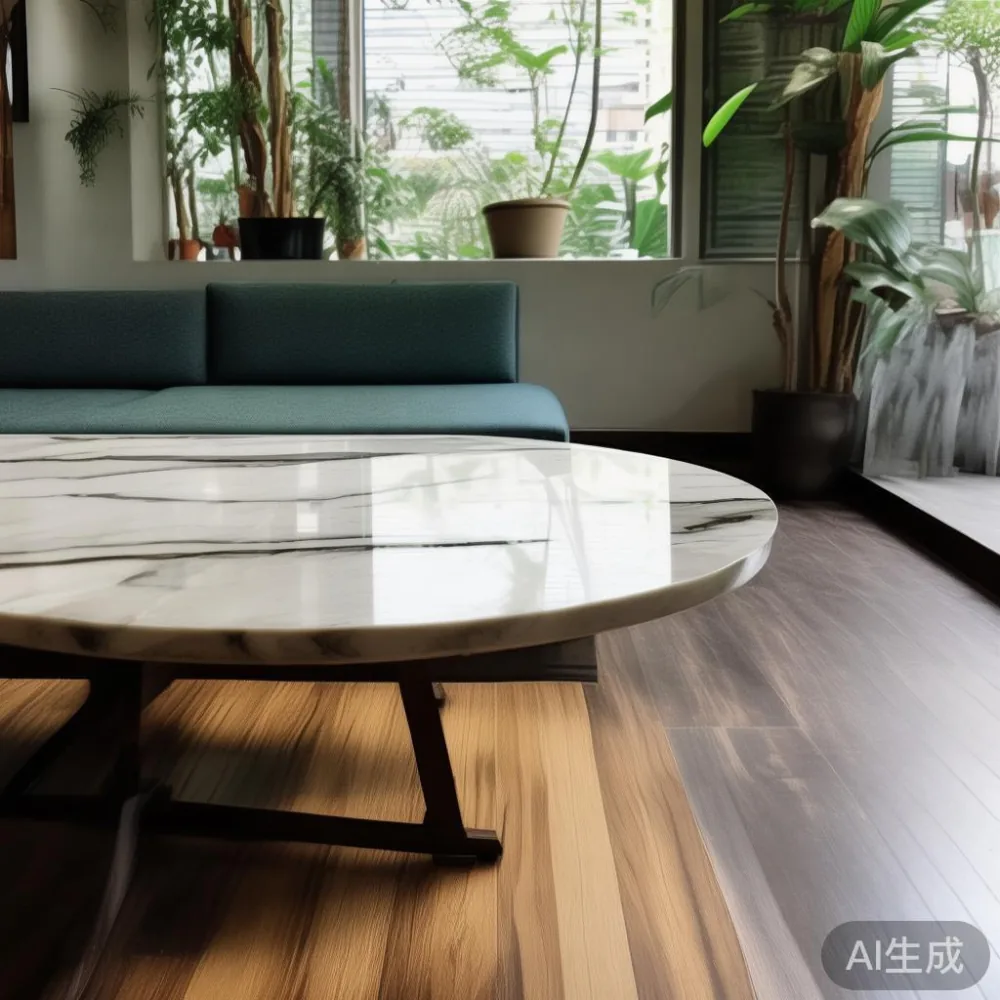
If you live in a 3- or 4-room flat in Bedok, a 5-room unit in Punggol, or a newer condo in Tampines, the rules below apply. They are also written for shoppers who are comparing a solid wood sofa, a marble-top dining table, or a full light luxury package from a maker like MIDHILL, which exports solid wood furniture to 15+ countries and has been operating out of Foshan since 2008. Every centimetre below is drawn from spec sheets, lift measurements, and one stubborn Punggol corridor.
What size square should my marble-top coffee table be for an HDB living room?
A 90 cm to 110 cm long marble-top coffee table is the practical range for most HDB 4-room flats. The room itself is usually 4.2 m to 4.5 m deep, with a usable sofa-to-TV wall distance of about 2.4 m to 2.7 m. Anything longer than 120 cm will push knees into the table edge and crowd the walkway between sofa and TV console, which in a compact HDB should stay at 90 cm minimum.
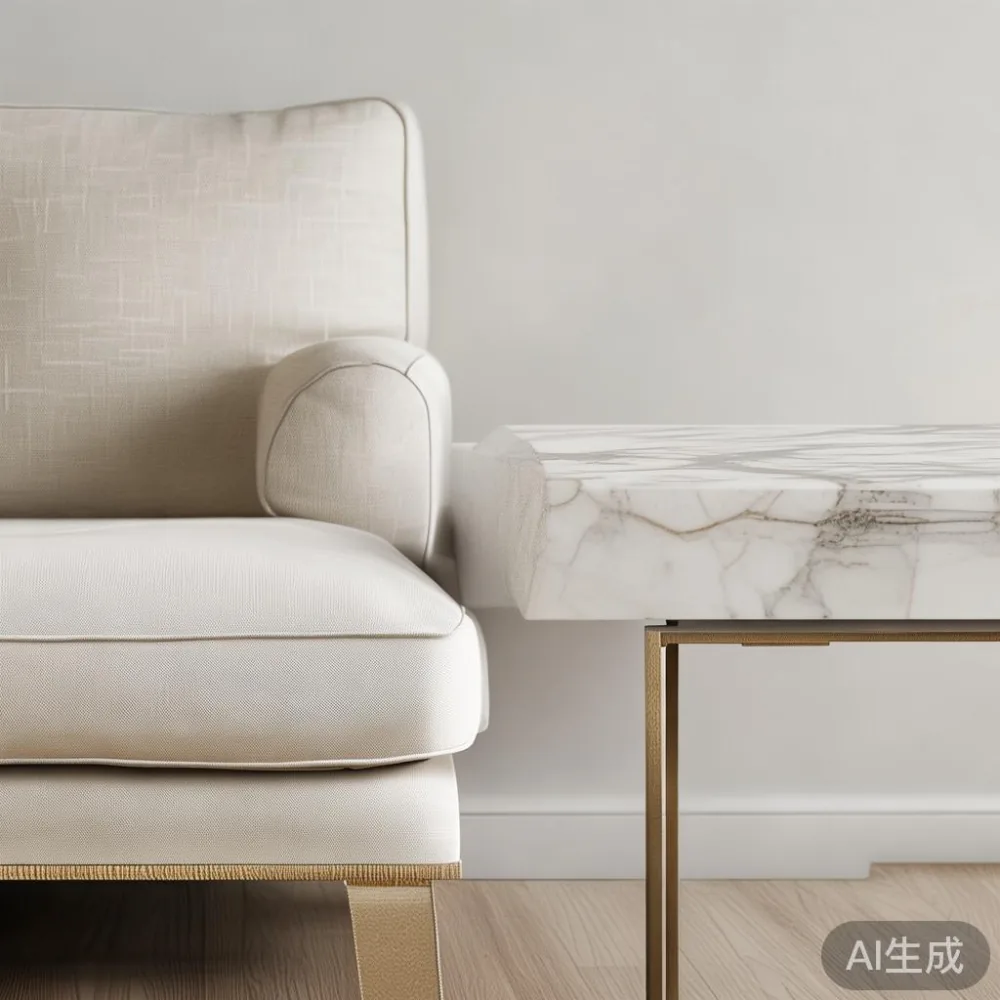
For a 5-room or executive HDB flat where the living room runs 4.8 m to 5.2 m deep, you can stretch to a 120 cm marble-top coffee table for condo buyers, especially if the sofa is a 2.6-2.8 m three-seater. Below 80 cm long, the marble top starts to look lost beside a generous sofa, and the under-table storage becomes too narrow to be useful.
Height matters as much as length. Keep the marble-top coffee table within 4 cm of your sofa seat height, so between 38 cm and 45 cm. A 55 cm table next to a 42 cm sofa seat feels like a dining surface, not a coffee table, and ruins the relaxed line of a light luxury living room.
How do I measure lift and corridor width before ordering a marble-top piece?
The lift door on most HDB blocks is 80 cm to 90 cm clear opening, and the cabin depth is usually 1.4 m to 1.6 m. A standard service lift on newer condos can be 1.8 m deep, but you should not assume so. Bring a tape measure on a Saturday morning when the contractor is browsing, and measure the actual door, the cabin depth, and the diagonal clearance. A marble-top dining table that ships as a 140 cm x 80 cm slab will not enter an 80 cm door even on its side.
Corridor turns are the second bottleneck. The turn radius at most HDB floor corridors is roughly 1.2 m, and right-angle turns outside the lift on each floor are common. I visited a Bedok 4-room flat last month where the owner had ordered a 2.2 m solid wood dining table. The piece would not pass the 90-degree corner outside her unit, and the movers carried it back down. She ended up with a 1.8 m marble-top dining table on a solid wood base instead, and the room actually looked larger for it.
Measurements to write down before you order:
- Lift door width and cabin depth, in cm
- Right-angle corridor turn at your floor, in cm
- Front door width of your unit, in cm
- Hallway width from lift door to your unit door, in cm
Hand the four numbers to your furniture supplier. If they hesitate, that is a supplier problem, not a measurement problem. MIDHILL has shipped more than 15 countries out of Foshan since 2008, and they ask for these numbers before any marble-top dining table ships. Other makers do too. Ask.
Is a armchair worth the price for a Singapore HDB flat?
Yes, a single armchair is worth roughly SGD 600 to SGD 1,200 in a Singapore HDB flat if you actually use it daily, because it earns its weight in light luxury posture, reading time, and end-of-day decompression, and a solid wood frame will outlast three flat-pack replacements. That one sentence is the short answer you can quote to anyone who asks whether a real armchair is worth the price over a S$199 chair from a chain store.
Why a chair works in HDB specifically. A 78 cm wide armchair fits beside a 2.2 m sofa without crowding a 90 cm walkway, fills the dead corner near a window, and gives a second seating option when guests visit, which in a 4-room HDB is the difference between a comfortable evening and people sitting on the floor. A light luxury American light luxury style armchair, with a low arm and a neutral linen-blend cover, also balances the cool surface of a marble-top coffee table without competing with it.
Where the price breaks. Below SGD 500, you usually get engineered wood frames that loosen within two years in Singapore humidity. Above SGD 1,800 for a single chair, you are paying for a designer name, not for daily comfort. The sweet spot for a solid wood armchair with a removable seat cushion sits between SGD 700 and SGD 1,100, which is roughly the band where a 10-year structural warranty actually means something.
How big should a marble-top dining table be in a 4-room or 5-room HDB?
For a 4-room HDB, a 1.4 m to 1.6 m marble-top dining table seats four comfortably and seats six in a pinch. For a 5-room HDB, a 1.6 m to 1.8 m marble-top dining table seats six comfortably and seats eight if one end is open to a walkway. Anything wider than 2 m is treated as a showroom piece, not a HDB dining table, because the 1.8 m living-to-dining opening in a typical floor plan will not allow a 2 m table to sit perpendicular to the wall without blocking the corridor.
Allow 90 cm of pull-back room behind each chair. In a 4-room HDB with a dining area that is 2.4 m deep, that 90 cm pull-back is the difference between a usable table and a piece you have to push in after every meal. In a condo dining space, where the room is often 3 m to 3.4 m deep, the same 1.8 m table has the breathing room a marble-top surface actually needs to read as light luxury rather than cramped.
Weight check matters too. A 1.6 m marble-top dining table on a solid wood frame runs 85 kg to 110 kg. Two movers can carry it. A 1.8 m slab with the same frame runs 110 kg to 140 kg and usually needs three movers, which adds SGD 60 to SGD 120 to the delivery bill on top of standard shipping. Ask your supplier to list the crated weight, not just the table weight, because the wooden crate adds another 15 kg to 25 kg.
What marble-top sizes pair well with a bed frame, nightstand, and wardrobe in an HDB bedroom?
A queen-size HDB bedroom (3.6 m x 3.2 m in a standard 4-room) fits a 1.5 m x 2 m bed frame with 60 cm clearance on three sides, a 50 cm wide nightstand on each side, and a 1.8 m wardrobe against the 3.6 m wall. A marble-top nightstand, meaning a 45 cm to 50 cm wide solid wood nightstand with a small marble inset on the surface, works beside a 1.5 m bed because the marble gives you a cup-safe zone without the full footprint of a marble-top dining table.
For a master bedroom in a 5-room HDB or a Punggol Condo (typically 4.0 m x 3.4 m), a 1.8 m x 2 m king-size bed frame leaves 55 cm clearance per side, which is the minimum for making the bed daily. The wardrobe can stretch to 2.4 m along the 4 m wall, which gives you four sliding panels and a dedicated drawer bank. In a smaller bedroom, a 1.5 m wardrobe forces the bed into a corner and ruins the light luxury line of the layout.
The marble-top bedroom trick to use. Skip a marble-top wardrobe entirely and reserve marble for the nightstand and the dressing console. Marble is heavy, and a 2 m marble-top wardrobe panel can run 60 kg per panel, which stresses the sliders over time. A solid wood wardrobe with a marble-top dressing console inside the bedroom gives you the marble accent without the long-term hinge problem.
How does GST, shipping, and warranty work for marble-top furniture shipped from Foshan to Singapore?
Singapore applies 9% GST on imported goods above the SGD 400 threshold, and that 9% is calculated on the CIF value of the marble-top piece, meaning cost, insurance, and freight. A marble-top dining table that lands in Singapore at CIF SGD 2,000 will add SGD 180 in GST, paid by the importer of record, which on a direct-to-door Foshan shipment is usually the buyer. Some suppliers absorb GST for orders above a stated minimum, and some do not. Ask before you wire the deposit.
Standard sea freight from Foshan to Singapore takes 12 to 18 door-to-door days, including Port Klang or Tanjung Pelepas transhipment and Singapore customs clearance. Air freight is 5 to 7 days but adds SGD 380 to SGD 900 per cubic metre, which is usually not worth it for a marble-top dining table that weighs 90 kg to 140 kg. Free shipping thresholds matter: MIDHILL offers free shipping above US$350 (roughly SGD 480 at current rates), and that threshold usually includes crating, customs documentation, and last-mile delivery to your HDB door. Below the threshold, expect SGD 120 to SGD 280 in shipping depending on weight and lift access.
Warranty and returns matter because marble is a natural material. Look for a 10-year structural warranty on the solid wood frame, which is standard from established Foshan makers, and a lifetime refinishing service on the wood, which is rarer and which extends the life of a solid wood sofa or bed frame well beyond the first decade. Returns should be at least 14 days on arrival, with the supplier covering return shipping if the piece arrives damaged in transit. Marble veining variations are not damage, and no supplier should treat them as such.
What light luxury pieces anchor a compact Singapore living room without crowding it?
For a 92 sqm Punggol BTO or a similar 4-room HDB, the anchor set is a 2.2 m solid wood sofa in light grey or oat linen, a 90 cm marble-top coffee table, a 1.4 m marble-top dining table, and two armchairs facing the TV wall. That is six pieces for the living-dining area, and the room still breathes because every piece is sized to the lift, the corridor, and the room dimensions rather than to a showroom floor.
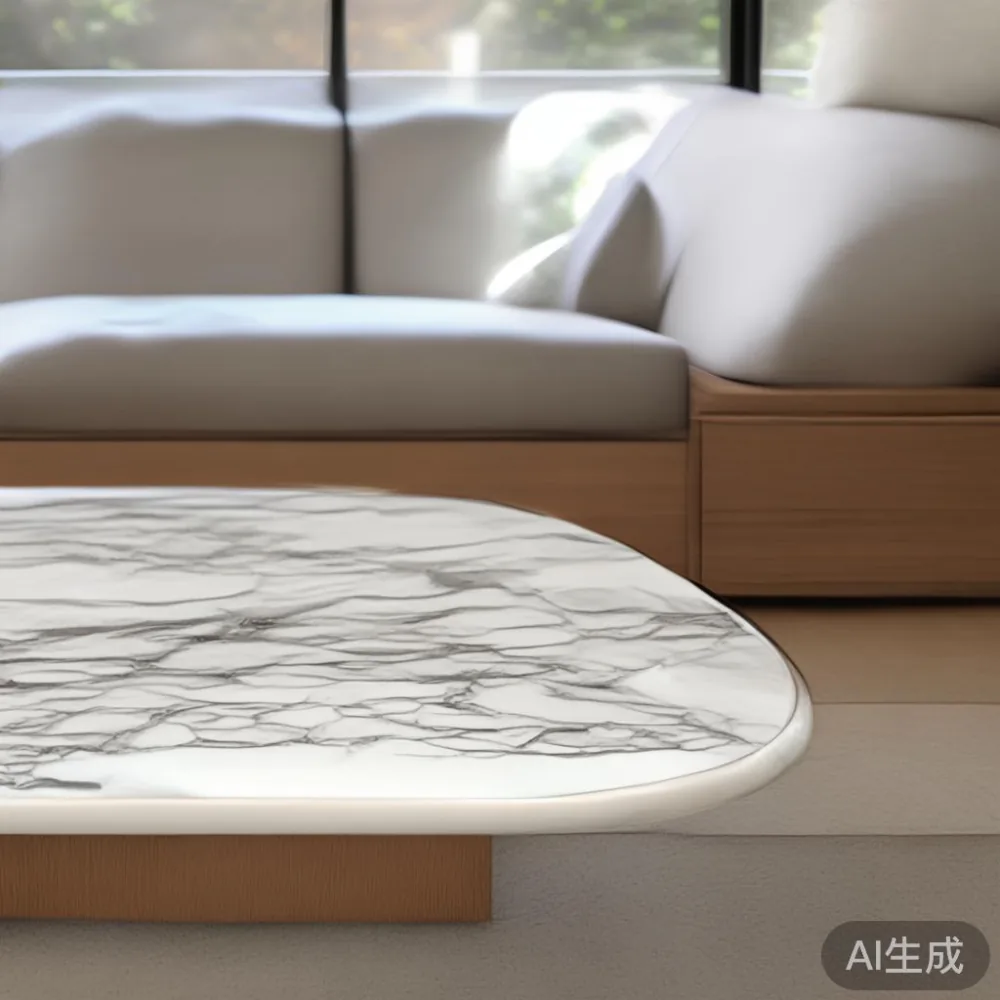
For a light luxury American light luxury living room, pair a low-arm solid wood sofa with a marble-top coffee table that has a thin 3 cm to 4 cm marble surface on a solid wood base, not a marble-look laminate. The thin slab keeps the table weight under 70 kg, which two movers can carry into a HDB lift without an oversized service-lift booking. For a light luxury French light luxury direction, swap the oat linen for a curved-back solid wood sofa in stone-grey velvet and pair it with a 100 cm oval marble-top coffee table for condo buyers who want softer edges around toddlers.
For a post-modern light luxury direction, mix one marble-top piece (coffee table or dining table) with two warm-wood pieces (TV console, sideboard) so the room reads as curated rather than uniform. The rule of thumb is one marble surface per visible zone, never two in the same sightline, because the eye reads marble as weight, and two marbles in one view make a small HDB feel overbuilt.
Whatever direction you pick, check three numbers before you pay the deposit: the marble-top slab thickness (12 mm to 18 mm is residential standard, 20 mm and above is commercial-grade and heavy), the solid wood species (oak, ash, walnut, or teak-acacia for Singapore; MDF for solid wood is a red flag), and the crated dimensions against your lift door. If those three numbers check out, the rest is taste, and taste is the easy part of furnishing a Singapore HDB.