Long-Term Cost Analysis: Veneer vs. Solid Wood for Singapore
Furniture budgets in Singapore rarely end at the checkout. A dining table must survive humid weather, fit through a HDB lift, look intentional beside a marble top, and still make sense after 5 years. Veneer can offer an attractive entry point, while solid wood carries higher material and labour costs but may age more gracefully. The fairest comparison is not based on the showroom price alone; it includes care, repairs, resale, delivery and the risk of replacing an item that no longer suits the home.
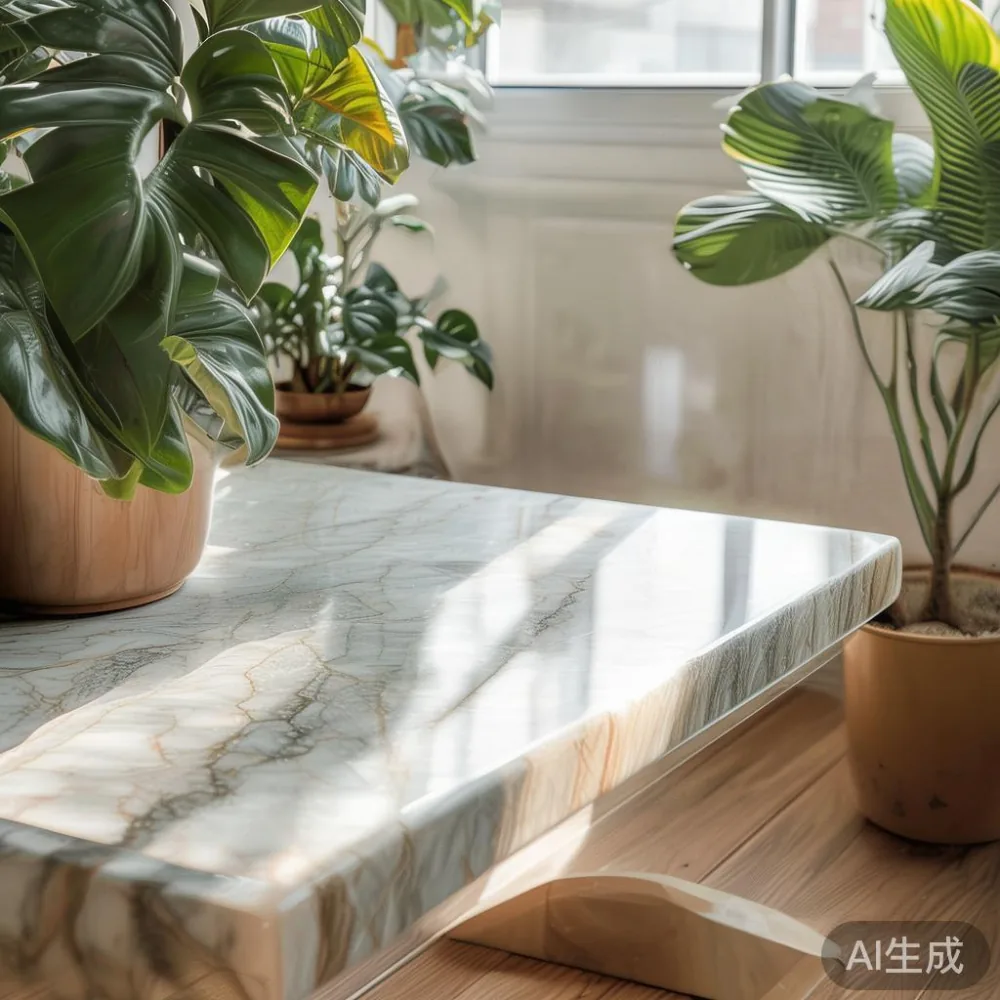
I visited my colleague’s Bedok condominium last month to inspect a 180 cm solid wood dining table that had been in daily use for four years. Its surface had softened slightly around one hot pot, while the adjacent 180 cm veneer table had a scratched edge and a swollen corner after a monsoon leak. Neither table was badly maintained, but the experience showed why ownership cost matters more than the initial invoice.
This guide compares veneer and solid wood over a 60-month period, using realistic Singapore figures and dimensions suitable for Tampines, Bedok and Punggol homes. It also considers how each material works with a marble table, and how material choice affects products such as a solid wood sofa, bed frame, wardrobe and nightstand.
What does veneer actually cost over five years?
Veneer is a thin layer of wood, generally about 0.6 mm to 1.2 mm, bonded to a manufactured board such as MDF or plywood. A 180 cm veneer dining table might cost SGD 680 before GST, with engineered-wood legs and a standard finish. A comparable solid oak or ash dining table may cost SGD 1,850 before GST. After 9% GST, those examples become approximately SGD 741 and SGD 2,017.
The apparent saving is about SGD 1,276. However, veneer furniture needs more careful protection from heat and moisture. Singapore’s relative humidity often ranges from 55% to 80%, and a kitchen near a window can reach higher levels. Place a hot pot on a veneer dining table and a ring can become permanent within 1 year. Near a marble top, the same heat can affect the surface finish, while condensation may cause the veneered edge to lift.
Over 5 years, a reasonable care allowance is SGD 280 for veneer: SGD 120 for two professional refreshes, SGD 90 for replacement edge trim, SGD 50 for polishing supplies and SGD 20 for a damp-related repair reserve. An unplanned replacement in year 3 or 4 adds another SGD 900 to SGD 1,400 before GST. A low-use table may therefore finish near SGD 1,020 in ownership costs, but a higher-use table can reach SGD 2,200 or more.
Solid wood has its own risks. A dining table exposed repeatedly to direct afternoon sun may fade unevenly, and movement can create small gaps around joints. Yet its thickness allows sanding and refinishing. A light scratch can be treated in 1 hour; a deeper mark may take 3 hours. Allowing SGD 480 over 5 years for 2 refinishing sessions, wax, oil and minor hardware replacements is realistic. Its total 5-year cost in this example is about SGD 2,497, compared with roughly SGD 1,020 for a well-maintained veneer table and SGD 2,200 for a heavily used one.
That produces a working difference of SGD 1,477 in favour of veneer for a low-use table, or SGD 297 for solid wood when veneer requires early replacement. The result shows why the purchase price is only one line in the calculation.
Is American bed worth it for an HDB bedroom?
The question is American bed worth it depends on construction rather than a national label. An American-style bed frame commonly includes a substantial headboard, slats or a platform base and solid wood rails. A queen bed frame measuring 160 cm by 200 cm typically weighs 45 kg to 70 kg in solid wood and 32 kg to 50 kg in veneer.
A queen veneer bed frame might sell for SGD 690 before GST, or SGD 752 after GST. A queen solid wood bed frame might cost SGD 1,480 before GST and SGD 1,613 after GST. For a 5-year period, add SGD 360 to the veneer figure for 2 inspections, a new centre support and one side-panel repair. Add SGD 250 to the solid wood figure for sanding, waxing and replacing 2 of the 10 support slats.
The result is approximately SGD 1,112 for veneer and SGD 1,863 for solid wood. Yet the solid wood bed frame may retain more value, and the 70 kg frame can feel considerably steadier on the 2.00 m x 1.60 m sleeping area common in Singapore condos. The heavier frame also requires careful delivery planning.
Before ordering, check the lift door and cabin measurements. A 70 kg bed frame may arrive in 2 cartons of 35 kg each, while a wardrobe may arrive as 3 flat panels of 18 kg to 27 kg. A condensed bed frame can reduce handling time from 45 minutes to 25 minutes, but it should not be weakened solely to save delivery space.
For renters planning a move at year 4, a solid wood bed frame can be disassembled and refinished. Veneer may need patching if its paper edge is damaged during transport. This matters in HDB flats, where the distance from the lift lobby to the unit may include a 90 cm corridor turn and a 6 cm doorway.
How do delivery, GST and local access change the total?
Singapore GST must be included in any fair 5-year comparison. At 9%, an SGD 1,000 pre-GST item becomes SGD 1,090, adding SGD 90. An SGD 2,000 item becomes SGD 2,180, adding SGD 180. Over several purchases, the tax difference is substantial but rarely the decisive factor.
Delivery is similarly practical. A standard in-town delivery to Tampines, Bedok or Punggol may cost SGD 35 to SGD 65 before GST, while carrying a 70 kg solid wood wardrobe upstairs may cost SGD 140 to SGD 260 before GST. A crane or specialist move can cost SGD 350 to SGD 700, depending on the unit height and access route.
Measure the lift door rather than assuming it will fit. A common HDB lift opening is around 90 cm wide and 210 cm high, while a condo lift may offer 110 cm to 120 cm of width. A wardrobe panel of 180 cm x 60 cm can turn through a 120 cm lift if the panel is tilted correctly; the same panel may not pass through a narrow staircase landing without scraping.
MIDHILL ships to Singapore with delivery generally taking 7 to 21 days after production, depending on stock, finish and destination. The 10-year structural warranty provides useful protection for manufacturing issues, while a 14-day return window allows a buyer to check scale, finish and access after arrival. Free shipping over US$350 applies to qualifying international orders, so the final Singapore quotation should still be checked for local freight, GST and installation.
Allow 15 minutes to inspect cartons, 20 minutes to move pieces into position and 45 minutes to assemble a wardrobe. These hidden labour costs can add SGD 40 to SGD 90 in the first year. A 5-year comparison should record them.
Which surface should sit beside a marble top?
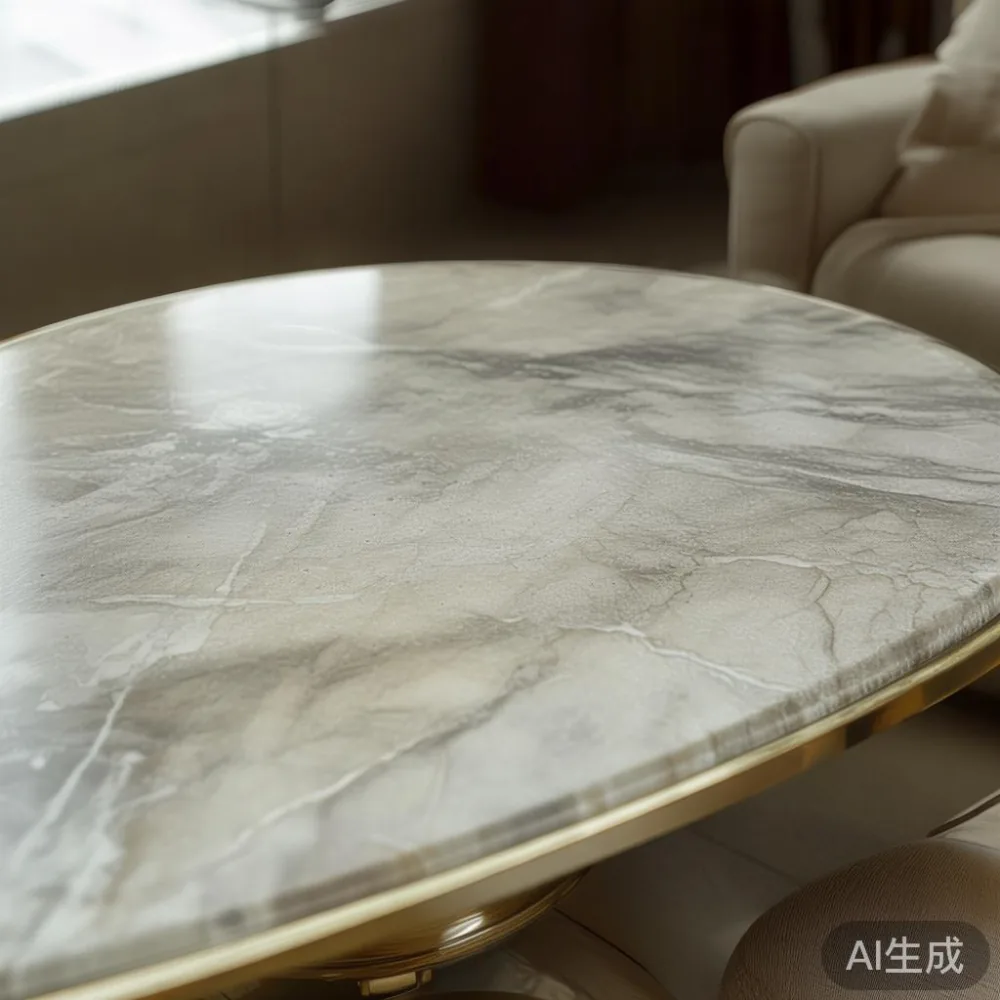
A marble top introduces a hard, cool and visually substantial surface. Paired with a light wood, it creates French light luxury; paired with walnut, it can feel more like American light luxury. A clean-lined solid wood dining table lets the marble top provide the focal point without requiring an oversized room.
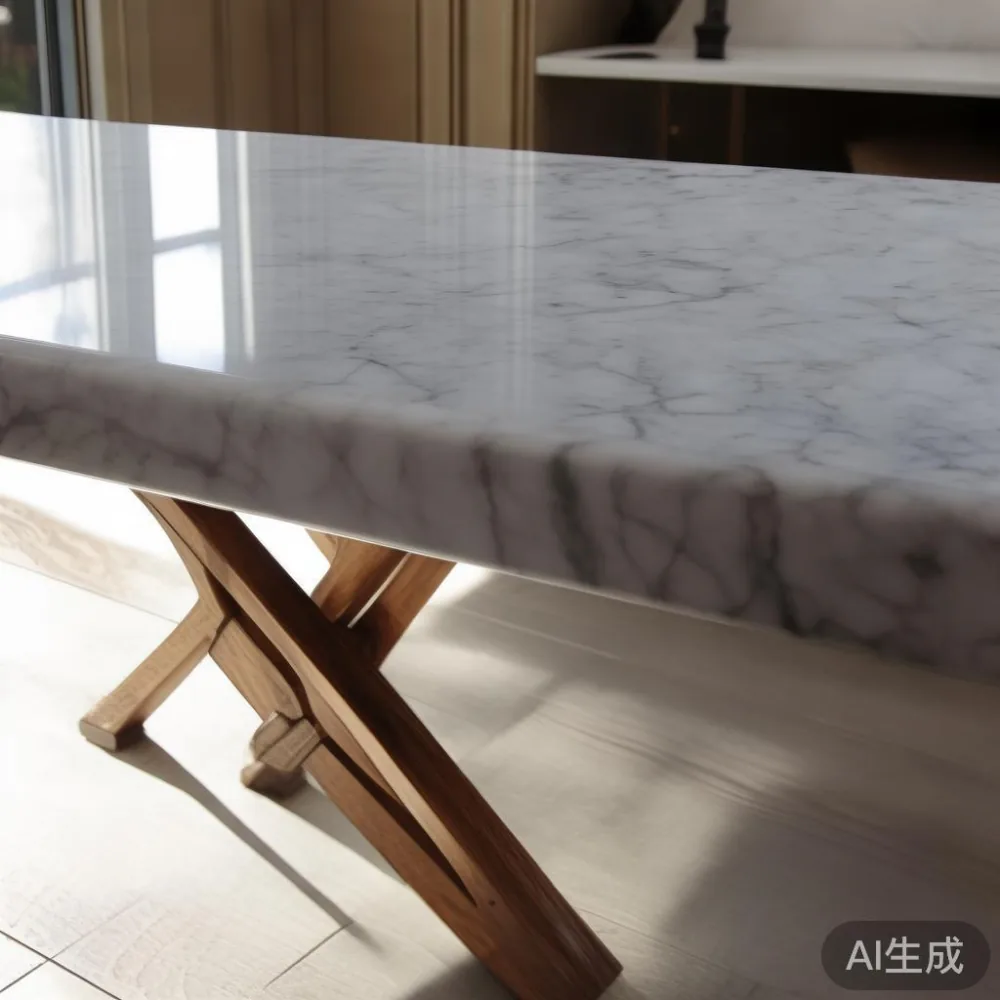
For a 200 cm x 100 cm marble top dining table, the base should be broad enough to resist tipping. A solid wood base weighing at least 65 kg is suitable for many dining settings, while a veneer base should include full-length metal or hardwood supports rather than narrow MDF legs. The height should usually be 74 cm to 76 cm, allowing approximately 28 cm of clearance at a standard 45 cm to 47 cm dining chair.
Heat is the main concern. Place a marble top on a stable solid wood dining table and use a trivet measuring at least 25 cm x 25 cm. Allow the same protection with a veneer dining table, but inspect the edge every 6 months because repeated heat can make the bond line visible. A marble top also adds weight: a 200 cm x 100 cm stone slab may weigh 180 kg to 260 kg depending on thickness and density. The supporting frame must be checked by the supplier.
At a nightstand level, a 50 cm wide marble top may weigh 18 kg to 30 kg. A solid wood nightstand weighing 12 kg to 18 kg is easier to reposition than a marble version weighing 35 kg to 48 kg. This is relevant in compact HDB bedrooms, where a 90 cm landing outside the bedroom door can complicate a large delivery.
For a bedroom with a 180 cm queen bed and 60 cm side clearances, planners often compare European for small living room ideas with a restrained Japandi approach. If you are considering how to style Japandi sofa in bedroom, a low-profile solid wood bed frame and a light oak nightstand can balance pale walls and woven textures without making the room feel crowded.
Which material is more realistic for compact Singapore homes?
Veneer is not inherently unsuitable for Singapore. It can provide consistent colour, useful shapes and a lower weight, and it may be sensible for wardrobes fitted into a 150 cm recess. The better question is where the furniture will receive the most physical stress.
A solid wood sofa is a different matter from a solid wood dining table. Sofa frames can include kiln-dried hardwood cores, engineered joints and upholstered cushions, so “solid wood” may describe only selected components. Compare the actual frame specifications, plywood thickness, joint construction and warranty terms rather than relying on the label.
A solid wood bed frame is usually more suitable than veneer for a bed that is moved, leaned on or assembled several times. A solid wood wardrobe can work well in a fitted HDB bedroom, provided door panels and runners are measured before drilling. Veneer can work for a wardrobe if it is floor-standing and protected from dampness. A 210 cm wardrobe with 4 doors may weigh 120 kg in veneer and 175 kg in solid wood.
Light-luxury style also affects the decision. French light luxury often favours curved profiles, soft fabrics and a solid wood sofa base. American light luxury tends toward generous proportions, button details and a substantial solid wood bed frame. Post-modern light luxury can combine a marble table with clean geometry and contrasting grain. In all 3 styles, material authenticity is less important than proportion, joinery and tactile quality.
For a guest room, European light luxury for guest room schemes can use a compact solid wood nightstand, a slim wardrobe and a pale veneer writing desk that weighs only 18 kg to 26 kg. This balances the visual language with the physical constraints of the room.
French sofa vs Modern sofa: where does cost appear?
The comparison French sofa vs Modern sofa often reduces to frame construction, cushion foam, cover and mechanism. A three-seat sofa measuring 220 cm may use a veneer or mixed-wood platform at the base, while a more substantial frame may use solid wood rails, webbing and sprung supports. The shape alone does not determine the price.
A 220 cm sofa at SGD 1,290 before GST may need SGD 350 over 5 years for foam replacement, cover cleaning and mechanism adjustment. A similar sofa at SGD 2,190 before GST may need SGD 220 over 5 years, including 2 minor service visits and a cushion refresh. The solid construction therefore starts at a higher price but can have a lower service allowance.
The same principle applies to the French sofa vs Mid-century modern sofa comparison. A sculpted French sofa may use more shaped frame components, while a mid-century design may rely on tapered legs and visible rails. Both need a stable foundation, especially when paired with a marble table nearby. A 45 kg sofa is easier to move through a 90 cm HDB lift than a 65 kg model.
Upholstery adds another dimension. Performance fabric may cost SGD 18 to SGD 42 per metre, while full leather can add SGD 900 to SGD 2,500 to a sofa. A light-coloured cover in a humid room should be treated every 6 to 12 months, while marble surfaces need separate, pH-neutral cleaning.
Buyers should request the frame species, moisture target, joint method, foam density and warranty exclusions. “Solid wood” without a component map is too broad for a useful 5-year calculation.
How should a buyer calculate the real five-year cost?
Start with the GST-inclusive purchase price. Then add delivery, carrying, installation, expected repairs, maintenance materials and likely replacement risk. Subtract any documented resale or transfer value at year 5. Repeat the exercise for at least 2 products, because a dining table and a wardrobe experience different stresses.
For the 180 cm dining table example:
Veneer: SGD 741 purchase + SGD 70 delivery and assembly + SGD 280 care + SGD 0 to SGD 1,300 replacement risk = roughly SGD 1,091 to SGD 2,391.
Solid wood: SGD 2,017 purchase + SGD 120 delivery and assembly + SGD 480 care - SGD 300 estimated resale value = approximately SGD 2,317.
The lower purchase price does not guarantee the lower 5-year cost. If the veneer table is treated carefully and has no water incident, the gap can remain large. If it is replaced once, solid wood may cost only SGD 74 more over 5 years in this scenario. That is why local conditions and use intensity matter.
For a wardrobe, use a 60 cm door opening and allow 3 cm above the unit for levelling. A 240 cm x 60 cm x 225 cm wardrobe may cost SGD 1,590 before GST in veneer and SGD 2,690 in solid wood. Add SGD 180 to SGD 420 for delivery and installation, SGD 300 for veneer care or SGD 240 for solid wood care, and an average SGD 150 for hardware adjustment over 5 years. The totals are approximately SGD 2,598 for veneer and SGD 3,560 for solid wood.
Ask for written care instructions and confirm whether refinishing is available. MIDHILL’s lifetime refinishing policy can support long-term maintenance for qualifying solid wood pieces, while its 10-year structural warranty addresses a different category of risk. Buyers should keep invoices, assembly instructions and finish samples so future care matches the original product.
What final material choice suits a Singapore home?
Veneer is financially attractive for lightly used, dry, fitted furniture when the buyer values a lower initial outlay and accepts that edge repairs may be more visible. Solid wood is usually stronger for dining tables, bed frames, nightstands and frequently handled pieces. Its capacity for sanding and refinishing makes the long-term economics more predictable, although the upfront price is higher.
A sensible strategy is to pair materials according to use. Choose veneer for a fitted wardrobe or a less frequently handled console, and choose solid wood for the dining table, bed frame and nightstand. Add a protected marble top to a stable solid wood base if the design calls for a focal surface. Confirm lift access, keep a 25 cm trivet beside the marble top, and budget for maintenance from day 1.
For project pricing or a material comparison tied to a specific floor plan, contact MIDHILL on +86 188 2788 2512 and request the dimensions, weight, finish and delivery estimate before ordering. The most cost-effective furniture is not simply the piece with the lower sticker price; it is the one that fits the route into the home, withstands 5 years of tropical use and can be maintained rather than discarded.