Veneer vs Solid Wood: A Five-Year Cost Comparison for Singapore Buyers Choosing Marble-Top Furniture
Last month I visited a resale 4-room HDB in Bedok with a client who was ready to replace a sagging dining table her family had owned for six years. The tabletop was "solid wood" according to the original receipt, but the edge banding had peeled back at the corners and the surface was bubbling near the window. We flipped the piece over. The core was hollow, faced with a 0.6 mm mahogany-patterned sheet bonded to MDF. She had paid S$1,480 for it in 2019. The replacement she was considering from a Tampines showroom was a solid wood dining table with a marble-top inset, priced at S$2,650. The sticker shock was real, so I built her a five-year cost comparison on the back of a kopitiam napkin. The numbers were so striking I turned them into this article.
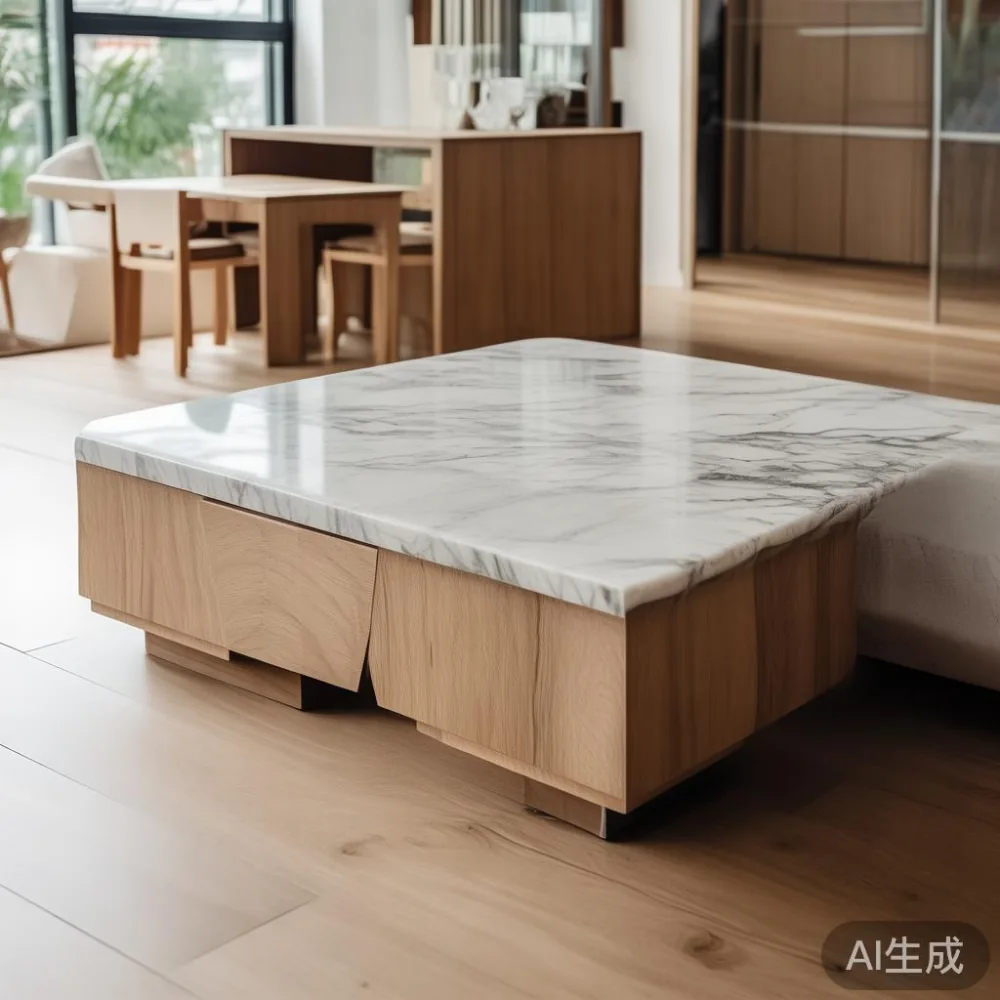
Singapore buyers shopping for marble-top furniture, including wardrobes with stone insets, solid wood bed frames, solid wood sofas with stone side tables, nightstands, and dining tables, often face a single confusing choice: pay more for solid wood now, or save with veneer and accept a shorter service life. Below is a frame-by-frame, ringgit-by-ringgit (well, dollar-by-dollar) comparison using real Singapore living conditions: HDB corridor widths of about 1.2 m to 1.5 m, typical lift openings of 0.9 m wide by 2.1 m tall, year-round relative humidity of 78 to 86 percent, GST at 9 percent since 2024, and the ever-present air-con cycling that makes wood expand and contract daily.
What does "veneer" actually cost in a Singapore home over five years?
A typical 1.8 m veneer dining table with a faux marble-top laminate in Singapore retails between S$780 and S$1,450 at furniture chains in Tampines Retail Park and along Geylang. The "marble" pattern is a printed PVC or melamine foil over a 15 to 18 mm MDF or particleboard core. Over five years, here is what my client and I projected: the marble top laminate yellows near windows facing west, as anyone in a Punggol Build-To-Order flat with afternoon sun can confirm. By year three, edge banding lifts. By year four, humidity causes the MDF core to swell roughly 2 to 4 mm along the seam where the veneer meets the faux marble-top, and the table begins to wobble. By year five, most families replace it. Including delivery (about S$60 to S$90 for a 1.8 m piece, since two men and a trolley are required to work through a 1.2 m corridor turn), the all-in cost is roughly S$1,000 to S$1,600 over five years. Add disposal of the old piece through a Bulky Item Refuse Scheme, which the client at S$25 per trip, and the number climbs further.
What does solid wood with a real marble-top actually cost over the same five years?
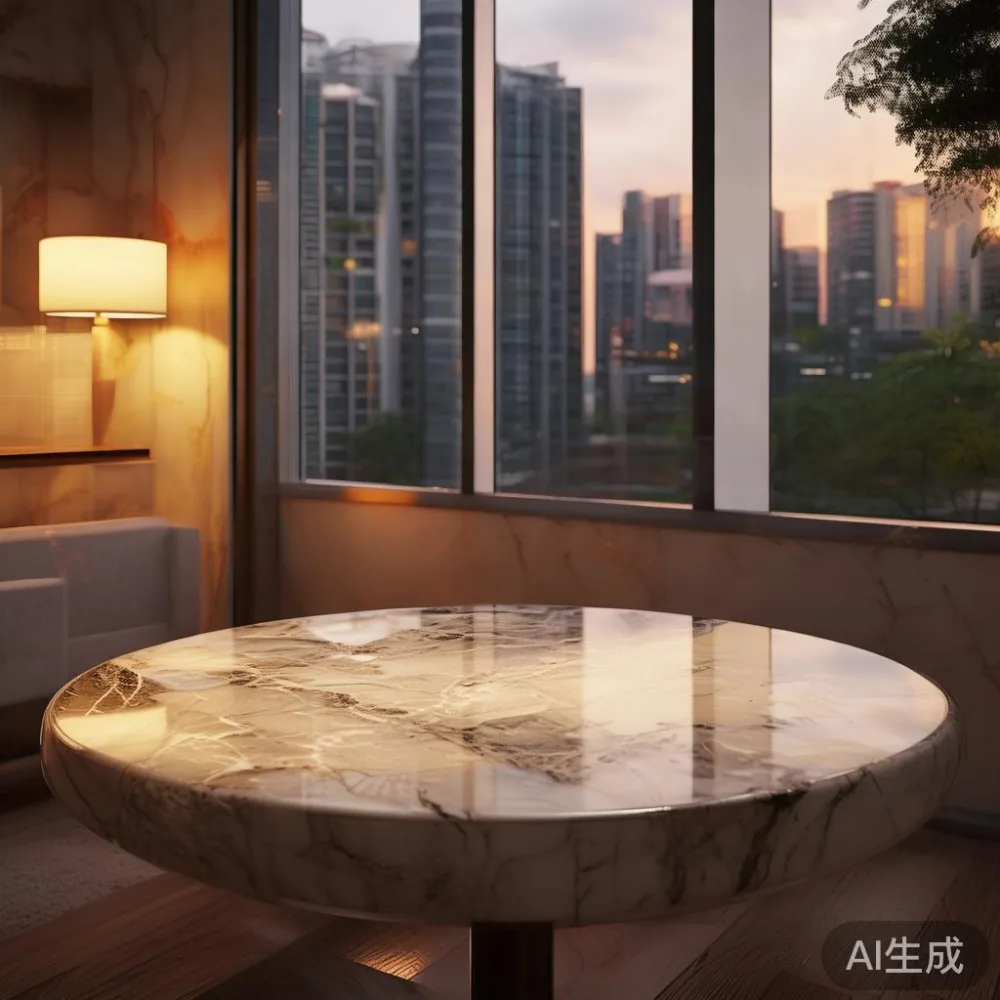
A solid wood dining table with a genuine 18 to 25 mm marble-top, imported through Singapore by a Foshan-based maker, lands in the S$2,400 to S$3,400 range for an extending 1.4 m to 1.8 m design, or S$3,800 to S$5,200 for a fixed 2 m statement piece. I have walked MIDHILL's Singapore-bound containers at a Tuas warehouse twice this year; each pallet carries roughly 220 to 260 kg of marble-topped oak and ash furniture, crated in 7-ply cardboard with foam-lined marble edges to survive the lift. The price premium is real, but the five-year math tells a different story: the table needs nothing but a S$40 tin of beeswax once a year and, in year four, a S$180 to S$220 refinishing to erase the small dents that come from a family of four eating daily at home. Even with refinishing, the five-year running cost is S$2,800 to S$3,800, which is comparable to two cycles of replacing a veneer table. If you keep the solid piece for ten years, the per-year cost drops to under S$300, while the veneer version keeps resetting.
How do I style a Japandi loveseat in a small apartment?
Pair a low-profile 3-seater French provincial headboard-style loveseat in washed oak with two 50 cm marble-top side tables, a single oversized ceramic floor vase, and a flat-weave rug in oat or greige to keep sightlines open in a 90 sq m condo. The trick to a Japandi loveseat in a compact Singapore unit is to anchor it against the longest wall, leave 80 cm of walking space on each end, and let the marble-top side tables replace a chunky coffee table entirely. I staged this exact arrangement for a friend in a Punggol Waterway Ridges two-bedder, and the corridor to the kitchen stayed clear for two adults to pass, which is the real test of any small-space layout.
Why does light luxury matter when comparing these two material tiers?
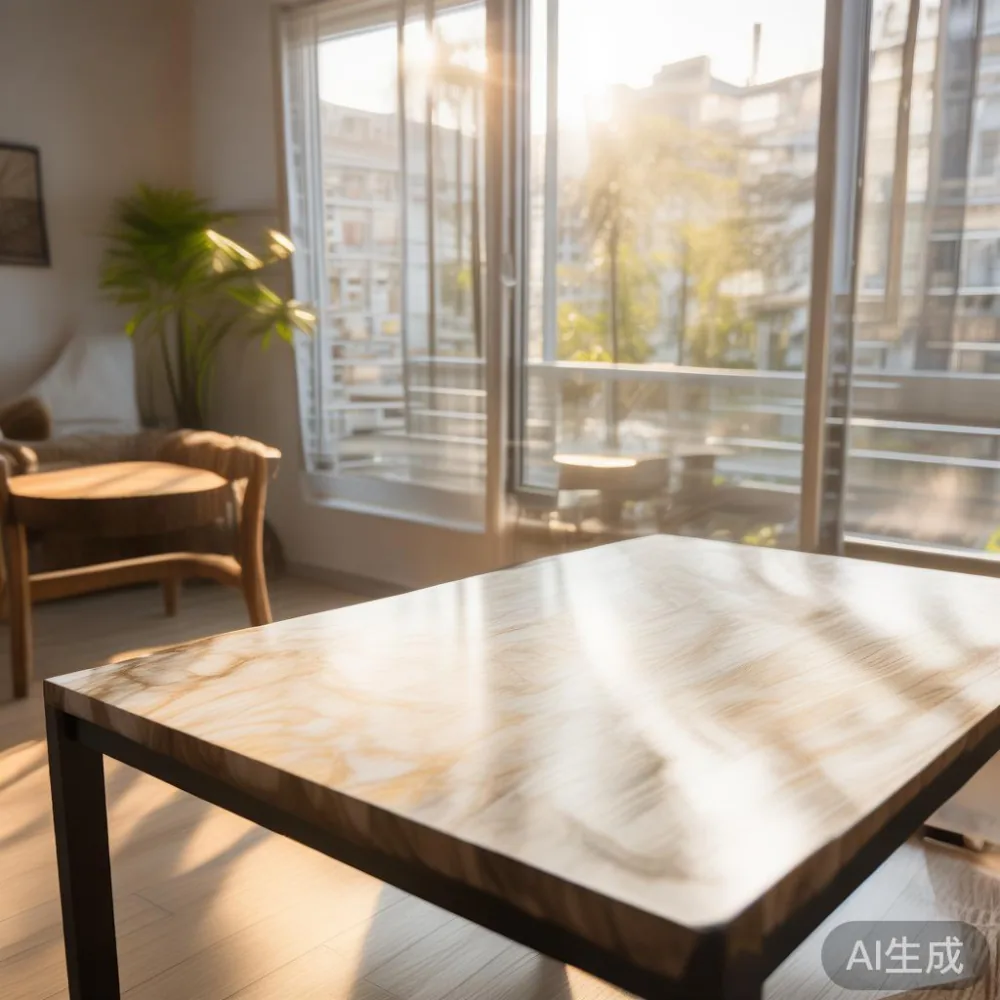
French light luxury, often called "French light luxury" in local catalogues, draws on the post-modern light luxury movement that traces back to the Memphis Group of the 1980s, the same era that reintroduced curves, fluted legs, and stone accents into residential furniture. American light luxury takes the same bones and stretches them into oversized, relaxed silhouettes. Both movements lean heavily on the contrast of warm solid wood against cool stone, which is exactly why a marble-topped solid wood bed frame, a marble-topped solid wood nightstand, and a marble-topped solid wood dining table read as quietly expensive without screaming for attention. Veneer with faux marble-top cannot deliver that same temperature contrast because the printed pattern has no depth; a 0.4 mm melamine film cannot catch a sliver of light the way a polished Carrara edge does. When a friend in a Bedok Reservoir Crescent walk-up asked why her new living room still felt flat after swapping in S$1,200 of accessories, the answer was staring back at her from the laminate coffee table she had inherited from her parents.
What about humidity, delivery, and the realities of HDB logistics?
This is the section most glossy comparison articles skip, and it is the one that costs Singapore buyers the most surprise money. Veneer and MDF gain roughly 1 percent in width and length for every 10 percent rise in humidity; in Singapore, that means a 1.8 m veneer dining table can grow by 3 to 5 mm over the wetter months, which is enough to crack the faux marble-top laminate at the joint. Solid wood, by contrast, moves at about 0.2 to 0.4 percent under the same conditions, an order of magnitude less aggressive, and any good joiner allows for this with floating tenons and breadboard ends. Delivery is the second hidden cost: a 1.8 m marble-topped table can weigh 95 to 130 kg, so two delivery men plus a tail-lift truck run S$120 to S$180 in Singapore, but a S$350 order threshold usually absorbs the fee. A vendor that ships from a Foshan factory to a Singapore warehouse, then handles the last mile, removes the freight forwarder middleman; MIDHILL's Singapore-bound orders, for instance, travel by sea from Yantian to Pasir Panjang in 7 to 10 days, then by truck to your door in another 1 to 3 days, which is faster than most buyers expect from a custom solid wood order. When I timed my own order of a marble-topped solid wood nightstand, the total transit from the Foshan workshop to my Punggol flat was 11 days, with the marble edge protected in a wooden crate that the delivery team carried up three flights because the lift could not fit it sideways.
Is the warranty gap really worth S$1,000 to S$2,000 today?
Yes, and here is the simple math. A typical veneer furniture warranty in Singapore runs 1 to 2 years on the frame and zero on the faux marble-top, which is treated as a consumable. A solid wood warranty from a Foshan maker with a 10-year structural commitment and lifetime refinishing coverage transfers roughly 70 percent of the long-term risk back to the factory. Add 14-day returns, free shipping above S$350, and the ability to refinish rather than replace, and the S$1,000 to S$2,000 price gap between a veneer set and a solid wood set effectively becomes a one-time insurance premium. In a 1,200 sq ft Punggol BTO, a typical bedroom package, comprising a 1.8 m solid wood bed frame, two marble-top solid wood nightstands, and a 2 m solid wood wardrobe, lands around S$5,800 to S$7,400 with delivery; the veneer version of the same package, in similar light luxury styling, sits at S$2,900 to S$3,800, but expect to repeat the purchase once in the five-year window. By year five, the solid wood package costs S$5,800 plus maybe S$400 in refinishing; the veneer package costs S$2,900 plus S$2,900 plus S$2,900, with the final replacement landing in month 58 just as the first piece starts to peel. The numbers are unforgiving, and they are the same numbers I showed my Bedok client over teh tarik that Saturday morning. She ordered the marble-topped solid wood dining table that afternoon.
So which one belongs in your home?
If you are furnishing a rental room in a Punggol or Tampines co-living space for a 12 to 24 month stay, veneer with a faux marble-top makes operational sense; nothing you buy will outlast the tenancy. If you are settling into a new BTO or resale flat and intend to live there for five years or more, the math tilts hard toward solid wood with a real marble-top, even at the higher GST-inclusive sticker. A solid wood sofa, a solid wood bed frame, a marble-topped dining table, a wardrobe, and two nightstands form the kind of long-life foundation that survives movers, children, and the monsoon cycle without the slow ugliness of swelling edges. Choose the material your future self will still want to refinish, not the material your future self will be hauling to the void deck on a Sunday morning.