Veneer vs Solid Wood: What Does a Dining Table Actually Cost You Over Five Years in Singapore?
Last month I visited a 4-room HDB flat in Tampines with a young couple who had just moved in. The previous tenant had left behind a dining table that looked tired within eighteen months — the corners were peeling, the surface had clouded over, and the whole piece was starting to bow under the weight of a hot pot. The couple assumed furniture was furniture. After a quick knock on the underside, I could tell in under ten seconds that it was a 0.6mm veneer wrapped around an MDF core. The conversation that followed turned into the costing exercise I want to walk you through today, because the maths in Singapore — between delivery surcharges, corridor manoeuvring, 9% GST, and the way heat and humidity behave in a Punggol flat facing the afternoon sun — does not behave the way Instagram mood boards suggest.
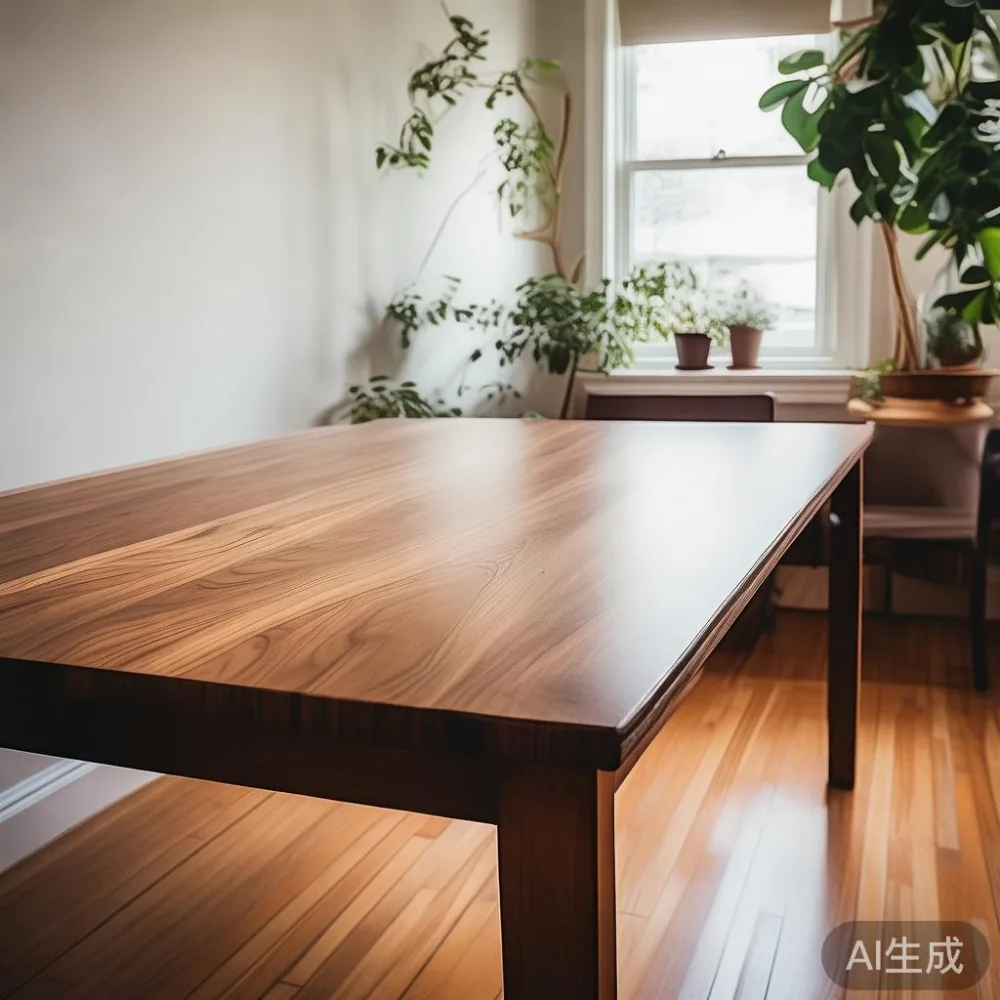
If you have been comparing a solid wood dining table against a cheaper veneered version, the price gap looks steep on day one. Over sixty months, that gap changes dramatically. I have built this article around a realistic Singapore scenario: a 1.6m dining table for four, a bed frame in queen size, and a 1.8m wardrobe, all delivered to a standard HDB unit on the 7th floor with the lift measuring a usable 1.1m wide by 2.1m deep. We will price everything in SGD and account for the small frictions that usually get left out of glossy catalogues.
What Exactly Are You Paying For on Day One?
Veneer furniture uses a thin slice of real wood — typically 0.5mm to 0.8mm — bonded to a substrate such as MDF, particleboard, or plywood. The substrate does most of the structural work; the veneer provides the look. Solid wood furniture uses one continuous piece of timber through the load-bearing sections. In a solid wood sofa frame, a bed frame, or a dining table, this difference matters because Singapore humidity averages 80% year-round, and HDB flats without full-day air-conditioning will see surface moisture swing repeatedly.
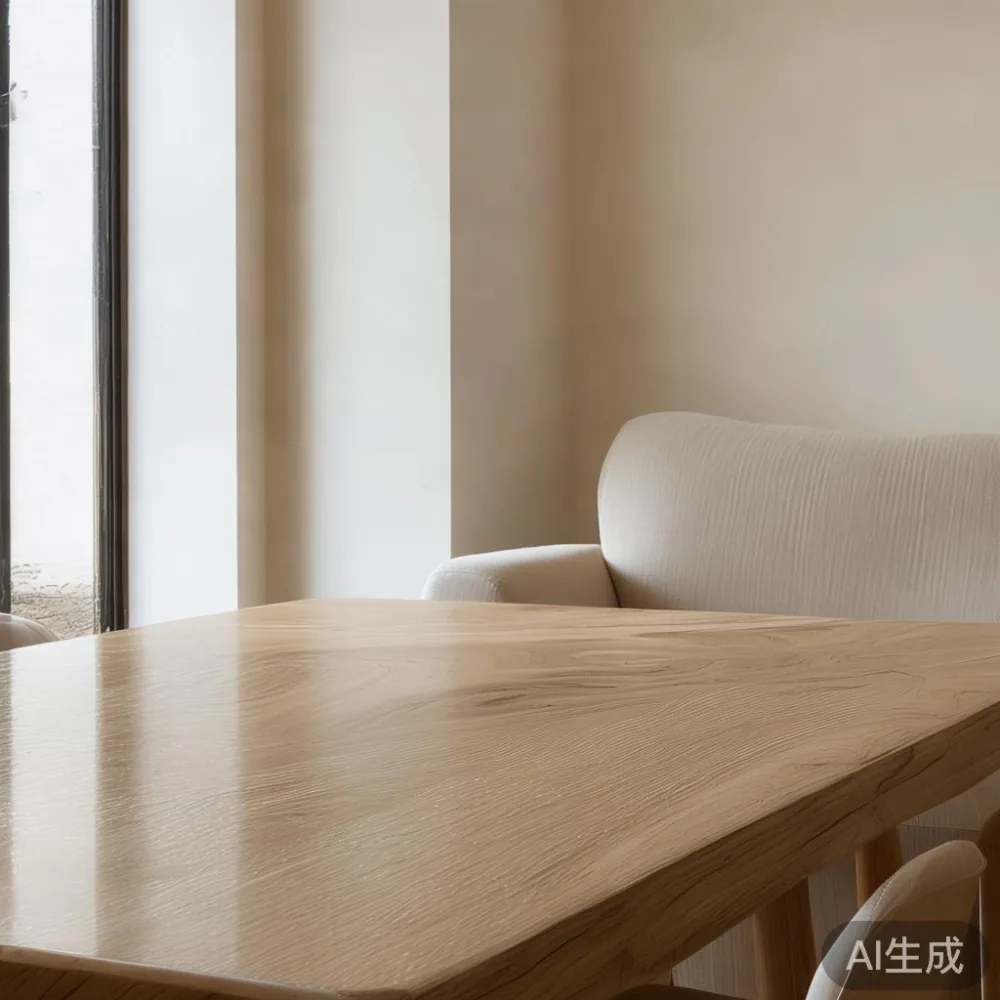
For a fair test, I pulled current SGD retail figures from three Orchard Road-adjacent showrooms and two online stores that deliver to Bedok and Bukit Batok. Here is what the same 1.6m dining table actually costs in Singapore before GST:
| Specification | Veneer version | Solid wood version |
| 1.6m dining table, 4–6 seater | S$520 – S$780 | S$1,680 – S$2,450 |
| Queen bed frame with headboard | S$480 – S$720 | S$1,450 – S$2,100 |
| 2-door wardrobe, 1.8m tall | S$690 – S$990 | S$2,200 – S$3,100 |
For shoppers exploring wholesale French provincial furniture or sourcing from regional suppliers, the spread can widen further once container shipping, customs brokerage, and last-mile delivery to a high-rise are tallied. A Foshan-built solid wood dining table in French provincial styling — turned legs, hand-carved apron, a marble top insert of approximately 90cm × 160cm — typically lands at the higher end of that solid wood band, around S$2,200 to S$2,600 after landed cost in Singapore.
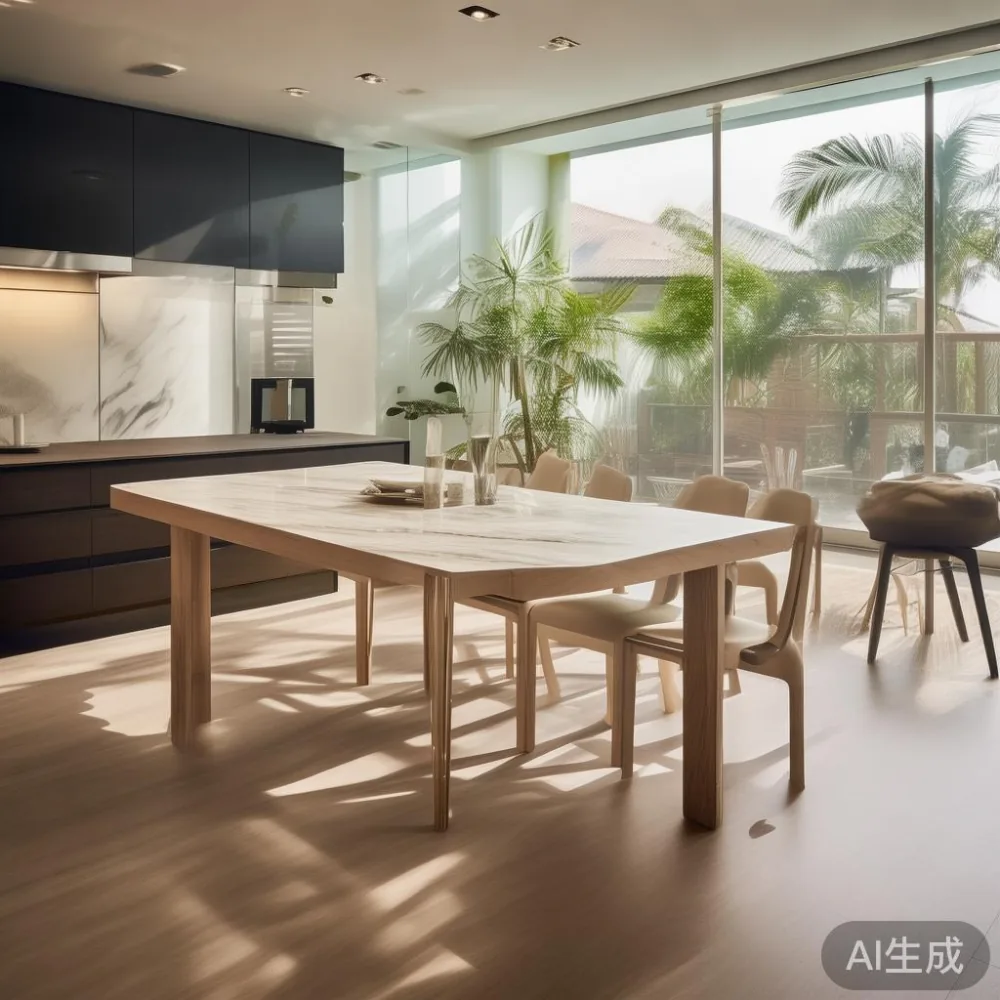
Add 9% GST to every line, then delivery. Most Singapore movers charge S$60 to S$120 per floor above the second storey where the lift cannot be used, and S$80 to S$150 for a timed corridor drop that complies with HDB block rules. A solid wood table weighing 38kg to 52kg will usually require two movers and a blanket wrap; a 22kg veneer table can be carried by one person in the same lift.
How Long Does Each Option Actually Last in Singapore Conditions?
Performance over time is where the comparison begins to lean. I keep a notebook of pieces I have inspected across Tampines, Sengkang, and Toa Payoh over the past seven years, and the pattern is consistent enough to share without guesswork.
Veneer pieces (year 1–3): Generally hold up well. Surfaces stay flat, joints remain tight, finishes look acceptable. The early years are the honeymoon period.
Veneer pieces (year 3–5): This is when I start getting WhatsApp photos from owners. Peeling along the table edge near where hot dishes are placed. Bubbling on the wardrobe door under morning sun. Sagging shelves inside the wardrobe once laundry weight sits on them for a season. A 0.6mm oak-look veneer bonded to a 15mm MDF core cannot tolerate a 1.2kg thermal load on a placeless surface for three years running — the heat degrades the adhesive bond, and once the bond fails, the veneer cannot be re-bonded by an in-home repair.
Solid wood pieces (year 1–3): Minimal movement if the piece was kiln-dried correctly. Tiny checks at end-grain are normal as the wood equalises to your home's humidity. The finish may dull where elbows rest on a dining table, especially with French light luxury styling that uses a wire-brushed matte topcoat.
Solid wood pieces (year 3–5): Surface scratches absorb into the grain pattern instead of exposing a different substrate. A dining table can be sanded back by 1mm to 2mm and refinished. A bed frame can be re-tightened at the joint with a hex key. Wardrobe doors, even after years of hinge stress, can be planed down by 2mm to 3mm if the HDB flat's seasonal humidity has caused slight swelling. This recoverability is what makes solid wood pieces feel like an asset rather than a disposable item.
One owner I spoke to in Punggol had owned the same solid wood dining table since 2014, and had refinished it three times with no replacement needed. By comparison, two of his neighbours had each replaced their veneer dining table once, and one had replaced twice.
What About the Hidden Repair and Replacement Costs?
This is the line item people forget. Let me give you actual Singapore prices, because they are surprisingly uniform across the island.
- In-home veneer re-bonding: Not a standard service. Most Singapore carpenters will not warrant it because the substrate underneath has usually swollen. Replacement of a single damaged panel on a wardrobe door: S$180 – S$280.
- Solid wood refinishing (sanding + reseal + light luxury colour refresh): S$280 – S$480 for a dining table, S$220 – S$360 for a bed frame headboard, S$420 – S$650 for a full wardrobe exterior.
- Loose-joint tighten and dowel repair on solid wood: S$60 – S$120 per visit, often absorbed under annual maintenance packages.
- Replacement of a failed veneer dining table after year 3: You buy the same piece again. Another S$520 – S$780, plus another delivery, plus another GST cycle.
If you buy the cheaper option twice in a five-year window — which is what the Tampines couple were staring at — you have spent S$1,040 to S$1,560 on the same product. The solid wood piece would have cost S$1,680 to S$2,450 once, with a refinish of S$300 to S$400 somewhere in year four. You are not just spending more on day one; you are spending more cumulatively, on a worse outcome, while creating more disposal load. Discarded veneer furniture does not decompose well in Singapore's incineration plants either, and bulky waste disposal from a Punggol flat runs S$80 to S$150 per trip.
Is a Light Luxury Wardrobe Worth the Premium If You Live in a Condo?
This question came up at almost every viewing I did in the past quarter, especially from owners in newer condos around the Ophir-Rochor and Canberra districts where the bedroom footprint is around 11 sqm to 14 sqm. The honest answer is that a light luxury wardrobe — finished with a satin topcoat, soft-close hinges, dovetail drawer boxes, and often a marble top on an adjoining dresser — pays for itself over five years in three measurable ways.
First, internal storage density. A solid wood wardrobe holds its shape with thinner side panels because the timber itself is structural. That means an extra 6cm to 8cm of usable interior width on a 1.8m unit, which in a compact HDB bedroom is the difference between hanging twelve pieces and hanging fifteen. Second, hinge and runner life. Soft-close runners rated to 100,000 cycles cost S$45 to S$80 per pair when you retrofit them to a wardrobe a year after purchase. Built into a light luxury wardrobe from the start, they survive the full five years with a S$0 maintenance cost. Third, the daily friction of living with a warped door — the click that does not close, the musty smell of trapped humidity — costs nothing monetary but a great deal of patience. Solid wood resists both.
For buyers actively researching the best Modern light luxury wardrobe for 2026, the real checklist items are these: ask about the source species (FAS-grade oak, ash, or walnut over rubberwood or fast-cycle pine), ask whether the back panel is 9mm plywood or 3mm hardboard, and ask whether the finishing line uses water-based polyurethane — important for indoor air quality in a tightly sealed HDB bedroom with no cross-ventilation.
How Should You Compare the Cost of a Marble-Top Table?
The site you are reading centres on marble-top pieces, and this is where the five-year maths diverges further from what most comparisons allow. A dining table or coffee table that pairs a solid wood base with a marble top is a different cost category again, because the marble — typically 18mm to 25mm thick — adds 28kg to 45kg to the weight, and that weight reshapes every part of the five-year curve.
On day one, expect a S$600 to S$1,200 premium over a comparable solid wood table without the marble top. Over five years, the marble behaves differently from the wood: it is harder, it resists scratches, and it cools the surface by 3°C to 5°C versus a plain wood top, which in Singapore's climate is a meaningful ergonomic detail during meals. The trade-off is sealer maintenance. Marble is porous, and the factory epoxy sealer lasts around 24 to 36 months in a HDB flat where kopi-o and sambal are daily companions. A Reseal-and-polish service runs S$220 to S$380 per visit. After year three, plan on one visit, which is roughly comparable to the refinishing schedule of the surrounding wood.
The combined piece, sourced through an Italian light luxury for small living room context where a 1.2m marble-top coffee table anchors the seating area, ends up costing about S$2,400 to S$3,200 landed and delivered. A comparable veneer-and-laminate version lands at S$980 to S$1,450. Over five years, the laminates crack at the corners near the floor by month thirty, and the marble-top piece is still standing — which is why the conversation about marble top surfaces always drifts toward the longer time horizon.
What About the Practical Singapore Delivery Hurdles?
I asked two movers in Jurong to walk me through the typical five-year service life of a customer's dining table, and both said the same thing: the difference is not really the material; it is the number of trips. A solid wood table that survives five years generates one delivery, one in-home move when the family relofts, and optionally one refinishing visit. A veneer table generates one delivery, one replacement delivery somewhere in year three or four, and one disposal trip. In a Bedok or Punggol flat where the corridor is 1.2m wide and the lift door is 0.9m, a single failed delivery attempt costs the customer a S$60 redelivery fee if the piece has to be returned to the warehouse.
A solid wood base also holds its resale value better in Singapore. The secondhand market on Carousell for a five-year-old solid wood dining table in French light luxury styling sits at roughly 35% to 45% of original retail, depending on condition. A five-year-old veneer dining table in the same condition is worth 5% to 12%, and frequently cannot be given away free because no one wants to drive up a Tampines lift to collect a 22kg table that will fall apart in their own home by year two.
How Do You Style It If You Buy Once?
The pattern I see in well-styled HDB bedrooms — three-room flexi in particular — is that owners commit to fewer pieces, and those pieces do more work. A solid wood bed frame with a fabric headboard, paired with two slimline nightstands, one 6-drawer solid wood dresser, and one statement marble-top side table often outperforms a room packed with seven cheaper items. If you are wondering how to style European sofa in bedroom for a per-room reading nook, the answer is the same as it is for a living room: anchor one piece of substance per zone, and let the negative space breathe. European sofa silhouettes — low arms, deeper seat depth, turned oak legs — pair naturally with a marble top accent precisely because the materials contrast without competing.
Many buyers searching for modern Mid-century modern furniture end up combining it with a French light luxury dining table because the two share the same restrained silhouette and rely on a single material moment — the marble top or the timber grain — to do the visual talking. This is also where the sourcing question gets interesting. Buyers exploring wholesale French provincial furniture in Singapore usually discover that the landed price on a 40-foot container of solid wood pieces is meaningfully lower than piece-by-piece retail, and that the per-piece savings easily cover the cost of refinishing down the line.
So How Do I Decide Without a Crystal Ball?
A useful mental model: if you expect to live in the same HDB or condo for more than 36 months, solid wood wins on cost. If you expect to relocate within 18 months and the furniture will not survive the move in good condition anyway, the cheaper option costs less. If you expect moderate-term residency but want the daily experience of stone, light, and weight under your hand, the marble-top solid wood hybrid captures both the emotional value and the financial value at once.
One final note from the Tampines visit. The young couple decided to consolidate one-piece-per-room with a Foshan-built, solid wood dining table with a marble top insert, a queen solid wood bed frame, and a 1.8m light luxury wardrobe. The total landed cost, including GST, two-man white-glove delivery up to the 7th floor, and a five-year refinishing package — much like what MIDHILL provides through its lifetime refinishing service and free shipping above US$350 on orders routed through regional warehouses — sat around S$6,800. They expect to live with these pieces for ten years, which lands the effective monthly cost at roughly S$56, including the scheduled refinish in year four. Their neighbour's veneer dining table, replaced once already, is now at S$47 per month over a five-year horizon — only marginally cheaper, and on its way to replacement number two.
That is the actual maths in Singapore: solid wood is not a luxury line item. It is a cost-control strategy that expresses itself as quality over time. Whether you are deciding on a solid wood sofa frame, a bed frame, a dining table, a wardrobe, or a marble-top statement piece, the five-year window almost always rewards patience, and a well-built piece from a maker that will still answer the phone in year five is the kind of decision you only have to make once.