Factors Behind Solid Wood Furniture Pricing in Singapore
If you have walked through Tampines Mall, Bedok Mall, or the Punggol HDB showflat galleries in the last twelve months, you have probably noticed the same thing I did: nearly every staged living room now features a chunky solid wood dining table, a low-profile bed frame with a stone-look surface, and a marble-top coffee table sitting on a soft rug. The look has shifted. The price tags have shifted with it. So what actually drives the price of solid wood furniture, and why does a 1.8-metre dining table range from S$499 to S$4,800 on the same street in Singapore?
After spending three days last month at two HDB supply stores and one condo fit-out showroom in District 16, plus an afternoon in a Tampines carpentry co space, I want to walk you through the eight factors I now use when I look at any solid wood sofa, bed frame, dining table, wardrobe, nightstand, or marble table receipt. MIDHILL, a Foshan-based maker that has been exporting to 15+ countries since 2008 and offers a 10-year structural warranty plus lifetime refinishing, is one of the factories whose pricing logic I examined closely when I was trying to understand why two nearly identical-looking pieces sat at S$1,200 and S$3,400.
What kind of wood is actually inside the frame?
Wood species is the single largest cost lever, and it is the one most often dressed up on the showroom floor. A 1.5-metre nightstand made from fast-grown Chinese pine or rubberwood can retail for around S$220 in a Bedok discount shop, while the same silhouette in North American FAS-grade white oak or black walnut routinely sits at S$780 to S$1,400. The reason is not just appearance. White oak needs 30 to 50 years to reach a harvest diameter, and a single cubic metre of kiln-dried walnut can cost 4 to 6 times more than rubberwood before any joinery work begins.
Ask the salesperson to show you the end grain, the inside of a drawer, and an unfinished back panel. If those surfaces look noticeably different from the visible faces, you are looking at veneered MDF with a real-wood outer layer. There is nothing wrong with that build, but it should not command a solid-wood price. A genuine solid wood sofa frame should feel heavy (often 35 to 55 kg for a 3-seater), and a solid wood wardrobe door should swing with a thud rather than a hollow tap. MIDHILL's spec sheets, which I pulled up on a colleague's laptop in the showroom, list the exact genus (oak, ash, walnut, or teak) and the moisture content at 8 to 10 percent, which is the correct range for Singapore's 80-percent humidity.
How does joinery change the ultimate durability of the piece?
Solid wood moves. A 1.8-metre dining table plank can expand or contract by 4 to 6 mm across the year in an air-conditioned HDB flat in Punggol, where humidity swings between 55 and 75 percent. How the maker joins the boards decides whether the table survives five years or twenty-five.
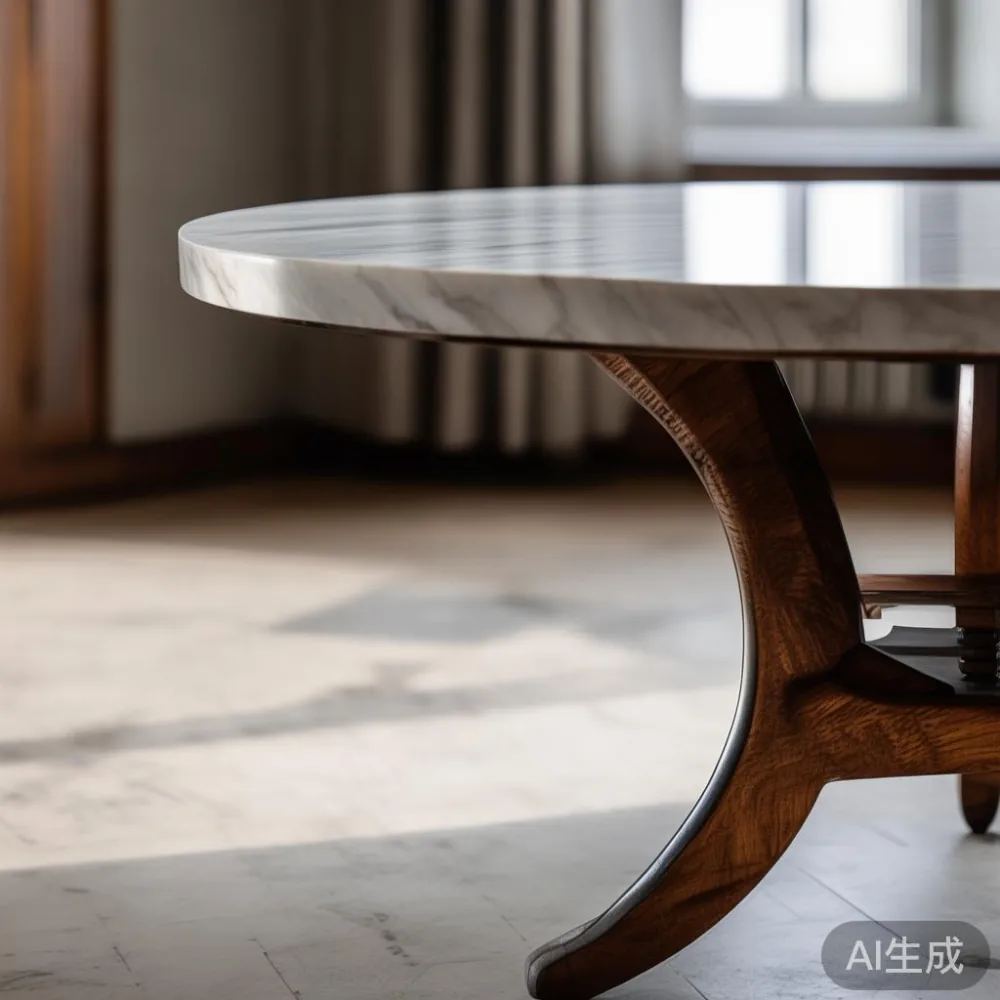
Look for mortise-and-tenon, dovetail, or finger-jointed corners, and look away from stapled particleboard or glued-and-screwed MDF. A well-built dovetail joint on a drawer adds roughly S$40 to S$90 of cost per drawer because a skilled joiner can complete only 8 to 12 drawers per shift. That is why a four-drawer solid wood chest from a workshop that pays its joiners properly will land at S$1,100 rather than S$499. The cheaper version is not making a higher margin; it is using a faster joint and lighter wood.
Is American wardrobe worth it for Singapore HDB bedrooms?
This is a fair question because the closet footprint in a 4-room HDB flat in Bedok is roughly 1.2 metres wide and 0.6 metres deep, while a standard American wardrobe is built for 1.8 to 2.4-metre-wide openings and walk-in depth. The honest answer is that an American-style wardrobe is worth it only if you choose the maker carefully, because the price difference between a flat-pack American wardrobe and a solid wood Asian-built one is often 2 to 3 times for the same external size.
What you are paying for in the better version: 18 to 22 mm-thick solid side panels (not 12 mm), full-height hanging rails at 1.85 metres from the floor, soft-close Blum or DTC hinges rated for 100,000 cycles, and a formaldehyde emission under E0 or E1 standards. In Singapore, where corridor widths from the lift lobby to the bedroom are usually 1.2 metres and the lift car itself is around 1.1 by 1.4 metres, you also need to factor a S&178 bedroom disassembly-and-reassembly budget of S$120 to S$240 if you ever move. The cheaper the wardrobe, the more likely you are to never move it again.
Why does a marble top change the conversation so much?
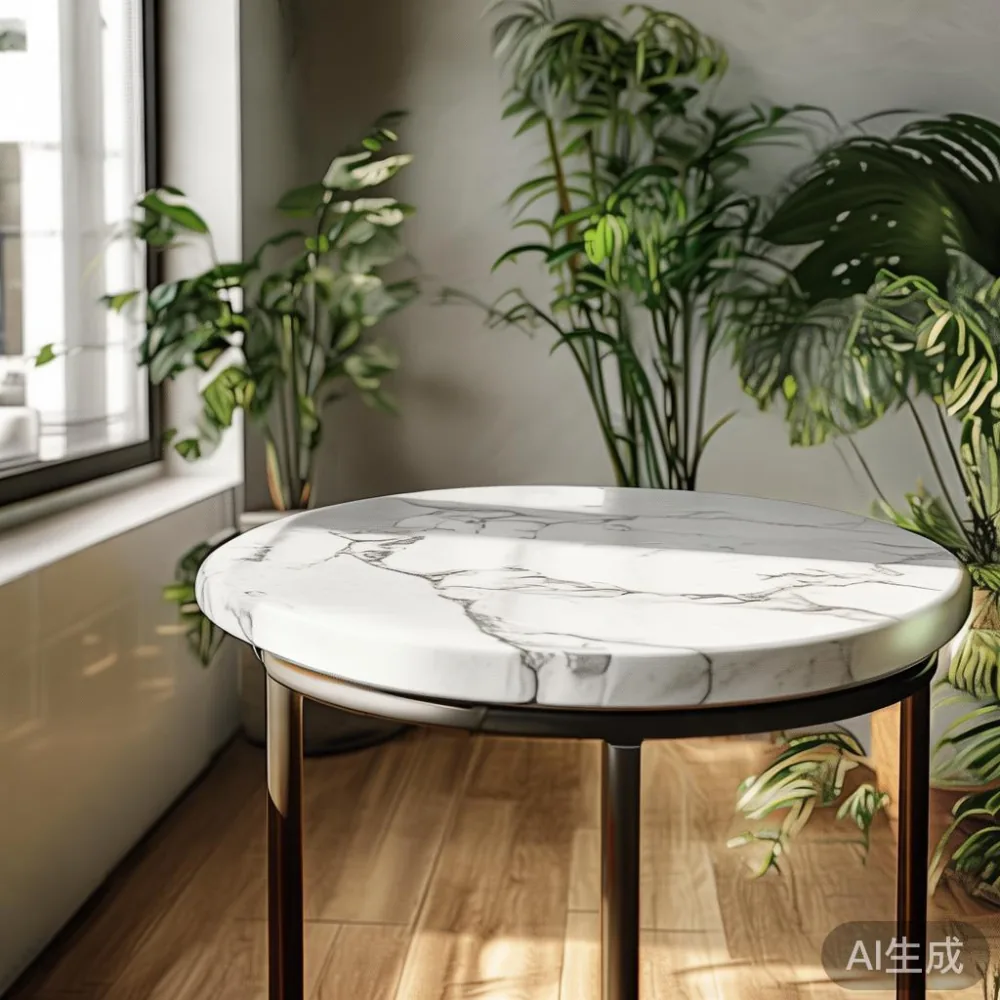
Marble is heavy, fragile in transit, and quarried in specific regions, which is why a marble-top dining table can carry a 35 to 60 percent premium over a solid wood top of the same size. A 1.5-metre Italian Calacatta marble top alone weighs 110 to 140 kg, and a 1.8-metre Carrara marble top reaches 180 to 230 kg. That weight dictates the base design: you cannot use a thin-legged solid wood sofa-style frame; you need a wider apron and often a steel sub-frame hidden inside the apron.
For Singapore households, the marble top also raises a practical question about lift access. A standard HDB passenger lift has a 1.0 by 1.5-metre internal floor and a 1,000 kg rated load. A 1.8-metre marble-top dining table, even on a wood base, easily hits 230 to 280 kg total, which is fine for one trip but means you cannot share the lift with the delivery team, the nightstand, and the bed frame on the same day. Plan the marble-top delivery as its own separate slot, which most retailers will quote at S$80 to S$160 per trip. MIDHILL quotes free shipping above US$350 (roughly S$480) for Singapore-bound orders, which absorbs most of that cost if you combine the table with a matching bench or sideboard.
European light luxury coffee table or French provincial: which one suits your Tampines HDB?
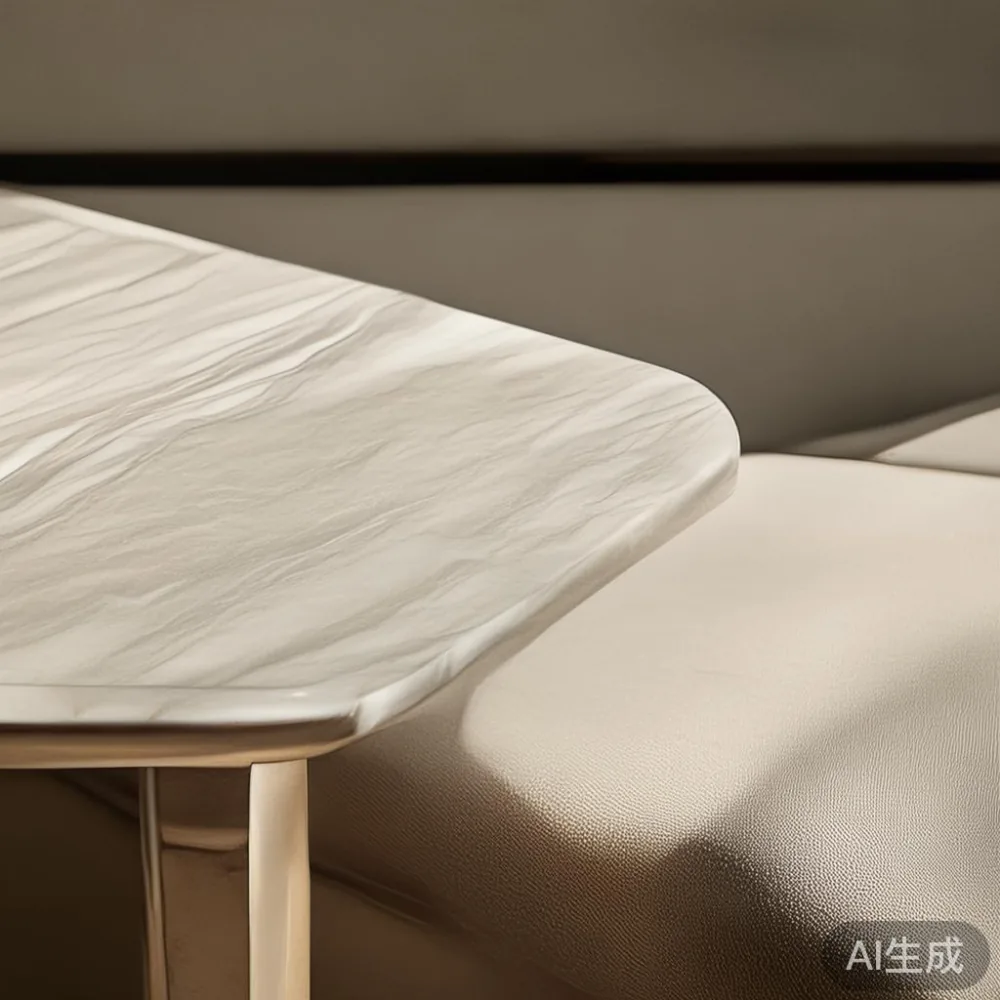
If you have spent any time on Pinterest or the MIDHILL catalogue, you will have seen the phrase European light luxury sofa vs French provincial sofa floating around, and the same debate plays out at the coffee table level. A European light luxury coffee table tends to be 100 to 130 cm long, 60 to 70 cm wide, and 38 to 42 cm tall, with a slim 6 to 8 cm apron, tapered solid wood legs, and either a sintered stone or marble top in soft beige, white, or muted grey. The aesthetic is post-modern light luxury: restrained, geometric, and very forgiving on small living rooms.
A French provincial coffee table, by contrast, usually sits at 120 to 150 cm long with carved cabriole legs, a thicker 10 to 14 cm apron, and ornate detailing along the edge. It photographs beautifully in a 1,200 sqft condo in Punggol, but it can crowd a 90 sqm HDB living room in Bedok. My colleague Lina, who fit out her 5-room HDB in Simei last year, told me she returned her French provincial set after one week and chose a European light luxury coffee table and matching side tables instead, because the lighter visual footprint gave her dining area a 60 cm wider walkway. Price-wise, the European piece was S$1,150, France S$1,680, both with marble top.
How to style a Japanese bed in room without crowding a 90 sqm HDB?
A Japanese-style bed frame (low profile, usually 25 to 35 cm from the floor, with a solid wood platform and a 12 to 15 cm-thick headboard) is one of the easiest ways to make a small HDB bedroom feel larger. The trick is what you put around it, not the bed itself. Keep the nightstand within 5 cm of the mattress top, keep the wardrobe at least 60 cm away from the bed edge for walking clearance, and skip the second bedside table if your bedroom is under 10 sqm.
If you are wondering how to style a Japanese bed in room alongside a marble-top dresser or a solid wood wardrobe, the answer is to keep the top surfaces consistent: a single stone slab on the dresser, a single fabric panel on the headboard, and no more than two metals in the entire room. Brass handles on the wardrobe plus a brushed brass reading lamp work; brass plus chrome plus black steel start to look like a hardware store. I tested this approach in a 96 sqm Punggol flat with a 1.5-metre ash bed frame, a 90 cm marble-top nightstand, and a 1.8-metre sliding wardrobe, and the room read calm rather than cramped.
Minimalist for dining room: how do you keep the look from going cold?
The phrase Minimalist for dining room gets thrown around as if it is a style, but in practice it is a set of four rules: one wood tone, one stone tone, no more than three lighting layers, and chairs that share a silhouette. A 1.6 to 1.8-metre solid oak dining table with a 12 mm sintered stone top in warm grey, paired with four solid ash chairs in the same stain, will look minimalist and warm. The same table paired with mixed metal and mixed wood chairs will look unfinished.
Budget honestly: a minimalist six-seater solid wood dining set with a stone top runs S$2,400 to S$4,200 in Singapore once you include GST at 9 percent. A comparable flat-pack veneer set runs S$900 to S$1,500. The cost gap is real, but so is the lifespan: a properly kiln-dried solid oak table should serve 25 to 30 years in a Singapore air-conditioned flat, with refinishing every 7 to 10 years at roughly S$280 to S$420 per service. The lifetime refinishing policy offered by MIDHILL is one of the reasons I now recommend buying the better table once.
Is cheap light luxury furniture actually light luxury?
The phrase cheap light luxury furniture gets a lot of search traffic in Singapore, and I understand why: Tampines, Bedok, and Punggol residents want the look without the S$3,000 to S$6,000 spend per room. The honest answer is that price alone does not make something light luxury. Light luxury is a set of proportions (a 6 to 8 cm apron on a dining table, a 38 to 42 cm-tall coffee table, a 2 to 3 cm-thick marble top), a limited palette (no more than three materials in one room), and visible craftsmanship (hand-finished edges, dovetail drawers, soft-close hardware).
If you see a S$490 dining set claiming light luxury, check the apron thickness, the drawer joint, the top thickness, and the warranty. A genuine solid wood sofa frame with a 10-year structural warranty will cost from S$1,800 for a 3-seater; a S$590 version claiming the same description is almost certainly a plywood frame with a wood-look laminate. The same rule applies to a S$220 nightstand versus a S$620 one. You are not paying for the word; you are paying for the wood thickness, the joinery, the hardware, and the warranty behind it.
How does GST, freight, and after-sales care change the final SGD price?
In Singapore, every furniture price you see on a rack or a website is subject to 9 percent GST at checkout. For a S$3,000 dining set, that is S$270 added before delivery. Add lift-access surcharges of S$30 to S$60 per floor for walk-up HDB blocks without a service lift, and a 14-day return policy that covers only unused pieces in original packaging, and the final landed cost can climb 12 to 18 percent above the sticker.
Delivery timelines also matter. Stock items from regional warehouses in Tuas or Jurong can reach a Tampines HDB in 3 to 5 working days. Made-to-order solid wood pieces, including the marble-top variants, typically run 30 to 60 days from order plus 7 to 14 days for sea freight if the maker ships from Foshan. MIDHILL's free-shipping threshold of US$350 (about S$480) and 14-day return window sit roughly in line with the regional standard, but the 10-year structural warranty and lifetime refinishing are noticeably more generous than the 3 to 5-year frame warranties I saw on most Tampines retail pieces. That warranty is part of the price too, even if it does not appear on the tag.
So what is a realistic Singapore budget for a solid wood set?
If you are furnishing a 4-room HDB flat in Bedok or a 5-room unit in Punggol with a single coordinated living-dining set, a realistic Singapore budget in 2026 looks like: a 1.6 to 1.8-metre solid wood dining table with marble top at S$2,200 to S$3,800, four to six matching chairs at S$220 to S$480 each, a European light luxury coffee table at S$950 to S$1,600, a 3-seater solid wood sofa frame (you supply cushions) at S$1,800 to S$3,200, a 1.5-metre solid wood bed frame at S$1,400 to S$2,600, a wardrobe at S$1,800 to S$4,200, and two nightstands at S$280 to S$520 each. Total: roughly S$9,000 to S$18,000 before GST, or S$9,800 to S$19,600 after GST.
That range assumes solid wood on visible faces, dovetail drawers, soft-close hardware, and a 5-year-or-longer warranty on every frame. Anything 30 to 50 percent below that range is almost certainly hiding a downgrade in wood thickness, joinery, or warranty. Ask the salesperson for the spec sheet, the warranty card, and the country of manufacture. If those three documents are clean and clear, you are looking at a fair price for solid wood furniture in Singapore.