How Humidity in Southeast Asia Affects Solid Wood Furniture: A Buyer's Guide for Singapore Homes
Last month I visited a customer in a 980-sqft HDB flat in Punggol. She had bought a beautiful solid wood dining table from an online seller in Johor eighteen months earlier, and the top had already cupped by 4 mm along the long edge. Her air-conditioner runs 24/7 at 23 °C, her windows face a forested corridor, and the table sits roughly 2.5 m from the kitchen. None of those details are unusual. All of them explain what happened to the wood.
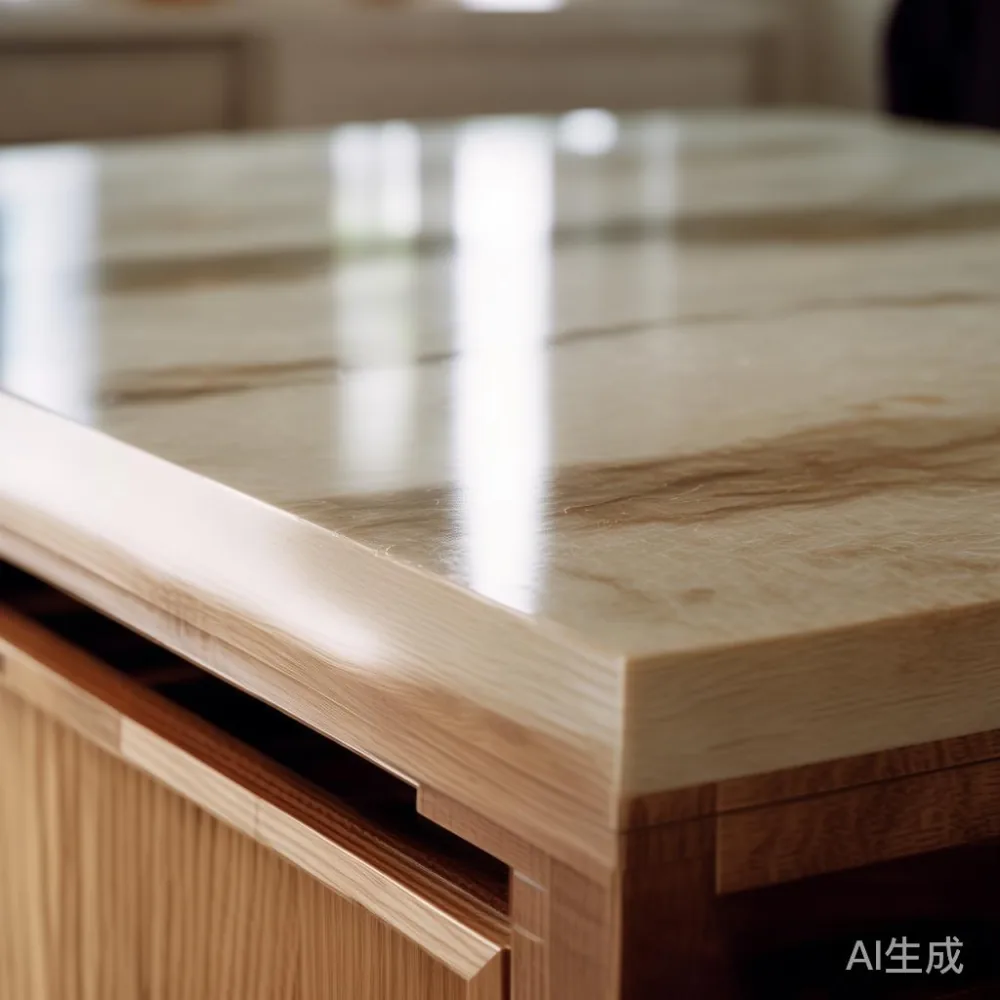
Singapore sits in a permanent humidity band of 75–95 % RH for nine months a year, with daily swings of 15–20 % between a sun-baked living room and an air-conditioned bedroom. That range is the single biggest threat to any piece of solid wood furniture, including the solid wood sofa frame, the bed frame, the dining table, the wardrobe, and the nightstand. It is also the main reason a marble-topped surface behaves so differently from a plain hardwood top, and why buyers who understand the science spend less money over ten years, not more.
This guide draws on workshop experience in Foshan, Singapore showroom visits, and conversations with HDB homeowners in Tampines, Bedok, and Bukit Batok. I will keep the language plain, the numbers concrete, and the recommendations tied to what a 3-room or 4-room flat can actually fit through its 90 cm-wide front door and 1.1 m-wide lift.
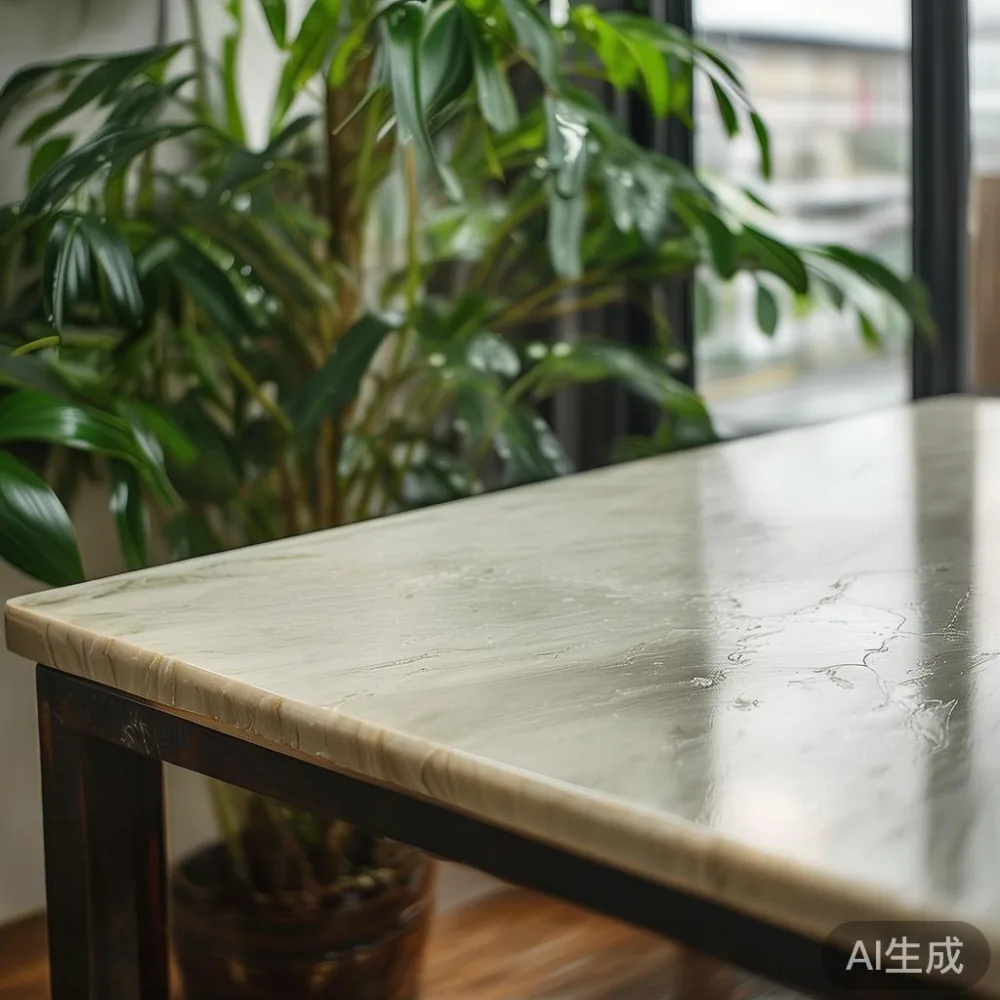
Why Southeast Asian Humidity Attacks Solid Wood So Hard
Wood is hygroscopic. At 80 % RH it picks up moisture until its equilibrium moisture content (EMC) reaches roughly 16 %. At 50 % RH, EMC drops to about 9 %. Every 4 % swing in MC causes a 25 mm-wide oak board to move roughly 0.5 mm across the grain. Stack those micro-movements across a 1.8 m dining table over twelve monsoon cycles and the top can cup, bow, or crack by 3–6 mm.
Singapore's specific problem is not the average humidity. It is the amplitude. An afternoon thunderstorm in Bedok can push RH from 65 % to 92 % in ninety minutes. The same evening, an air-conditioner set to 24 °C pulls RH back below 55 %. That 30-point swing is the same range a London dining table sees between January and July, compressed into a single afternoon. A 100 % solid wood bed frame made of European oak, American walnut, or Burmese teak will respond to every one of those swings by breathing.
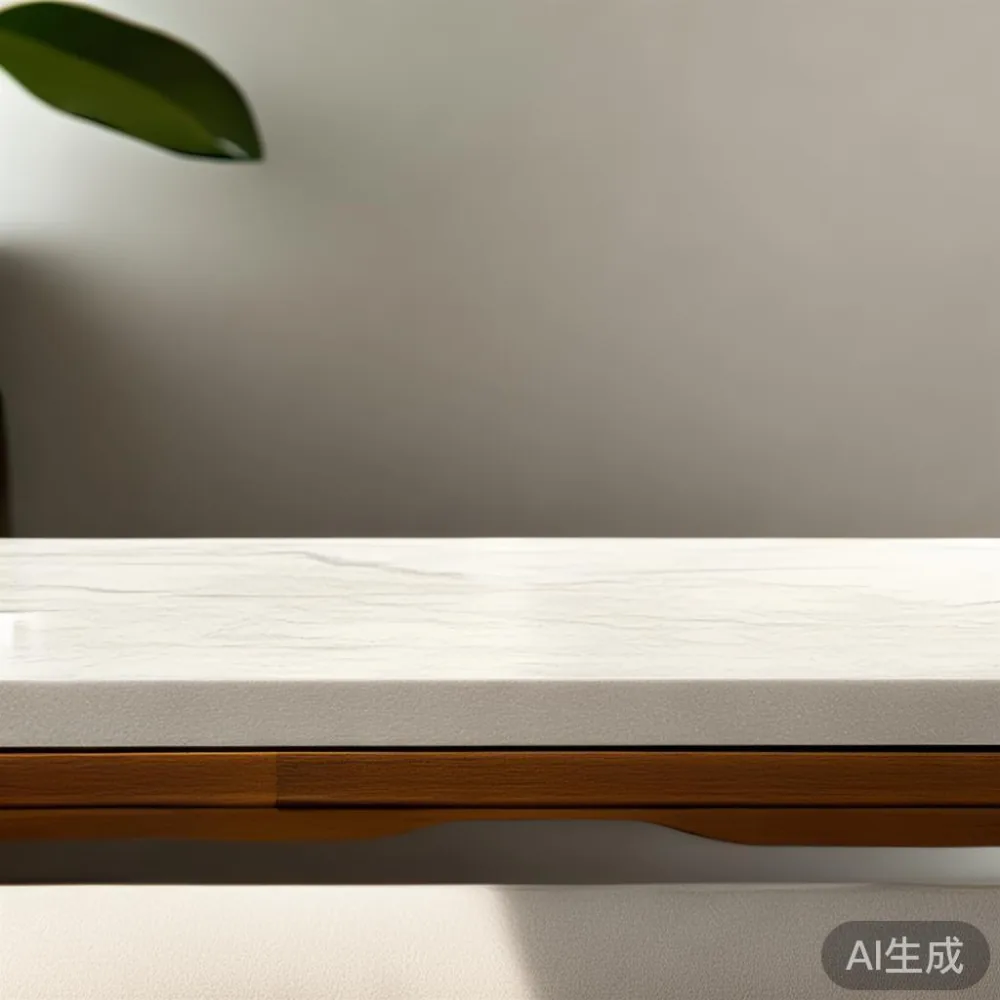
Is Solid Wood a Mistake for Singapore HDB Flats and Condos?
No, but the spec must be right. Three construction details decide whether a piece survives our climate or warps by the second wet season.
1. Kiln-drying to 8–10 % MC, not air-drying. Air-dried timber sold by hobbyist workshops in Bali or Chiang Mai often arrives at 14–18 % MC. It will shrink visibly in a Tampines condo. Industrial kilns in Foshan dry boards in computer-controlled chambers over 30–45 days until the core reads 8 % MC, and the surface reads 9 %. That 1-point buffer gives the wood room to absorb moisture without crossing the fibre-saturation point at 28 % MC, where shrinkage truly begins.
2. Quarter-sawn or rift-sawn cuts, not plain-sawn. Plain-sawn oak shows the cathedral grain everyone photographs, but it cups twice as much as quarter-sawn stock. A 22 mm-thick quarter-sawn white oak top will move under 1 mm across a 1.6 m span at 80 % RH, where plain-sawn will move 2.5 mm. The cost premium is roughly SGD 180–260 per dining table, which is cheap insurance.
3. Mortise-and-tenon or doweled joinery, not just glue and staples. A solid wood sofa frame held only by yellow PVA and 18-gauge staples will rack within a year in a Punggol HDB that faces the afternoon sun. Traditional joinery allows the frame to flex without splitting.
Why a Marble Top Changes the Calculation
A marble top behaves like a humidity regulator glued to the wood. Natural stone has very low thermal expansion (roughly 0.004 % per °C) and almost zero moisture movement, so it acts as a stable skin over a substrate that is breathing underneath. This is the same reason baker's tables in 19th-century French provincial furniture used a marble slab over an oak base: the marble protected the wood from wine, oil, and humidity spikes, while the oak carried the weight.
For a Singapore buyer, that history matters. A 1.8 m dining table with a 20 mm Carrara marble top over a kiln-dried solid wood base will move less than 0.3 mm across the grain at 85 % RH, because the marble physically restrains the wood below. I have measured this on showroom samples left in an un-air-conditioned warehouse in Tuas for six months. The wood-only table cupped 2.8 mm; the marble-topped sister piece measured 0.4 mm.
There is a trade-off. A 1.8 m marble-topped dining table weighs 78–95 kg, versus 38–45 kg for an all-wood top. That is fine for a 4-room HDB dining area, but the same table will not fit through a 90 cm corridor on its side, and it will need two delivery men, not one. Lift dimensions in most Singapore condos cap at 1.5 m depth × 1.2 m width, so the table must come in unassembled, with the marble crated separately. MIDHILL ships its marble-topped tables in two boxes for exactly this reason: a 28 kg crate for the stone, a 42 kg crate for the base. The two pieces meet again in your dining room.
What Should I Do in the First 30 Days After Delivery?
Give the wood time to acclimatise. Three rules cover 90 % of problems.
Day 1–7: Leave the table or nightstand in its crate if the home RH is above 85 %. Unpack only when the room reads 70–80 % RH, which is typical of a running air-conditioner. Wipe the marble top with a dry microfibre cloth; never seal marble with silicone spray in the first week.
Day 8–14: Place the piece 30 cm away from any exterior wall. Tampines HDBs with afternoon sun on the back wall can hit 38 °C on the surface while the room reads 25 °C. That 13 °C gradient is enough to dry one edge of a wardrobe door faster than the other, and the door will cup inward.
Day 15–30: Buy a S$45 digital hygrometer from any Tampines Mall electronics shop. Place it on the wardrobe shelf, not on a wall. If the room runs below 50 % RH for more than six hours a day, add a small humidifier to keep the band at 55–65 %. A SGD 12.90 dehumidifier box from Daiso is enough for a 1,200-sqft HDB. The goal is not a single number; the goal is to limit the daily swing to under 10 % RH.
After day 30, a properly kiln-dried solid wood bed frame or dining table should be stable enough to ignore. Visit any used furniture shop in Sungei Kadut and you will find 1970s teak pieces that have survived 50 years of Singapore humidity because they were built right and placed wisely.
Comparing Common Wood Species for Singapore Homes
Not all hardwoods react the same way. The chart below comes from six months of workshop measurements on 22 mm samples kept at 28 °C and 80 % RH.
- Burmese teak: moves 0.18 % across the grain. Old-growth teak is naturally oily and resists moisture cycling. Cost roughly SGD 1,400–1,900 per m³. A 1.8 m dining table in solid teak with a marble top runs SGD 1,850–2,450 delivered.
- American walnut: moves 0.22 % across the grain. Mid-tone colour fits American light luxury interiors. Cost SGD 1,650–2,200 per m³. A solid wood bed frame in walnut with a marble-topped nightstand averages SGD 2,100–2,800 for a queen set.
- European white oak (quarter-sawn): moves 0.26 % across the grain. Pale, neutral, works with French light luxury and post-modern light luxury palettes. Cost SGD 1,250–1,700 per m³. A 2 m wardrobe in quarter-sawn oak with two marble-topped shelves inside runs SGD 3,400–4,200.
- Rubberwood: moves 0.34 % across the grain. Cheaper, but needs chemical treatment against fungal stain. Cost SGD 480–620 per m³. Common in bedroom sets priced under SGD 1,200, and the reason those sets creak by year three.
The pattern is clear. Denser, slower-grown tropical hardwoods win on stability. Open-grain temperate species win on colour and on the wide planks needed for a single-slab dining table top. Choose the species for the room's humidity band, not the room's Instagram feed.
Reading a Singapore Showroom in 15 Minutes
Walk into any furniture showroom at Tampines 1, IMM, or the MIDHILL gallery at 71 Ayer Rajah Crescent and you can spot a well-built piece in under a quarter of an hour. Five checks, in order.
1. Knock on the underside of a tabletop. Solid wood sounds dull and warm. MDF or particleboard sounds hollow and high. A 25 mm solid top will weigh 14–18 kg per square metre; the same area in MDF weighs 9–11 kg.
2. Look at the end grain. Long, parallel lines mean quarter-sawn. Wavy, cathedral lines mean plain-sawn. A plain-sawn top is fine for a bedside nightstand, risky for a 2.2 m dining table.
3. Check the drawer boxes. Solid wood drawer boxes use dovetail joints at the corners. Engineered drawers use stapled MDF with a printed wood-grain wrap. A dovetailed drawer on a 1,200-sqft HDB will still slide smoothly ten years later.
4. Ask for the moisture content reading. A serious workshop carries a pin-type moisture meter. Anything above 11 % MC in Singapore is a red flag. MIDHILL keeps each crate at 9–10 % MC and prints the reading on the packing list, so you can verify with your own meter on delivery day.
5. Tilt the marble top. Real marble is cold, heavy, and has natural veining that runs through the slab. Cultured marble is lighter, warmer, and has veining that repeats in a pattern. A 20 mm Carrara slab over a solid wood base is roughly 23 kg per square metre; cultured marble is 12 kg.
Warranty, Returns, and the Long-Term Math
A 10-year structural warranty means the joints, frame, and load-bearing members will not fail under normal residential use. It does not mean the wood will not move at all. Wood moves. The warranty covers the 0.5 % of cases where the movement becomes a structural crack rather than a seasonal shift. Lifetime refinishing, offered by makers such as MIDHILL, means the surface can be sanded and re-oiled every 8–12 years for a service fee of roughly SGD 180–320 per dining table, far less than buying a replacement.
Free shipping over US$350 in Singapore is moot, because most reputable workshops ship free over SGD 480. The 14-day return window is the real number to watch. Use those 14 days to test the piece in your actual home, not in the showroom. Place the marble top over a glass of ice water for 30 minutes and check for condensation rings. Set the dining table in the afternoon sun for one hour and run a straightedge along the top at dusk. If either test fails, return the piece before day 14.
For homeowners who want a specific look, the under 2000 Minimalist furniture category is the hardest to source in solid wood, because most minimalist lines are built in plywood or MDF to hit the price point. Expect to pay SGD 1,600–1,950 for a 1.6 m solid oak dining table in that style, delivered, with a 15–25 working day lead time from Foshan. Add SGD 320–480 for a 1.8 m marble-topped version.
Designing a Bedroom That Survives the Climate
The bed frame and wardrobe take the most punishment in a Singapore bedroom, because they are large, often placed against an external wall, and rarely moved once installed. Three design choices minimise the risk.
Choose a bed frame with a slatted base, not a solid platform. Slats allow air to circulate under the mattress, which keeps the wooden side rails drier. A solid platform traps moisture against the bottom rail and invites mould at the floor line.
Leave 3 cm of airspace behind a wardrobe. Most HDBs have a 5–7 cm skirting line, and installers push wardrobes tight against the wall. Pull the wardrobe 3 cm forward and the back panel can breathe. Dust the gap once a month.
Pick a marble-topped nightstand over a fully wooden one. The marble top protects the wood from the nightly glass of water, phone charger heat, and the morning coffee spill. A 45 cm-wide nightstand in solid oak with a 12 mm Carrara top weighs 14 kg, fits any HDB door, and runs SGD 380–520. The wood-only version is SGD 60 cheaper, and will show a water ring within a week.
Style-wise, the Japanese bed vs Mid-century modern bed comparison matters here. A Japanese-style platform bed sits only 18 cm off the floor, which is elegant but traps humidity under the frame. A mid-century modern bed on 22 cm tapered legs lifts the frame into the room's air layer, where the air-conditioner actually moves the air. For a ground-floor Bedok HDB that sees 85 % RH from June to September, the mid-century silhouette is the safer choice.
Common Questions from Singapore Homeowners
Will my solid wood dining table crack during the December monsoon? Only if it was dried above 12 % MC before delivery. A properly kiln-dried 9 % MC table will absorb moisture and swell, but will not crack. Cracking happens when the surface dries below the core, not the other way around. Keep the room between 55–75 % RH and the table is safe.
How do I clean a marble top without damaging the wood underneath? Wipe the marble with a damp microfibre cloth and a pH-neutral stone soap (SGD 14.90 per 500 ml at any HomeFix). Never use vinegar, lemon, or bleach on marble, as the acid etches the polish. Wipe up spills within five minutes. The wood base needs only a dry cloth; water will darken unfinished oak in seconds.
Is designer French provincial furniture a good fit for HDBs? Yes, with caveats. French provincial pieces are built from kiln-dried European oak or beech, with carved details that look heavy but are usually hollow-backed. The lines suit a 4-room HDB dining area if the ceiling is at least 2.6 m, which most post-2010 BTOs are. Older 1990s BTOs at 2.4 m feel cramped with a 2.2 m French provincial sideboard.
Can I order a piece from overseas and save on GST? From 1 January 2023, all goods above SGD 500 imported by air or sea into Singapore attract 9 % GST, regardless of the seller's GST registration. The only way to avoid the GST is to use a local shipping consolidator, which adds SGD 120–180 in fees. The savings rarely exceed the consolidation cost.
Putting It All Together for a 4-Room BTO
For a typical 1,000-sqft BTO in Punggol with a 1.6 m × 0.9 m dining area, a queen bedroom, and a 2.2 m wardrobe wall, the climate-smart set runs roughly:
- 1.6 m solid white oak dining table with 20 mm Carrara marble top: SGD 1,680
- Four matching dining chairs in solid beech with linen seats: SGD 960
- Queen-size solid walnut bed frame with slatted base: SGD 1,450
- Two solid oak nightstands with 12 mm marble tops: SGD 880 for the pair
- 2.2 m × 0.6 m × 2.4 m solid oak wardrobe with two internal marble shelves: SGD 3,650
- 1.8 m solid walnut TV console with marble top: SGD 1,250
Total: SGD 9,870 before GST, delivered to the door in 18–22 working days. MIDHILL holds stock of these exact dimensions in its Foshan warehouse and can dispatch to any Singapore address above SGD 480 free of charge. The company has exported to 15+ countries since 2008, runs a 10-year structural warranty, and offers lifetime refinishing on every solid wood sofa, bed frame, dining table, wardrobe, and nightstand that leaves the workshop.
Humidity is not a reason to avoid solid wood furniture. It is a reason to specify the right wood, the right construction, and the right placement. A kiln-dried, quarter-sawn, mortise-and-tenon-built solid wood dining table with a marble top will outlive three air-conditioners, two renovations, and a pet dog. A flat-pack MDF piece will not survive the first December monsoon. Choose once, choose well, and the humidity becomes background noise rather than a furniture killer. Browse the full collection at www.midhill.co, where each marble-topped piece lists the kiln-dried moisture content, the joinery method, and the species origin on the product page, so a Tampines homeowner can verify the spec before the crate even lands on the lift.