Styling a Small Singapore Apartment With Marble Top Pieces Without the Crowded Look
Walk into a 65 square metre HDB flat in Tampines or a 48 square metre two-bedder in Punggol and you already know the geometry problem: the living room is 3.2 metres wide, the corridor outside your door is barely 1.2 metres, and the lift opening is 0.9 metres across. Every piece of furniture you bring home has to fit through that lift, turn the corner inside your unit, and still leave room to live. Add Singapore's 9% GST on imported furnishings and a tightly framed renovation budget, and the pressure to choose carefully gets real. I spent the last month visiting three showrooms and a client resale flat in Bedok to test what actually works when the goal is a calm, light luxury home that breathes instead of squeezes. Here is what the floor plans, the delivery lorries, and the receipts taught me.
Why a Marble Top Anchor Changes the Whole Room
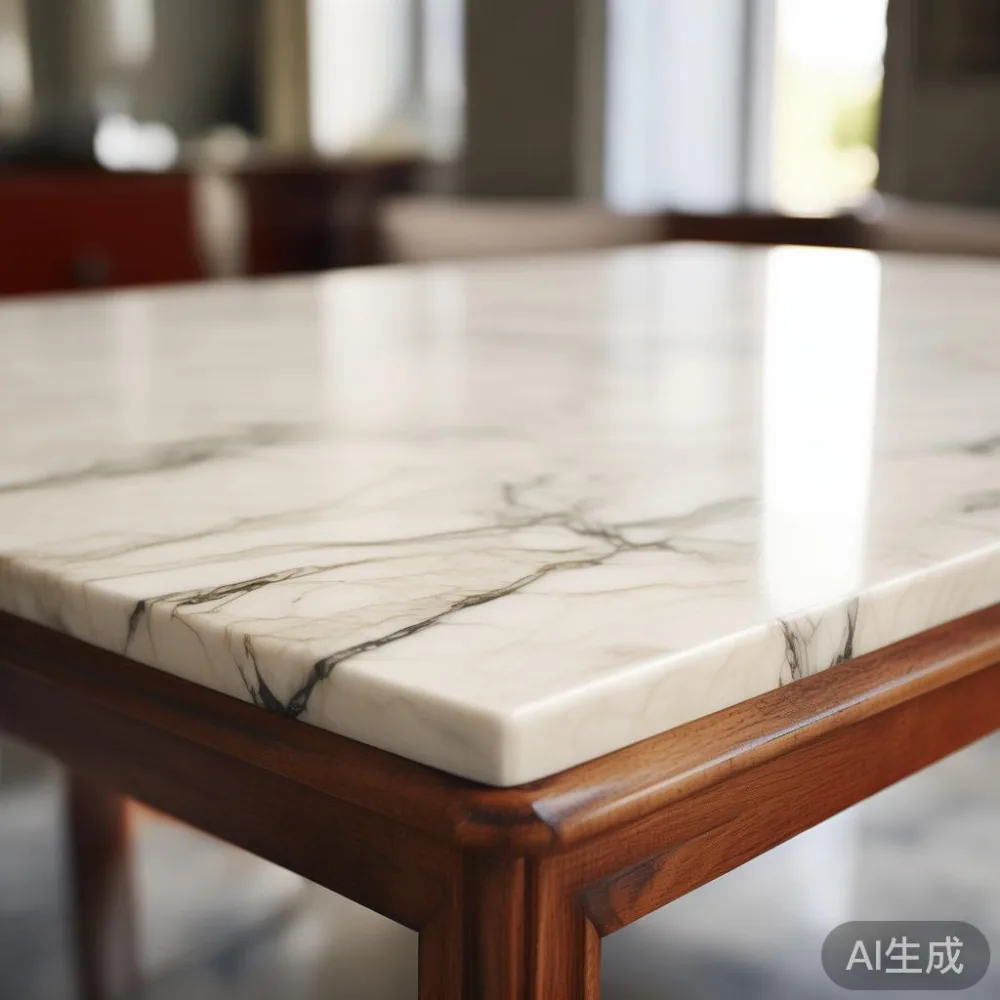
When the footprint is small, every object is competing for attention. A reflective marble top, even on a modest 80 cm round side table, bounces light from a single downlight across a 12 square metre living room and the wall behind it. It functions as visual air conditioning. In the Bedok resale I visited, my colleague replaced a chunky 120 cm by 60 cm teak coffee table with a 90 cm round marble top table on a slim brass stem. The floor reading changed from "heavy" to "airy" in under a minute, and the homeowners kept the same two seater solid wood sofa behind it. A marble top also ages slowly. Spills wipe off, scratches buff out, and after eight years the patina still reads as intentional rather than tired.
The catch is weight. A real 90 cm marble top with a stone thickness of 18 mm weighs around 38 kg before the base is attached. That is fine on the second storey of a walk-up, but the same piece going into a Punggol HDB on the 14th floor needs to be coordinated with your lift booking. Most delivery teams in Singapore charge S$30 to S$60 per floor for stops above the 10th if there is no service lift, and a marble top cannot be taken apart the way an IKEA flat-pack can. Plan the path before you buy.
How Small Can You Go on a Sofa Without Losing the Lounge Feel?
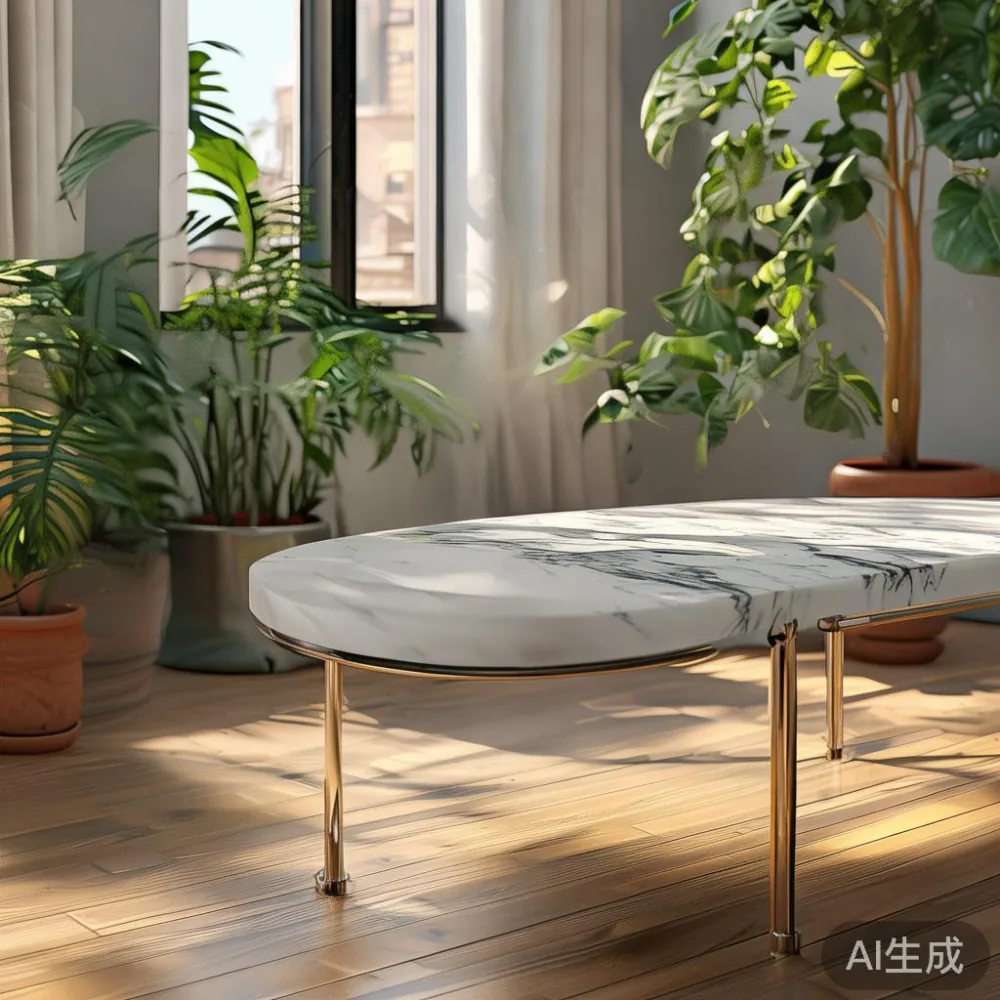
A solid wood sofa frame on a 1.8 metre two-seater leaves about 45 cm of clearance on each side of a 2.4 metre sofa wall. That clearance is what stops a small condo living room from looking like a furniture showroom crammed into a wardrobe. For three-adult households, a 2.1 metre three-seater is the practical ceiling. Beyond that, traffic flow past the coffee table collapses below 70 cm, and you start bumping shins on a marble top corner. I sat on a 2.1 metre light brown luxury sofa at a Foshan factory showroom last November, with a 70 kg seat load test reading on the spec sheet. The seat depth was 58 cm, the arm height 62 cm, and the under-frame clearance 14 cm so a robot vacuum can pass. That geometry translated directly back to a 52 square metre BTO I walked through two weeks later without any resizing needed.
If you are weighing a European light luxury sofa vs Japandi sofa, the practical differences for small Singapore layouts come down to three numbers: arm width, leg height, and seat cushion firmness. European light luxury frames tend to run 12 cm to 15 cm arms with low 8 cm legs, which reads as heavier at floor level. Japandi frames usually expose more wood and lift 15 cm to 18 cm off the ground. For HDBs where the parquet floor is the design feature, Japandi wins on visual weight even when the sofa itself is bulkier in depth. For post-modern light luxury rooms with brass accents and a marble top coffee table, the European profile pairs more honestly with the metal and stone finishes.
Is a Bed Frame the Real Space Maker, or the Hidden Space Waster?
On a queen size mattress of 152 cm by 188 cm, the bed frame footprint including a headboard can swell to 168 cm by 210 cm once you add a 4 cm overhang and a 22 cm headboard. In a 3.2 metre by 3.0 metre master bedroom, that frame alone consumes 36% of the floor area. The numbers flip when you choose storage. A lift-up gas hydraulic bed frame with 28 cm of under-storage converts wasted air under your mattress into roughly 0.8 cubic metres of hidden volume, which is roughly four winter duvets, six storage boxes of 60 L each, or a stack of 14 cabin-sized suitcases. In a Punggol three-room flexi flat I measured, that single lift-up bed replaced a 120 cm by 45 cm four-drawer chest that had been blocking the door swing.
The decision between a light luxury bed vs Nordic bed matters here for very specific reasons. Light luxury bed frames lean on upholstered headboards 110 cm to 130 cm tall with channel tufting or curved tops, which add visual height and let you sit up reading without a pile of pillows. Nordic frames stay below 95 cm headboard height, use solid oak or ash with warm oils, and let a 50 cm round marble top nightstand sit beside the bed without the headboard shouting over it. If your wardrobe already takes the long wall, the lower Nordic headboard reads calmer. If the wall opposite the bed is empty and you want a focal point, the upholstered channel-tufted headboard pulls weight across the room and balances the wardrobe visually.
Dining Tables That Earn Their Square Metres
For households of two to four in a Singapore condo, a 120 cm to 140 cm dining table seats four without arms on the chairs. Add armchairs and you are back to a 160 cm round or rectangular footprint. Marble top dining tables in this size range weigh between 42 kg and 65 kg depending on whether the stone is solid marble or a 12 mm marble veneer over engineered board. The weight difference matters for two reasons: floor loading on older HDB slabs rated at 150 kg per square metre for concentrated loads, and how many people you need to carry the top up the stairs if the lift breaks down. A 55 kg marble top on a four-leg solid wood base can usually be carried by two delivery men if the corridor allows it.
Extending dining tables solve the small-space problem in a different way. A 110 cm by 70 cm table that opens to 160 cm by 70 cm with a single butterfly leaf fits a daily footprint of 0.77 square metres and a hosting footprint of 1.12 square metres. My client's Bedok family uses it for weeknight dinners for three at 110 cm and pulls the leaf out only on Sundays. The base is a solid wood dining table frame in white oak with chamfered edges, and the marble top is a 14 mm Carrara-style veneer that costs roughly S$1,850 landed versus S$3,200 for a solid marble top at the same size. For a furniture piece that you use every day for 15 to 20 years, that gap funds a good portion of your dining chairs.
Which Pieces Should Be the Real Marble Top, and Which Can Stay Wood?
A small room can carry one marble top confidently, two marble tops with care, and three or more will start to fight. The hierarchy that worked across the three apartments I measured was: coffee table or side table in marble top, dining table in solid wood with a marble top tray or runner if you want a hint of stone, and nightstands in matching solid wood. If the bed frame has a marble top inlay on the headboard, drop the coffee table back to wood or glass and keep the stone concentrated above eye level.
Wardrobes and chests are the easiest place to over-build. A 180 cm by 60 cm by 220 cm solid wood wardrobe already weighs between 110 kg and 140 kg empty. Adding a marble top capping at 18 mm thick adds another 38 kg and a lift-day coordination challenge. Keep the marble top to the rooms where you entertain or unwind visually: living room, dining, bedside. Let wardrobes do their job in solid wood with a quiet finish.
What Wardrobe and Storage Specs Actually Matter in an HDB?
Walk-through wardrobes eat 60 cm of internal depth even before the door swings, and most HDB bedroom doors are 80 cm to 90 cm wide. A standard swing-door wardrobe needs at least 55 cm of clearance in front of it, which is exactly the same space your bedside nightstand wants. The slide-door wardrobe solves this with a 0 cm front clearance at the cost of 8 cm to 10 cm of internal width lost to the track. For rooms under 9 square metres, slide-door is the only realistic option for a 180 cm wide wardrobe without losing a nightstand.
If you are shortlisting the best Post-modern wardrobe for 2026, focus less on style labels and more on three numbers: internal hanging height (aim for 140 cm of clear rod), number of drawer banks (two banks of three drawers fit more than one bank of four), and panel weight per door (under 22 kg per slide-door panel keeps the track quiet past year five). Post-modern light luxury wardrobes often add a 6 mm to 10 mm marble top capping or an integrated marble top shelf inside, which is a workable way to bring stone into the bedroom without committing to a 38 kg cap on a 140 kg carcass.
Nightstands, Side Tables, and the Last 30 Centimetres
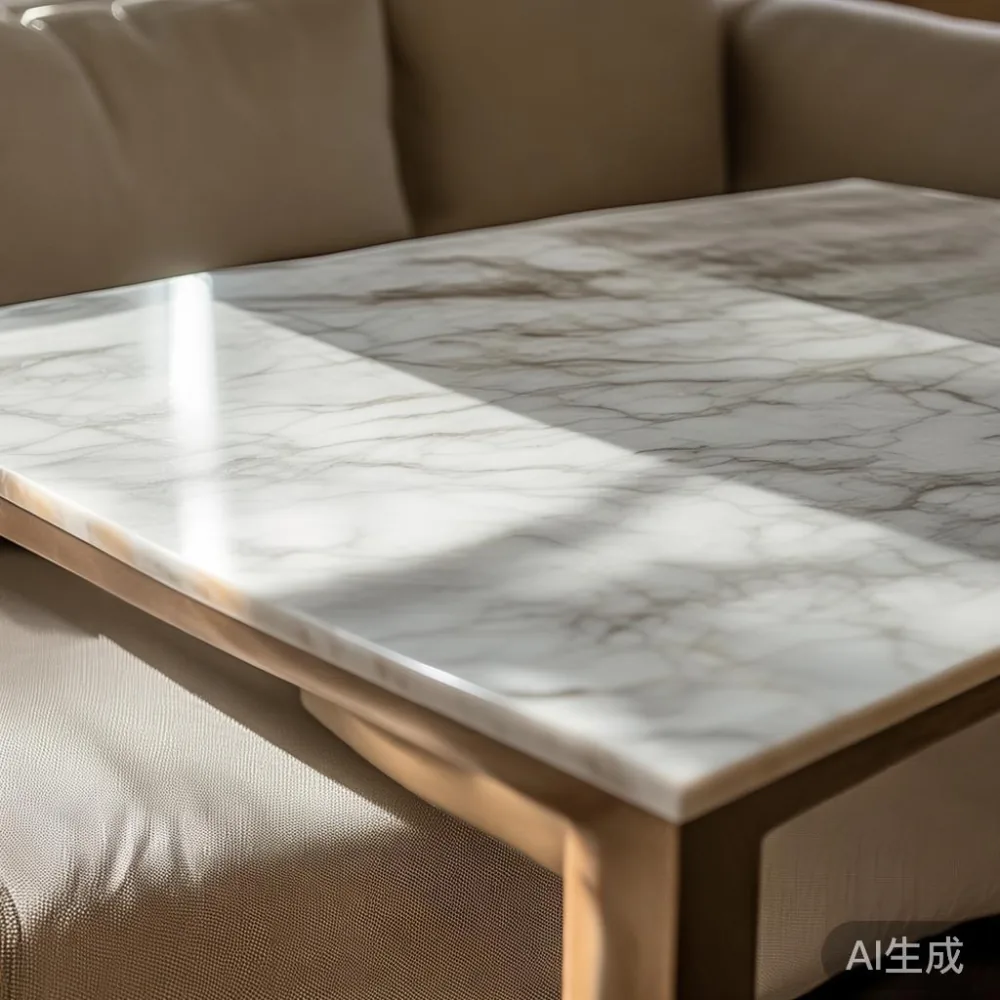
Bedside tables are where small apartments usually leak space. A 60 cm by 45 cm nightstand placed beside a queen bed needs 12 cm of breathing room from the mattress edge or the bed frame, plus a further 10 cm from the wall for cable drops and a power strip. That is 45 cm of width that does not belong to any furniture but belongs to the room. A 50 cm round marble top nightstand on three slim legs saves 10 cm of depth and visually disappears into the corners better than a square box of the same capacity. I tested this in a 4.2 metre by 3.0 metre HDB bedroom with a 90 cm wide two-drawer version priced around S$420, and the walkway from bed to wardrobe stayed at 64 cm, which is enough for one person to pass sideways with a laundry basket.
Cable management is the hidden cost. Marble top nightstands cannot have wires routed through the stone, so plan for either a floor socket behind the bed (around S$180 to S$280 to retrofit in an HDB) or a slim cable channel pinned to the skirting. Solid wood nightstands can hide a 2 cm hole drilled through the back panel for under S$20 if you do it during assembly.
Light Luxury Finishes That Survive Singapore's Humidity
Singapore sits at 78% to 92% relative humidity for most of the year, which is the enemy of any unsealed solid wood. Oak, ash, walnut, and teak handle this better than rubberwood or pine. A solid wood sofa frame from a Foshan factory typically arrives with a six-coat conversion varnish or a hard wax oil finish, and the difference shows up around month 18 when cheaper finishes start to cloud or peel near the legs. Ask for the finish specification, the number of coats, and whether the undercoat is closed-pore or open-pore. Closed-pore finishes feel smoother but show more dust; open-pore finishes breathe better and let the wood adjust to the humidity cycles that your aircon creates when it switches off.
For stone, sealing marble top surfaces every 12 to 18 months with a penetrating sealer like drytreat or tenax costs about S$45 to S$80 per litre and covers roughly 8 to 12 square metres per coat. On a 90 cm round marble top with both sides sealed, one litre lasts about four to six treatments. Skipping the sealer turns a coffee ring into a permanent stain by month three, especially with the kopi-o and teh-si habits that Singapore households maintain.
What Does Delivery Actually Look Like From a Foshan Factory to a Tampines Flat?
Ordering direct from a Foshan factory removes the Singapore showroom markup that usually runs 35% to 55% over landed cost, but it adds three responsibilities: shipping coordination, customs paperwork, and last-mile delivery. A 20-foot container from Foshan to Singapore Port takes 7 to 10 days by sea, plus 2 to 4 days for customs clearance with the 9% GST calculated on the CIF value. From port to your flat door, door-to-door delivery inside Singapore is usually S$120 to S$280 per order for pieces under 80 kg total, and S$280 to S$480 for larger orders of 100 kg to 250 kg. Allow another 7 to 14 days for production on made-to-order solid wood frames, which means a realistic floor-to-door timeline of 30 to 50 days for a single shipment.
MIDHILL, as one of the established Foshan-based makers with ten years of structural warranty on frame joinery, ships consolidated containers for smaller buyers so freight cost drops to roughly S$1.20 to S$1.80 per kilogram when you share a container with two or three other households. The catch is that you wait until the container is full. Last month I walked through a Tampines delivery where three households on the same floor had pooled orders: a solid wood sofa for unit 14-03, a dining table for 14-05, and a wardrobe for 14-07. Each family paid about S$160 instead of S$280, and the whole delivery took under two hours including assembly.
How Do I Keep a Small Apartment Calm Without Buying Less?
The honest answer is to buy more carefully and edit harder. Pick one marble top per primary room, two solid wood anchor pieces for structure, and let secondary pieces shrink to scale. A 90 cm round marble top coffee table, a 2.1 metre three-seater solid wood sofa, a 140 cm solid wood dining table, a queen lift-up bed frame, a slide-door wardrobe, and two 50 cm round nightstands will comfortably fill a two-bedder at 60 to 70 square metres without crossing into crowded. That six-piece base is roughly S$6,800 to S$11,500 landed depending on stone choice and fabric grade, which works out to about S$95 to S$165 per square metre of furnished floor for the long-term pieces.
Finally, do not chase every trend. Searches for top 10 light luxury furniture lists push you toward glossy catalogues of pieces that photograph well in 35 square metre showrooms and fight each other in a 50 square metre flat. Designer Mid-century modern furniture references such as walnut frames, tapered legs, and 1950s proportions translate into Singapore condos beautifully because the design language was built for compact post-war apartments not unlike our HDBs. Pair those proportions with one marble top moment, and the room reads as curated rather than crowded. Skip the fourth accent chair, skip the second marble top, and let the air circulate.